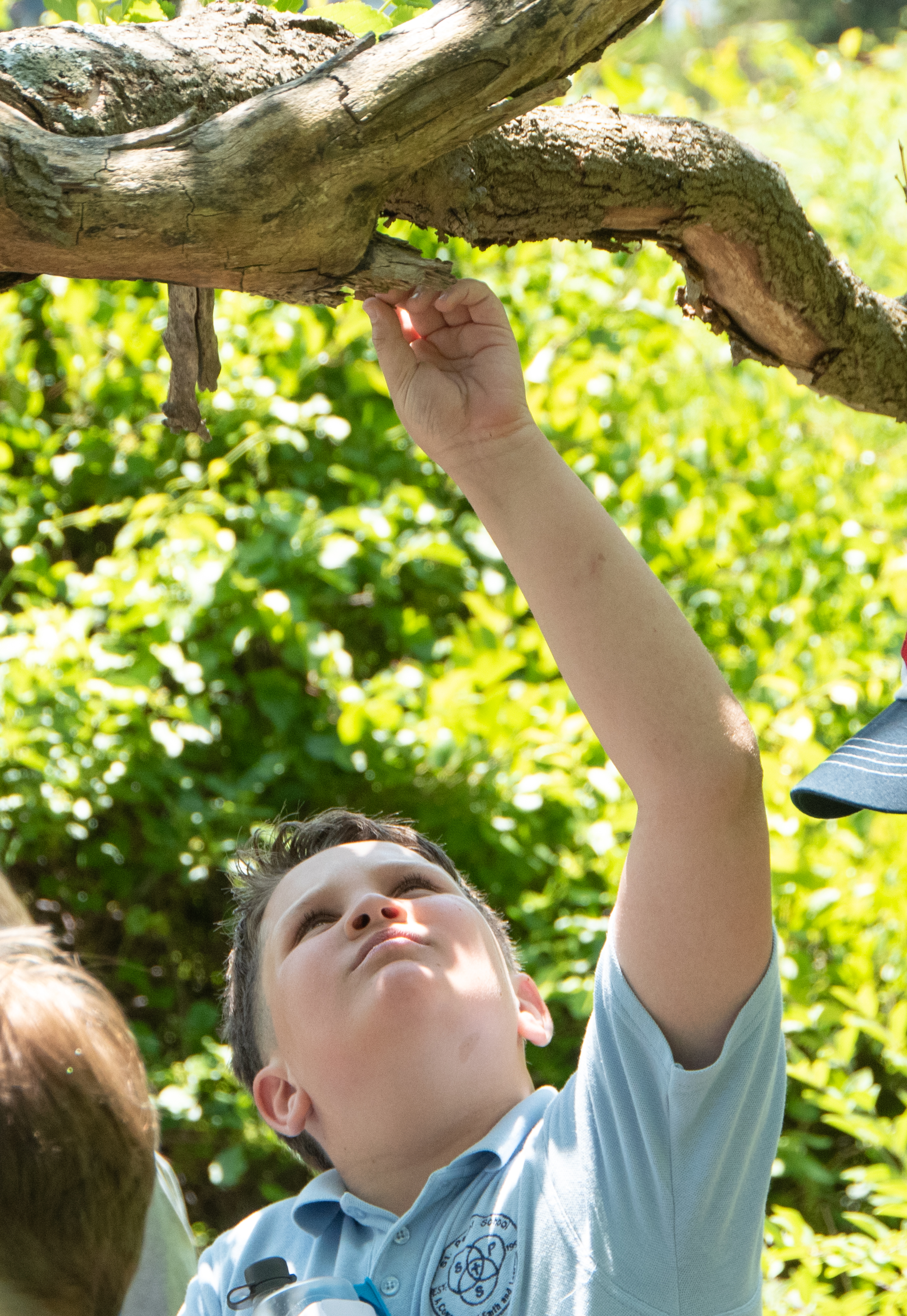
An Enlightening Outdoor Experience 

On June 1st, 2023, 4th- and 5th-graders from St. Peter School walked to Salter Grove accompanied by three teachers and five 8th-grade honor students. 
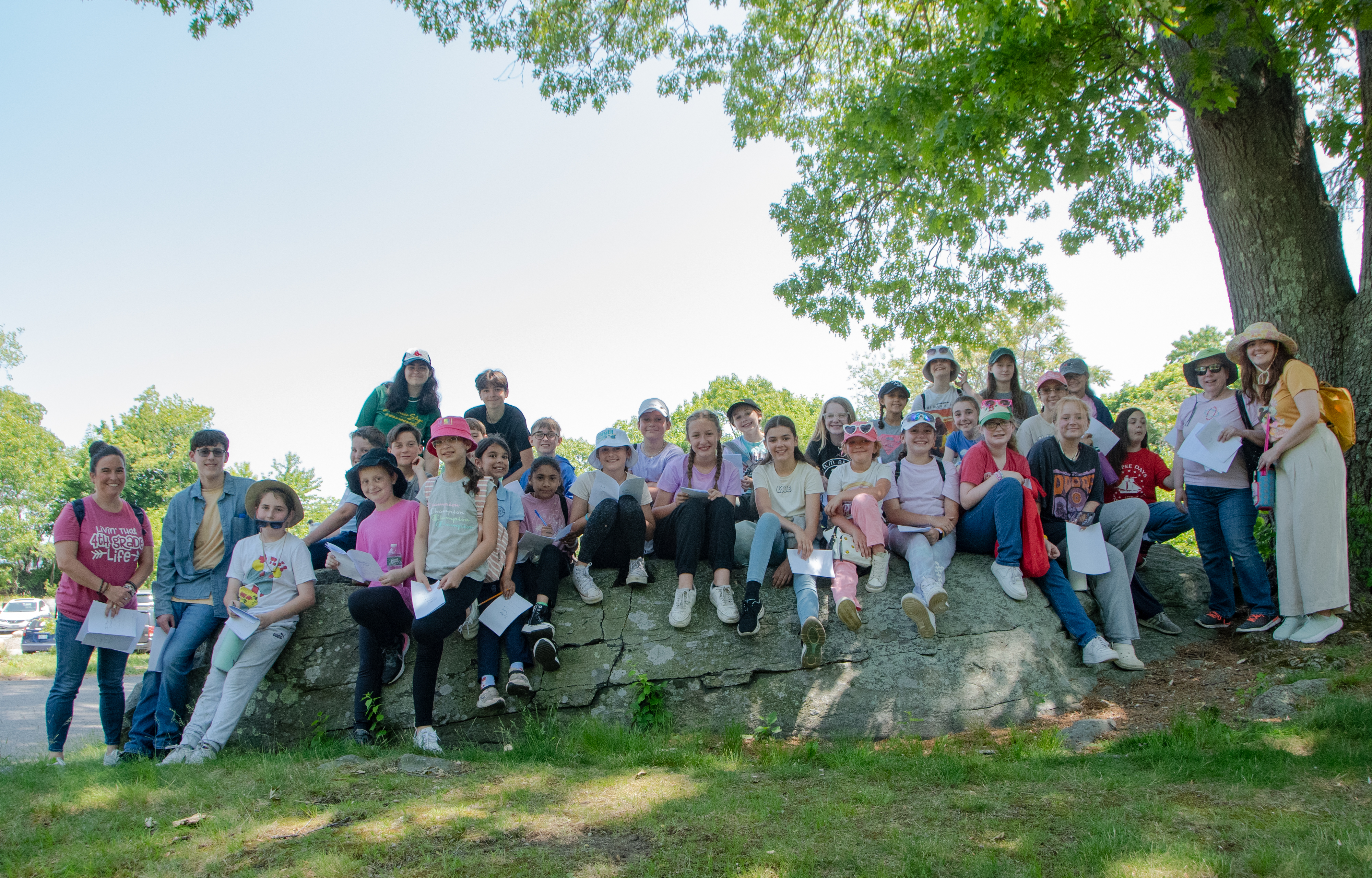
Students and teachers from St. Peter School

During the 90-minute visit, information from the Guide to Salter Grove was accessed by smartphone to to explore and learn about the ecological assets of the park. 

Talking about what will be seen on the nature trails. 

Science topics discussed in the classroom came to life for students and teachers alike. 

Students recorded observations in journals.

Organized into small groups, they walked along nature trails to observation stations that featured examples of: glacial history and geology of Rhode Island; native versus introduced plants; impact of invasive plants; different kinds of aquatic and terrestrial habitats; tolerance of marsh plants to brackish water; and human impact on the environment. 
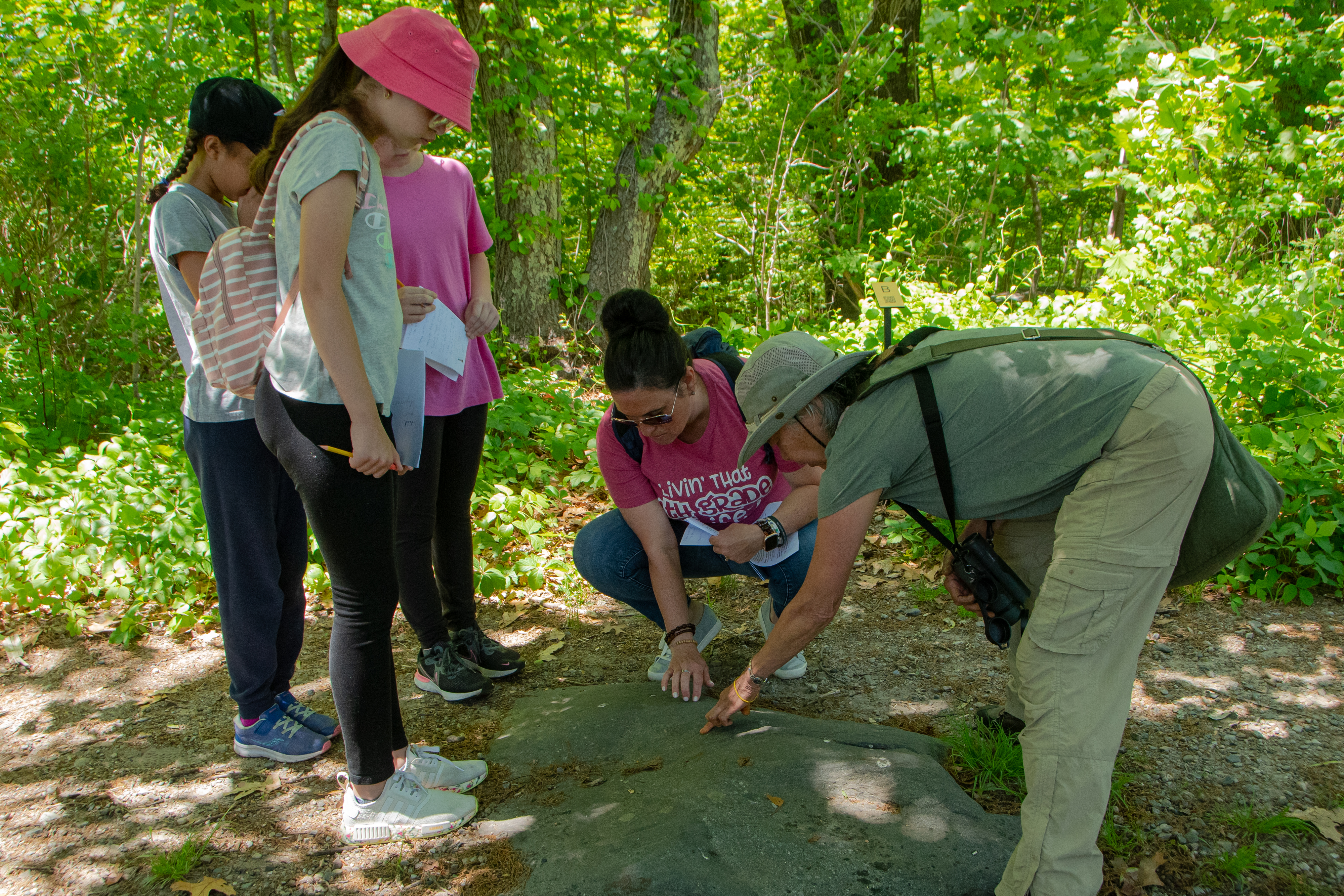
Examining glacial striations along Upland Trail. 

And all this, from just six of 23 observation stations! 

Inside the knotweed jungle. 

Dr. Susan Unger, the science teacher who organized this field trip, would like to continue using Salter Grove as an outdoor classroom. Future field trips would focus on fewer topics so students can dive more deeply into the subject matter. Instead of simply noting down observations, they could collect data to answer specific questions formulated during classroom discussion. 

See more photos from the St. Peter School field trip below:
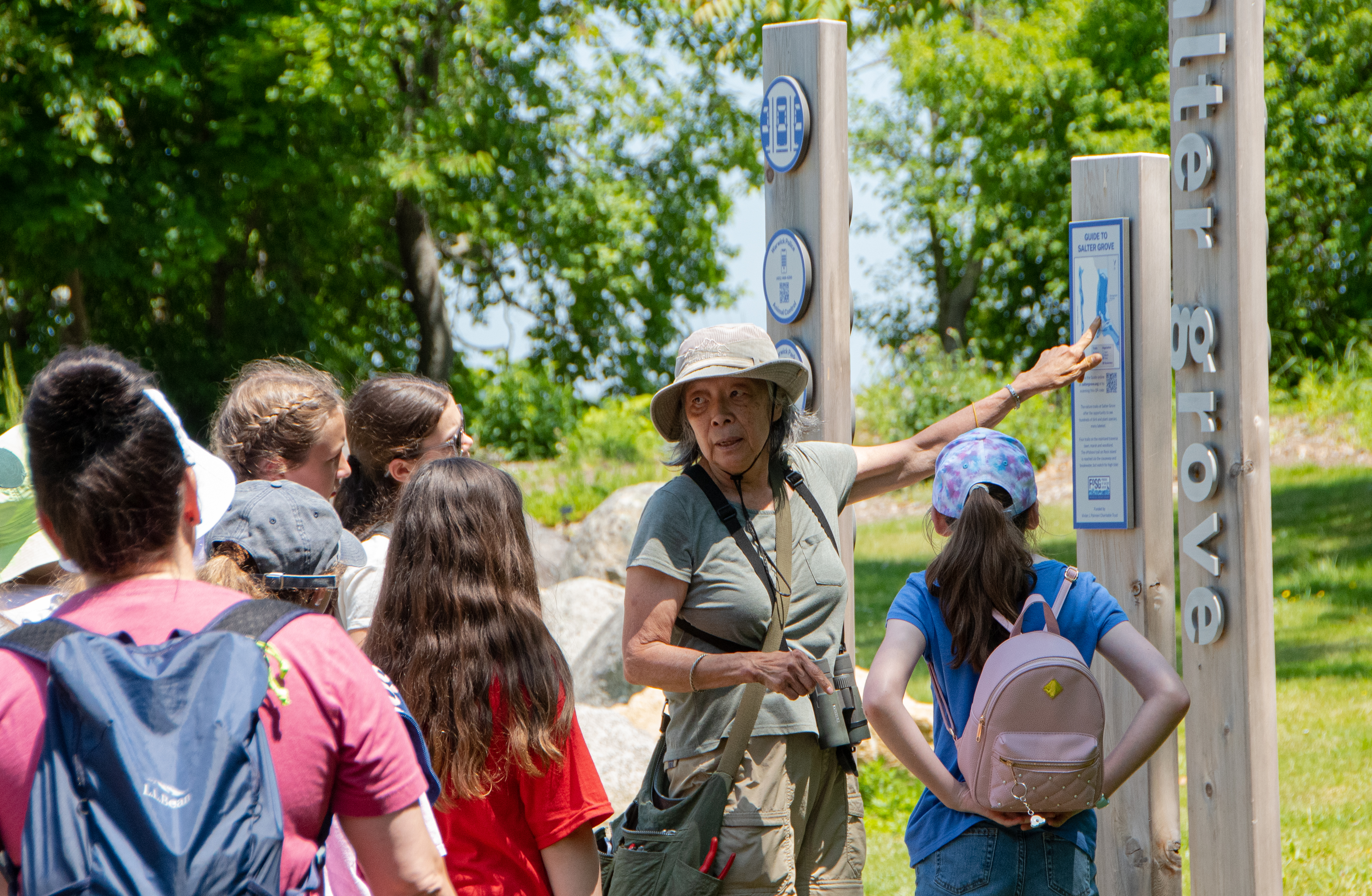
(Photos by FoSG member Jason Major)

To Everything There is a Season

Early on the morning of May 6th, a group of five explorers began an observational journey through the trails of Salter Grove. 

Billy McGovern confers with Anonymous, Stella, Wesley, Gwen, and Michael (L to R, Michael not pictured) about their park exploration. 

The youngsters met at a cozy picnic table along Upland trail. They were shown a series of pictures of the same location at different times of the year. The explorers noted how the features of the pictures changed seasonally.

With the pictures in mind, the explorers next set out to find an interesting location in Salter Grove. Having chosen an appropriate spot, they began the process of documenting the area. Armed with pencils, crayons, and markers they drew their chosen location with great detail.

Back at the picnic table, the explorers displayed great enthusiasm while describing the features in their pictures that they found most interesting.

The explorers will keep their pictures in a safe location for a future adventure. During the summer, they will draw another picture of the same location to see how it has changed over time.

This was the second outing of a program being developed by the Friends of Salter Grove. This program aims to show that outdoor recreation and education with minimum technology is fun.

Like Scandinavian forest schools, the program aims to instill a sense of respect for the environment and the importance of having minimal impact while demonstrating how to use a shared space without impairing others’ enjoyment.

Turn! Turn! Turn! 

Volunteers Help Salter Grove Look its Best for Spring 

The 2023 cleanup season at Salter Grove got off to a strong start on March 18, thanks to a big turnout of volunteers, including many first-timers.

Cold, grey, and windy conditions didn’t diminish the enthusiasm of families and individuals who had signed up for some outdoor activity in anticipation of Spring.

Nearly 30 people worked together to collect 302 pounds of trash and other debris blown in by winter storms.

Organized by Save the Bay, large volunteer groups contribute to the regular efforts of nearby residents to keep up Salter Grove and its surrounding shorelines for the public to enjoy.

Teams come out at least monthly from March to November.

Continue reading →

See Something; Say Something

The number of visitors to Salter Grove has increased greatly after replacing the playground, repairing the causeway, and improving the nature trails. It is wonderful to see so many appreciating our unique park.

A few visitors mistakenly believe that they are entitled to do whatever they want in a public space. But use of public spaces, like parks, is indeed regulated for everyone’s safety and enjoyment.

Regulations applying to all Warwick parks are listed here.

Continue reading →

Natural Learning

Billy in the lead, followed by Benjamin McGovern, Gwen St Laurent, Eva McGovern, and Gwen’s father, Kevin. 

Early on a brisk Saturday morning Billy McGovern led a small group of students through the winding trails of Salter Grove. Their mission was to identify and describe the major parts of a plant. 

During their walk Billy would stop periodically to play “Simon Says” with the students, challenging them to touch a specific part of a nearby plant. By the end, the students were able to identify many parts of the plant and describe their role in the plant’s life. 

This was the inaugural outing of a program being developed by the Friends of Salter Grove. This program aims to show that outdoor recreation and education with minimum technology is fun.

Like Scandinavian forest schools, the program aims to instill a sense of respect for the environment and the importance of having minimal impact while demonstrating how to use a shared space without impairing others’ enjoyment. 

Photos by Jason Major

The Pelican Brief

The visiting American White Pelican towers over a group of Double-crested Cormorants on the southern tip of Rock Island. (Photo by Jason Major)

An American White Pelican was sighted in the vicinity of Rock Island and Passeonkquis Cove on September 25, 2022 and remained through September 29, 2022.

According to available records for Rhode Island, there have been eighteen sightings of this large waterbird since 1946, including one for Warwick in 1996.

With a wingspan up to ten feet and a maximum body weight of 30 pounds—16 being average—this pelican normally breeds in large colonies on lakes in the interior of southern Canada and the northern plains of the western United States. It migrates in large gregarious flocks to winter along the Gulf of Mexico and in Florida.

So how and why did a solitary pelican that’s usually west of the Mississippi stray so far to the northeast? It could have been confused by the intense smoke from forest fires as it left the breeding grounds and was separated from its traveling companions as it flew to the wintering grounds.

Continue reading →