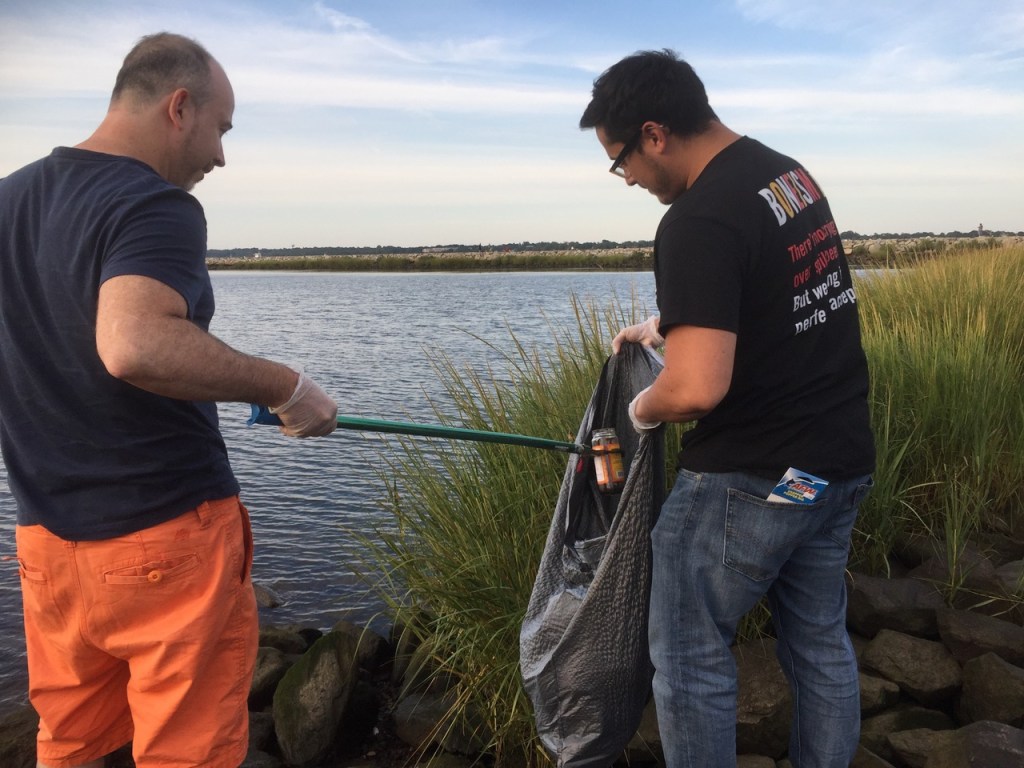
Join the International Coastal Cleanup with Save The Bay! Shoreline trash is unpleasant for visitors and dangerous to wildlife, and shoreline cleanups are a great way for volunteers to make a difference.
We will divide into teams to pick up trash and record what we find. The data will be included in the Ocean Conservancy’s annual report on marine debris.
Sylvan setting of a new play hut at at the sharp, southern bend of the Upland Trail
An engaging play hut has been installed to encourage children to venture onto the nature trails with their guardians and stretch their imaginations. The hut will also support our efforts to develop a children’s outdoor education program.
The open walled construction provides lovely views of the nearby vernal pond and South Cove while allowing guardians to monitor active youngsters.
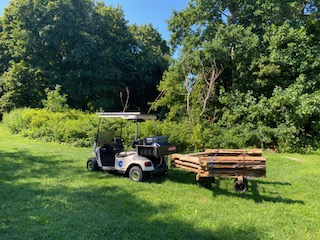
Steps in hut construction and installation
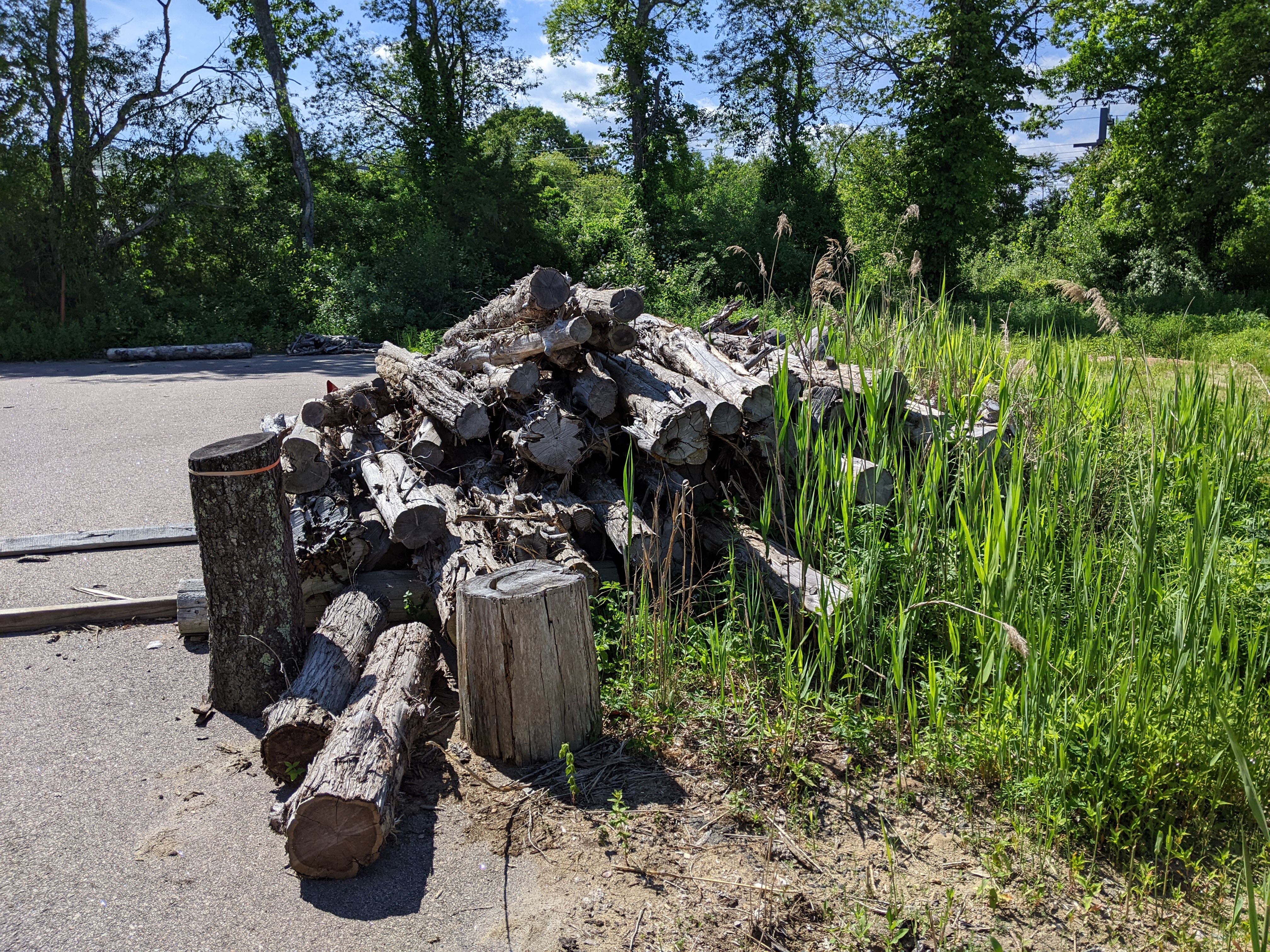
Cedar logs were milled into thick planks that were bolted together as modules, which were then transported by electric cart to the installation site with minimal environmental impact.
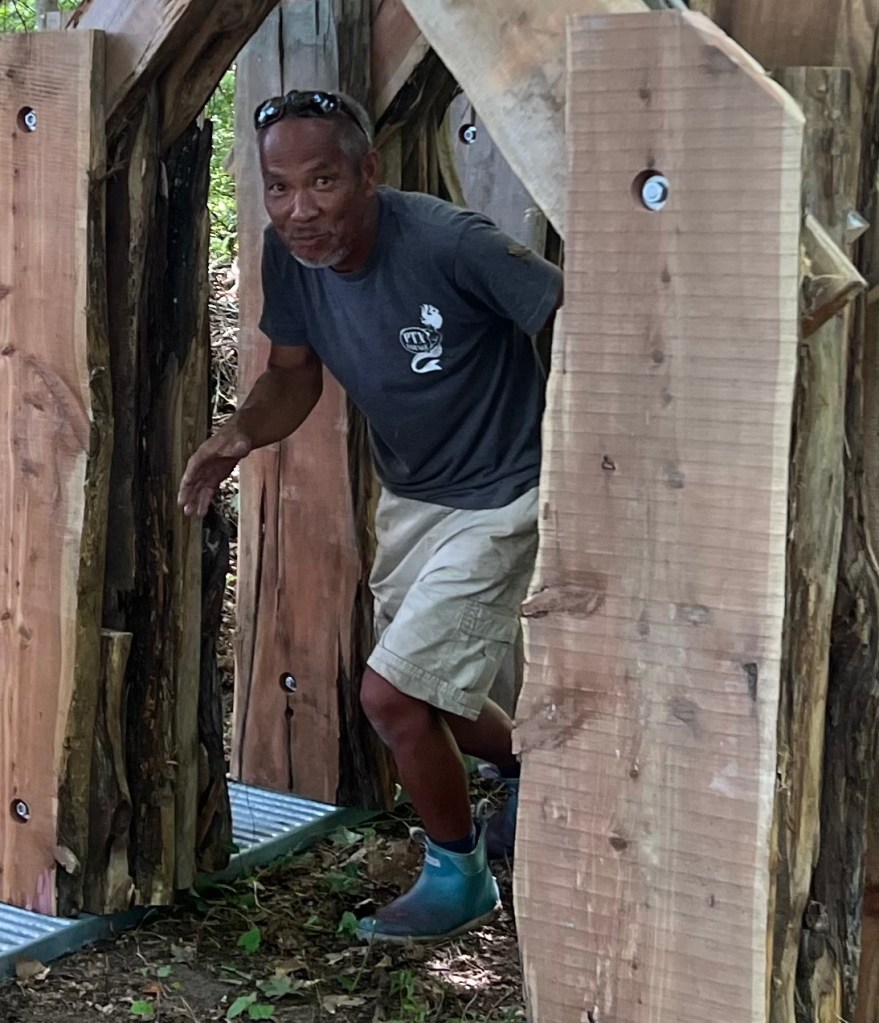
Fabricator Don Nguyen during module assembly
We are grateful to the City of Warwick for supporting this project, the VJ Palmieri Charitable Trust for a grant to cover the project cost of $8,800, David Goss for arranging purchase and milling of the cedar poles by Jim Lawson, Steve Douglas for providing storage for the cedar planks, and Don Nguyen for fabricating and installing the hut.
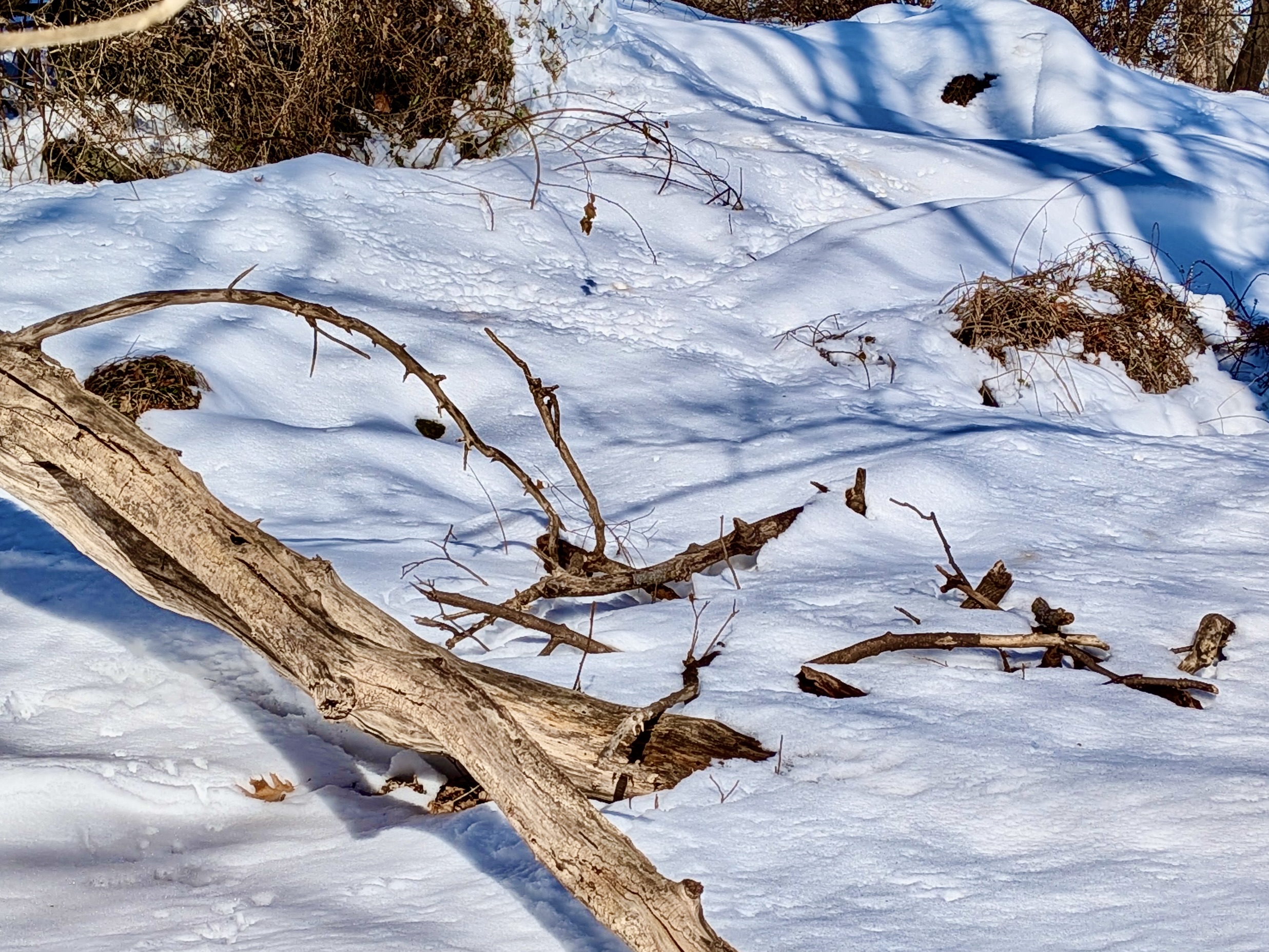
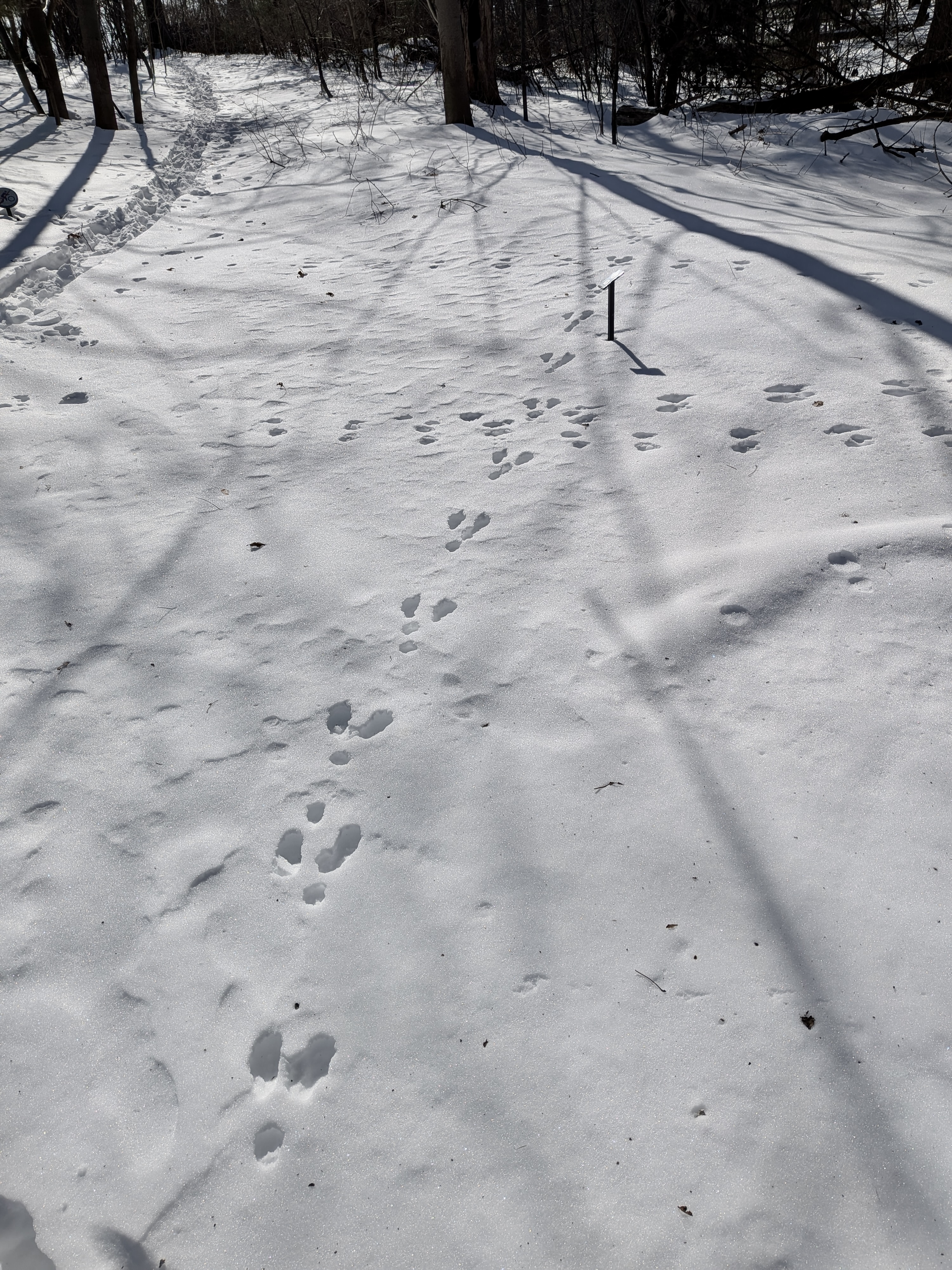
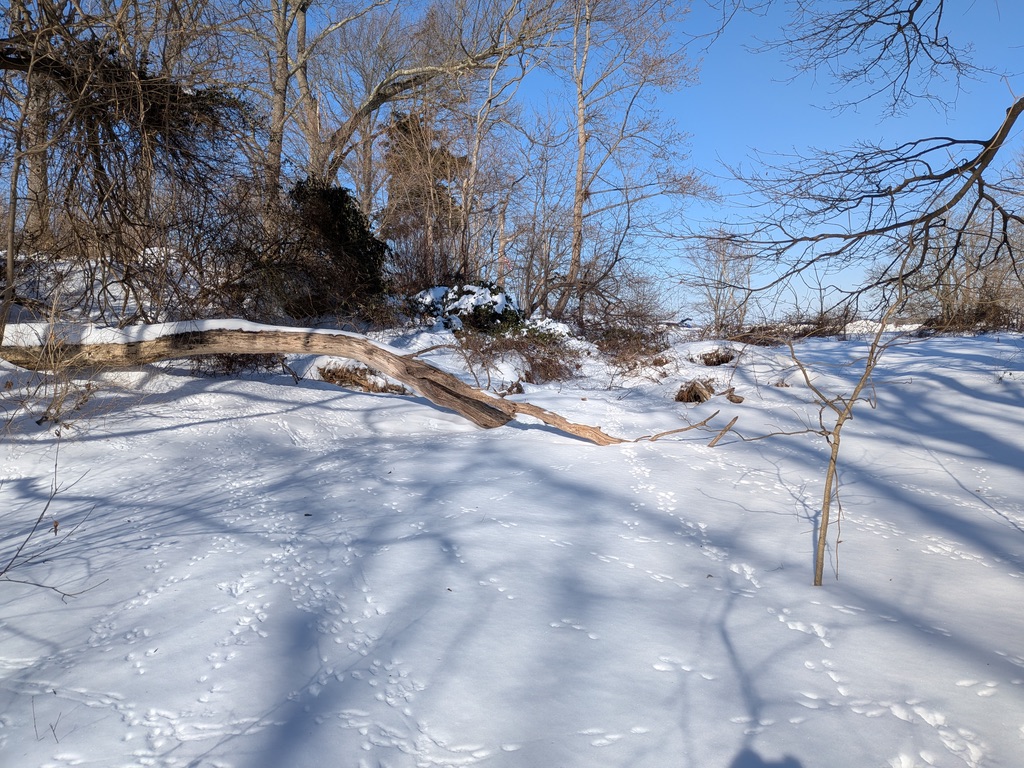
While the park was under a thick cover of snow during February 2026, certain brush piles were surrounded by abundant tracks of the Eastern Cottontail.
Abundant tracks of the Eastern Cottontail
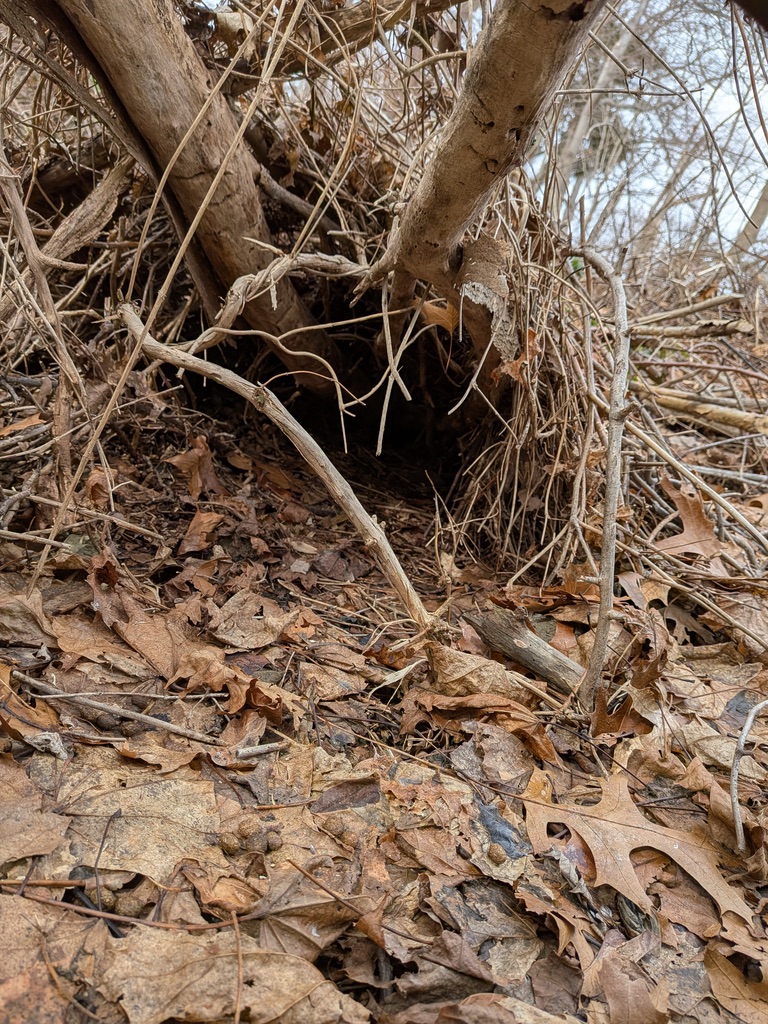
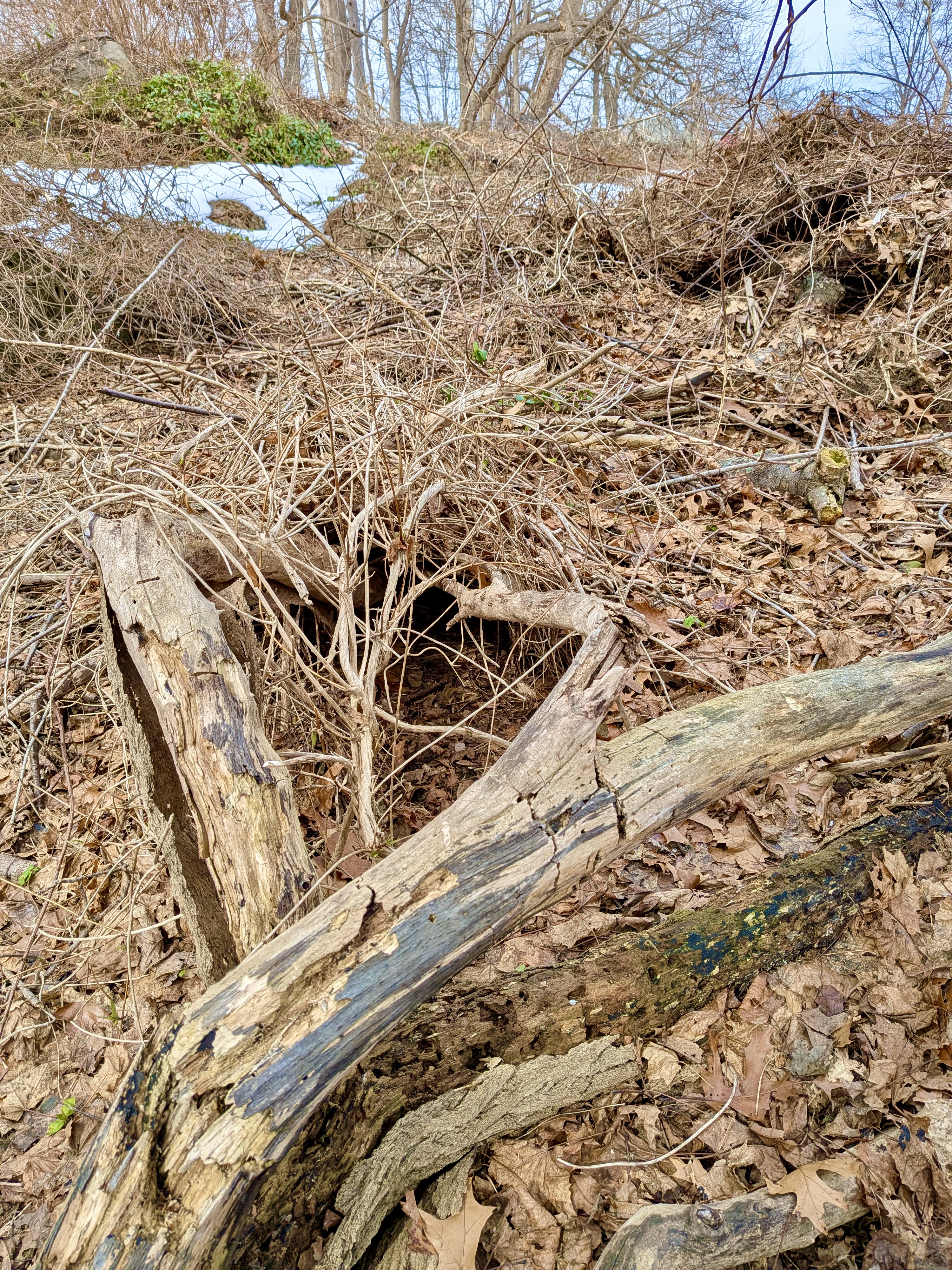
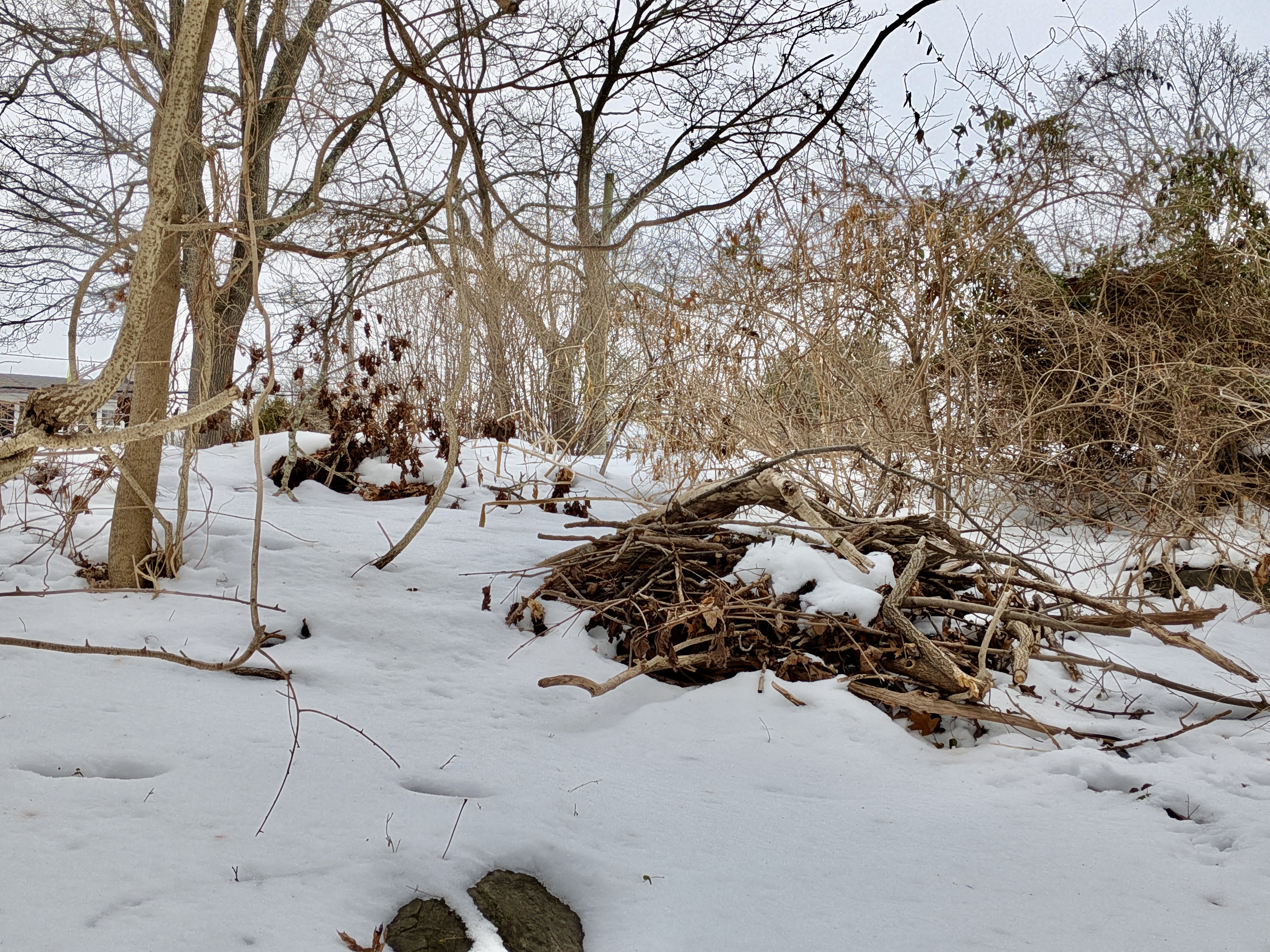
Once the snow had melted, the appearance of well-worn entrance holes in these brush piles proved that they were used as shelters during a period of extreme cold.
Entry holes were excavated from around logs
The location of where entrance holes were excavated and their relationship to the overall matrix of the popular brush piles suggest that a good one must include different kinds of plant material in alternate layers. A loosely interwoven network of woody stems of different diameters is important to form a sturdy dome-like shape that holds grassy material, herbaceous vines, and leaf litter for thermal insulation.
Brush piles that are well-built can last several years since component materials can be added over time. Such stable locations would provide save havens for wildlife from predators as well.
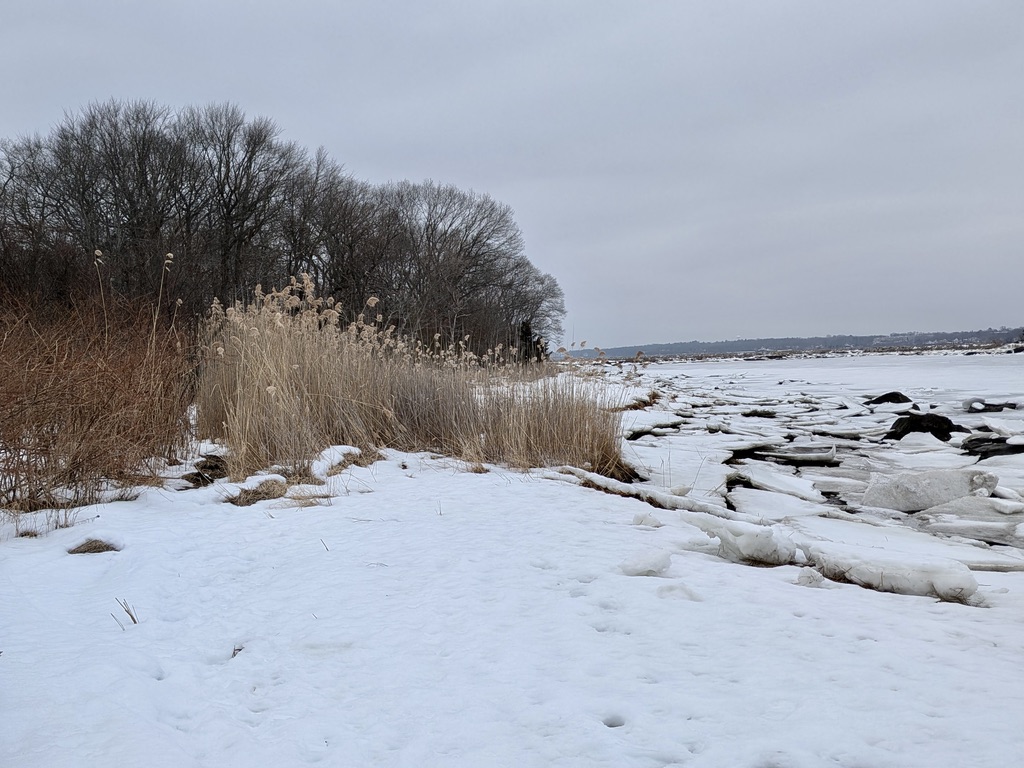
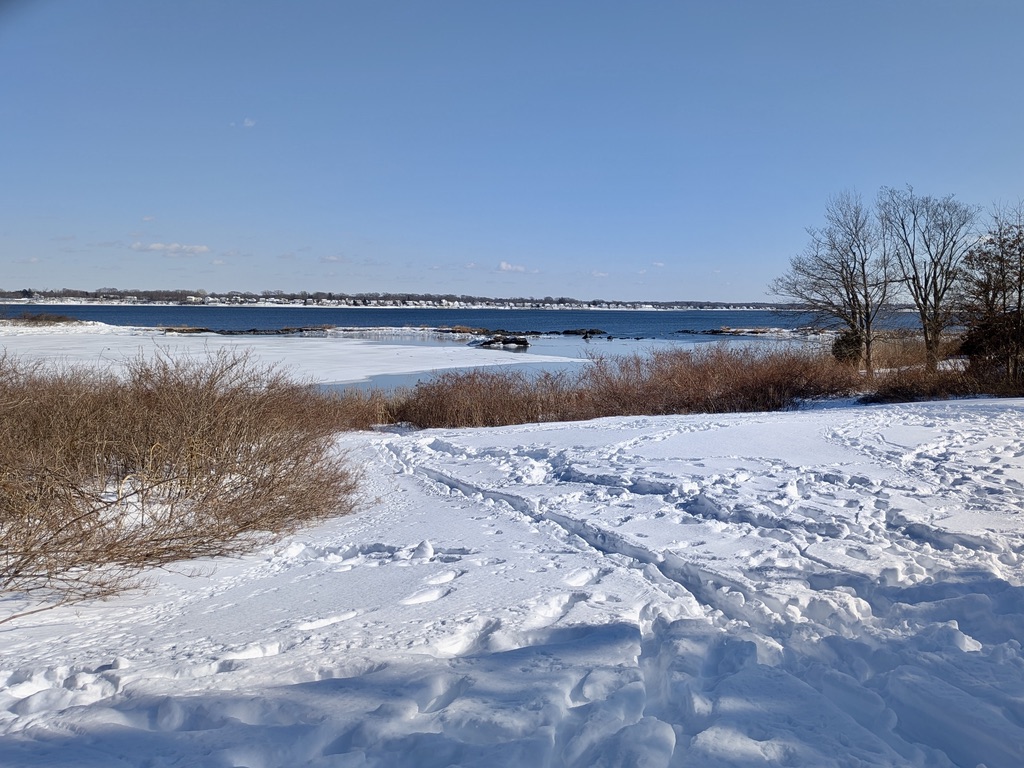
The snow accumulation and persistent low temperatures this winter have provided visuals of Salter Grove not possible in recent winters.
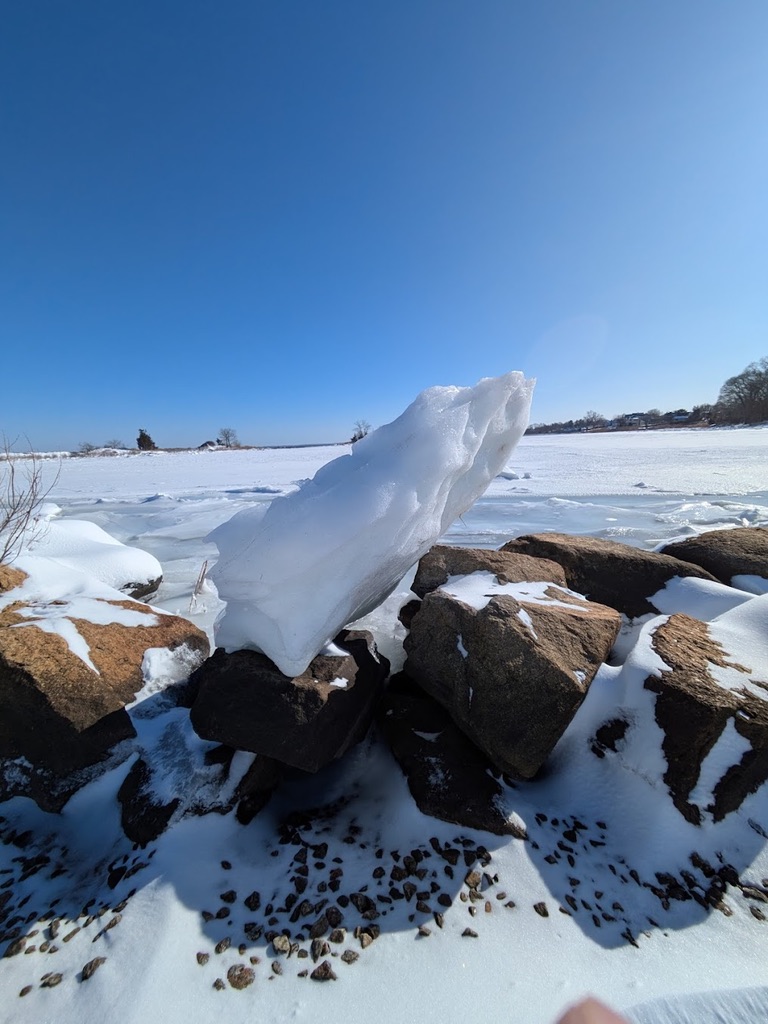
As of January 29th, 2026, the entire park was under at least a foot of snow except for the plowed area in the parking lot. Persistent low temperatures formed ice floes in both North and South Coves. Tidal movement then heaved large plates of ice on top of rocks and along the shore.
Ice fragment left by high tide on causeway rock. Photo by Andrew Chin
Northward from south end of Marsh Trail, where plates of ice press against shore. Photo by M. Wong
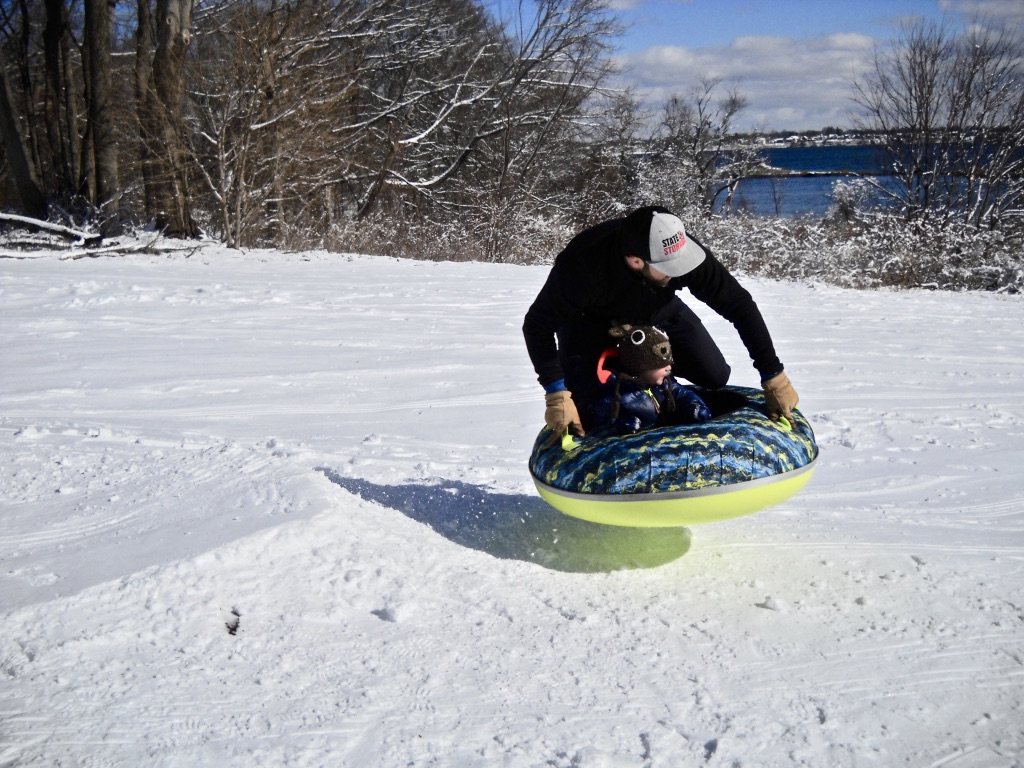
Of course, sledders took advantage of snow-covered Audubon Hill, long a neighborhood winter favorite. Hikers and cross-country skiers were out as well.
Flying down Audubon, February 2021Audubon Hill, February 2026
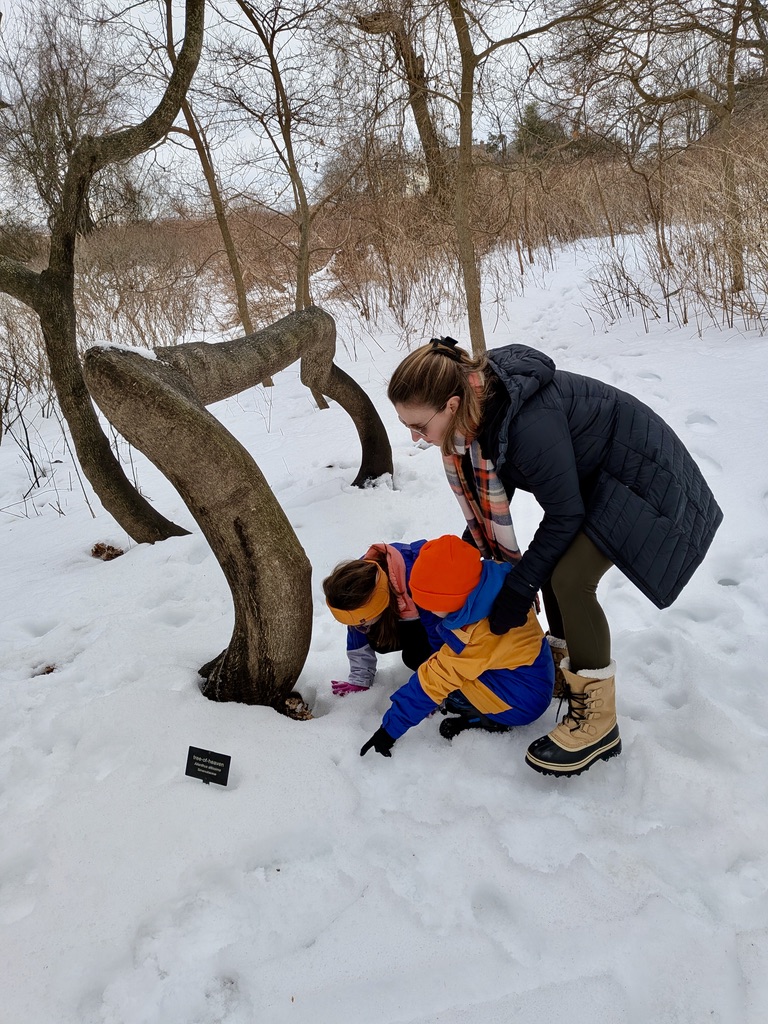
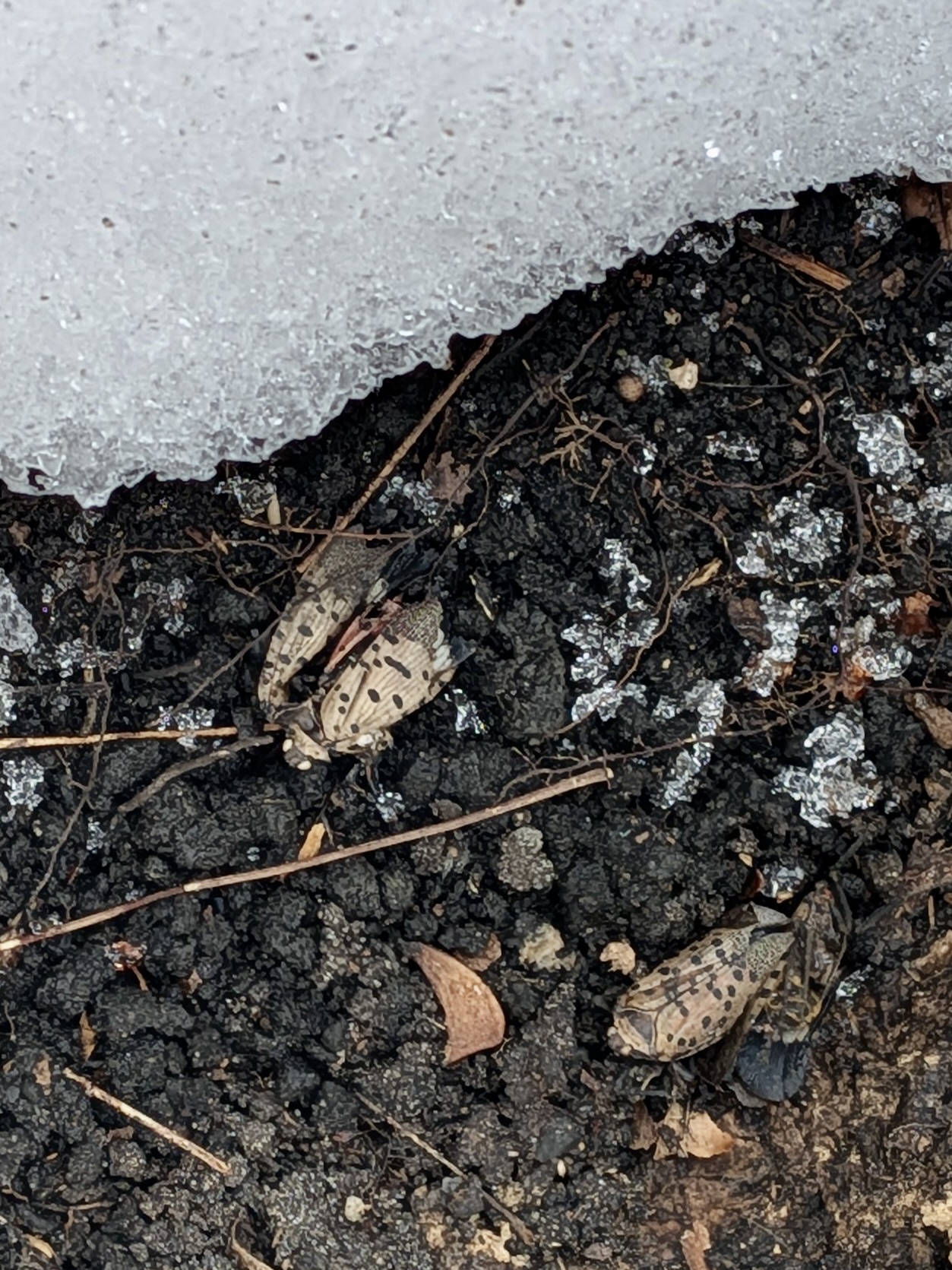
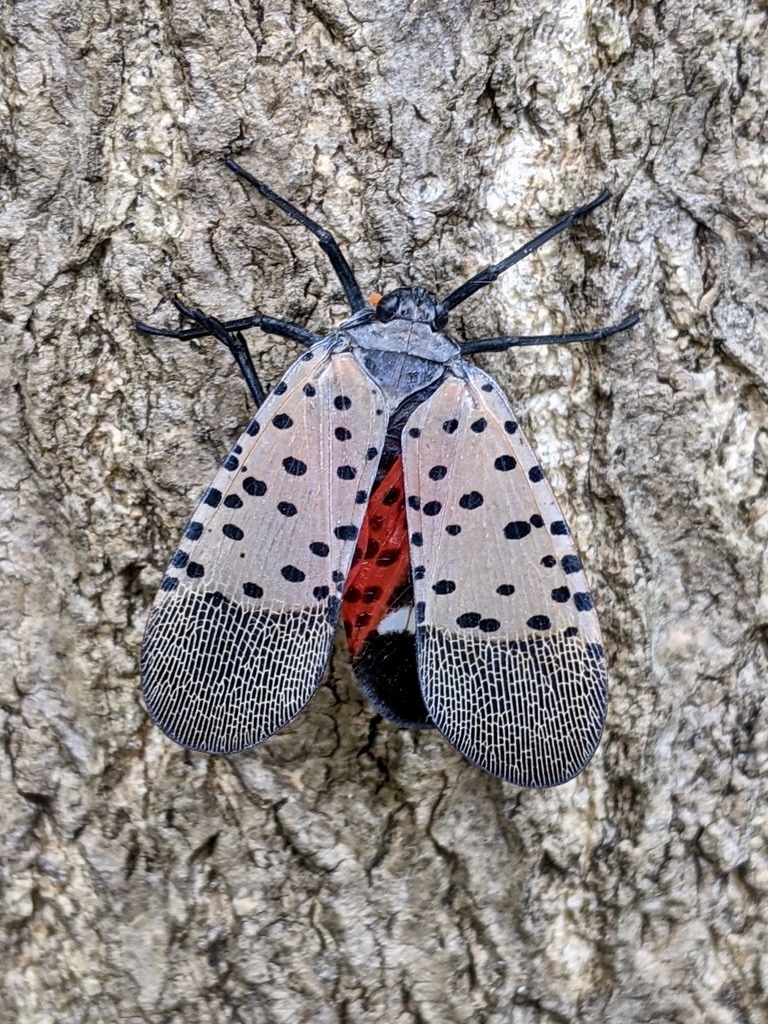
One family was admiring the tree-of-heaven along Audubon Trail only to discover traces of the Spotted Lanternfly at the base of the geometric trunk. There was a heavy infestation during the fall of 2025.
Julie Maas and son Ben looking at what daughter Nora discovered
Spotted Lanternfly, February 2026Lanternfly in September 2025
Before the snows came, Nature Trail volunteers constructed a number of brush piles using debris from the wind storm of July 3rd, 2025. The thick snow cover provided an opportunity to “track” visitation rate and structural effectiveness of these new wildlife shelters.
Brush pile constructed with debris from windstorm of July 3rd, 2025
Tracks of Eastern Cottontail trace movement after snowfall
Oldest and largest brush pile constructed in 2020 attracts most traffic
Photos by Marina Wong except where otherwise noted.
Visitors to Salter Grove often comment on the pleasant and clean appearance of the park with its well maintained and litter-free trails. So who’s responsible?
Carolyn Hardie and Andy Lohmeier
Thanks to Carolyn Hardie, who has contributed over 1000 hours of her valuable free time since March 2020 as a volunteer to help manage the vegetation. Here’s what she has to say about her experience:
“Volunteering to help restore, improve and nurture the various habitats at Salter Grove is an enjoyable and rewarding experience. Preserving a very special space for visitors while gaining valuable knowledge, getting outside and getting exercise is an ideal combination. Connecting with like-minded volunteers is definitely an added benefit!”
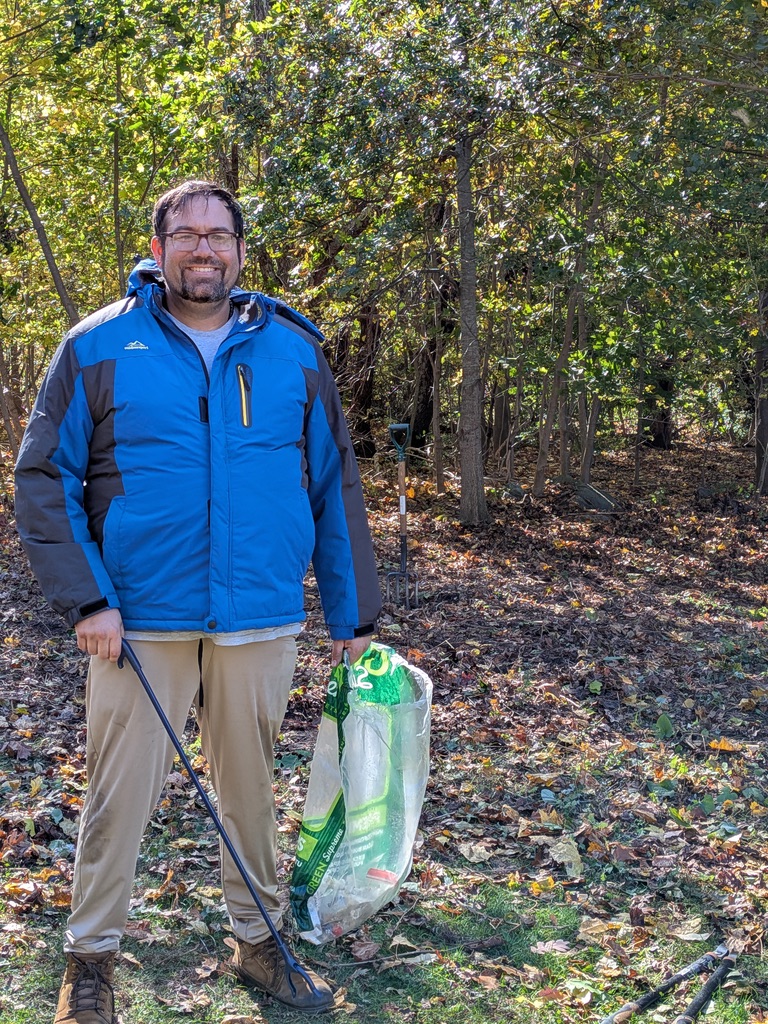
Thanks also to Andy Lohmeier, who has been the FOSG liaison with STB in all cleanup matters since May 2019. He has led and trained many volunteers and was named as Save the By Volunteer of the Month in May 2025. Here are his thoughts:
“Volunteering at Save The Bay is a way to meet neighbors who see the importance of taking care of beaches and shoreline for future generations to enjoy,” said Andrew. “Everyone to some extent contributes to the waste that flows to the Bay, but by doing cleanups, we can help control the problem and protect wildlife.”
It appears self-organized individuals have also been picking up trash in between cleanups. We don’t know all of them but can now thank at least one individual by name.
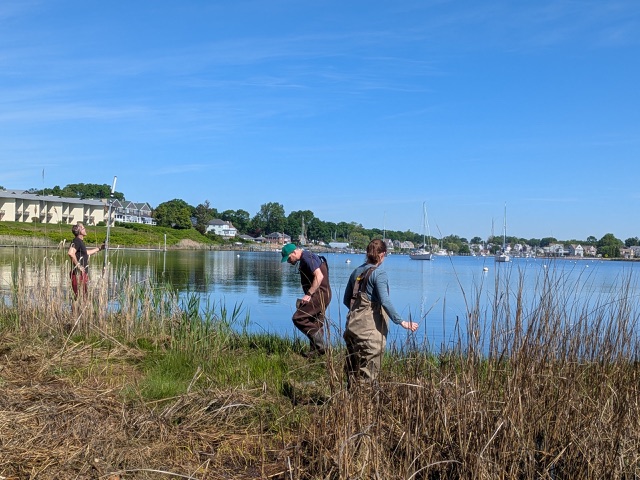
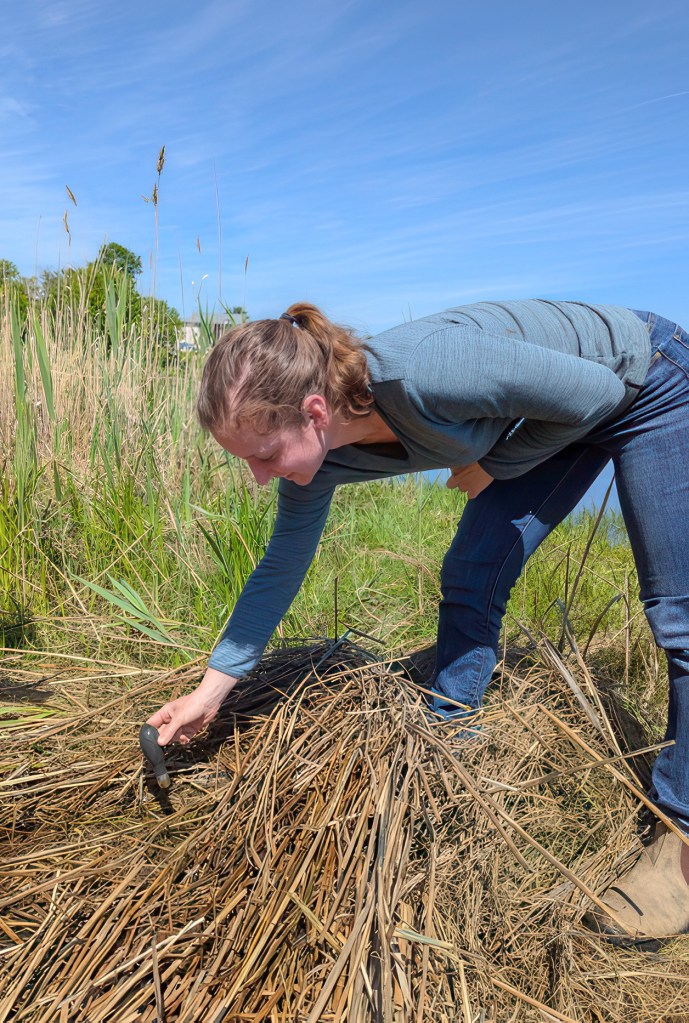
After scanning the perimeter of North Cove, the search narrowed in on the Phragmites marsh.
Prof. Brian Prendergast saw that the satellite tag on a striped bass he was tracking had detached and was floating near Salter Grove. He contacted FoSG for support in locating the tag so we reached out to members and collaborators.
Brian Prendergast smiles as his detector indicates the satellite tag is nearby.
After recovery, the tag was passed to Scott Bennett, Program Manager of the Striped Bass Initiative who had joined the search from the Marine Biological Laboratory. He will download the data so the striped bass’s migration track can be traced. A very interesting discovery of this research is that at least some of the older fish hole up in coastal ponds during the summer where they conserve energy by remaining relatively inactive. This confirms the reports of fishers that the same fish show up annually.