While the park was under a thick cover of snow during February 2026, certain brush piles were surrounded by abundant tracks of the Eastern Cottontail.
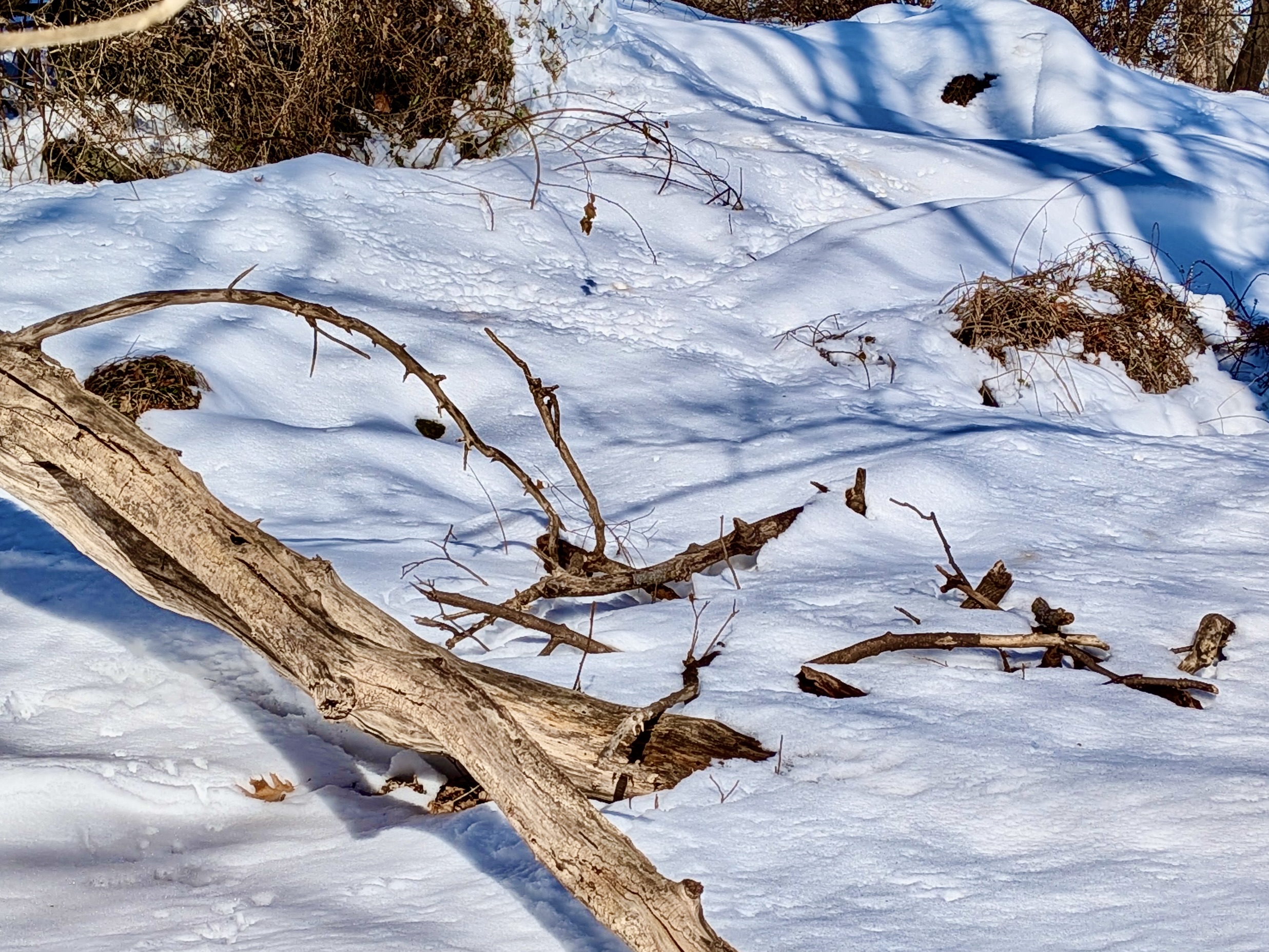
Abundant tracks of the Eastern Cottontail
Once the snow had melted, the appearance of well-worn entrance holes in these brush piles proved that they were used as shelters during a period of extreme cold.
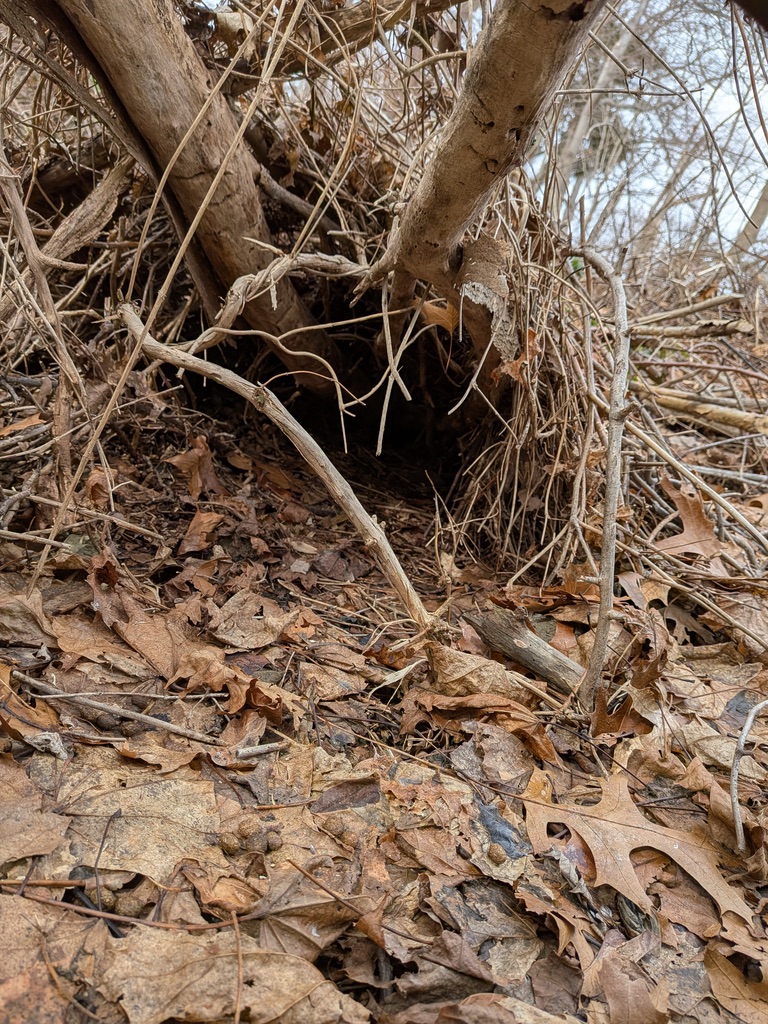
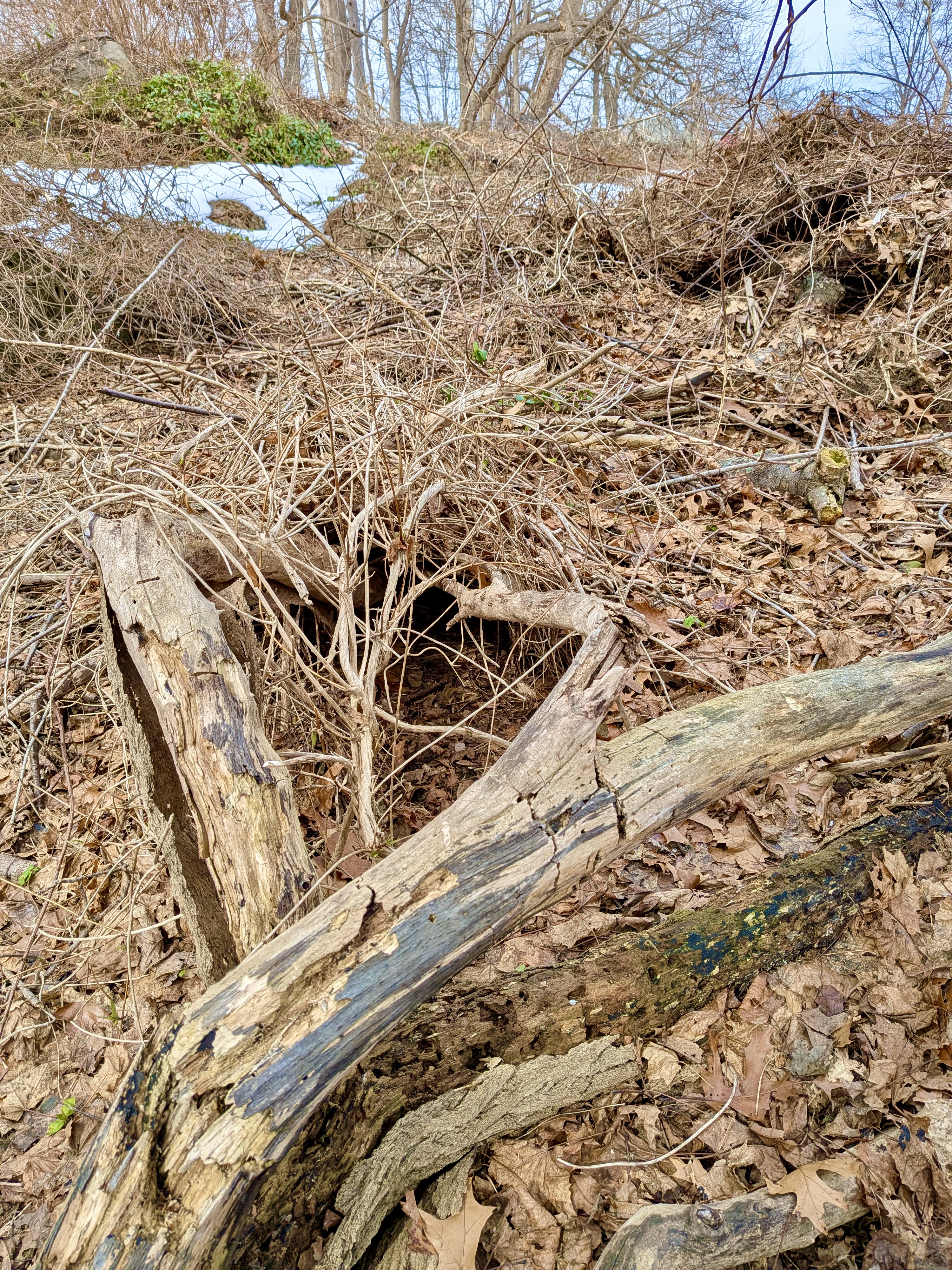
Entry holes were excavated from around logs
The location of where entrance holes were excavated and their relationship to the overall matrix of the popular brush piles suggest that a good one must include different kinds of plant material in alternate layers. A loosely interwoven network of woody stems of different diameters is important to form a sturdy dome-like shape that holds grassy material, herbaceous vines, and leaf litter for thermal insulation.
Brush piles that are well-built can last several years since component materials can be added over time. Such stable locations would provide save havens for wildlife from predators as well.
The snow cover in February also revealed which brush piles were ineffective as thermal shelters. Those dense with thick woody stems, but lacking sufficient insulation, were devoid of animal tracks.
After the snow melted in mid-March, a relatively large Virginia Opossum was found frozen at the base of a large Norway maple along Audubon Trail, in an area of the park lacking well-insulated brush piles. It was huddled in a curve of the trunk. Its fur was matted down like the thin layer of leaf litter it was lying on.
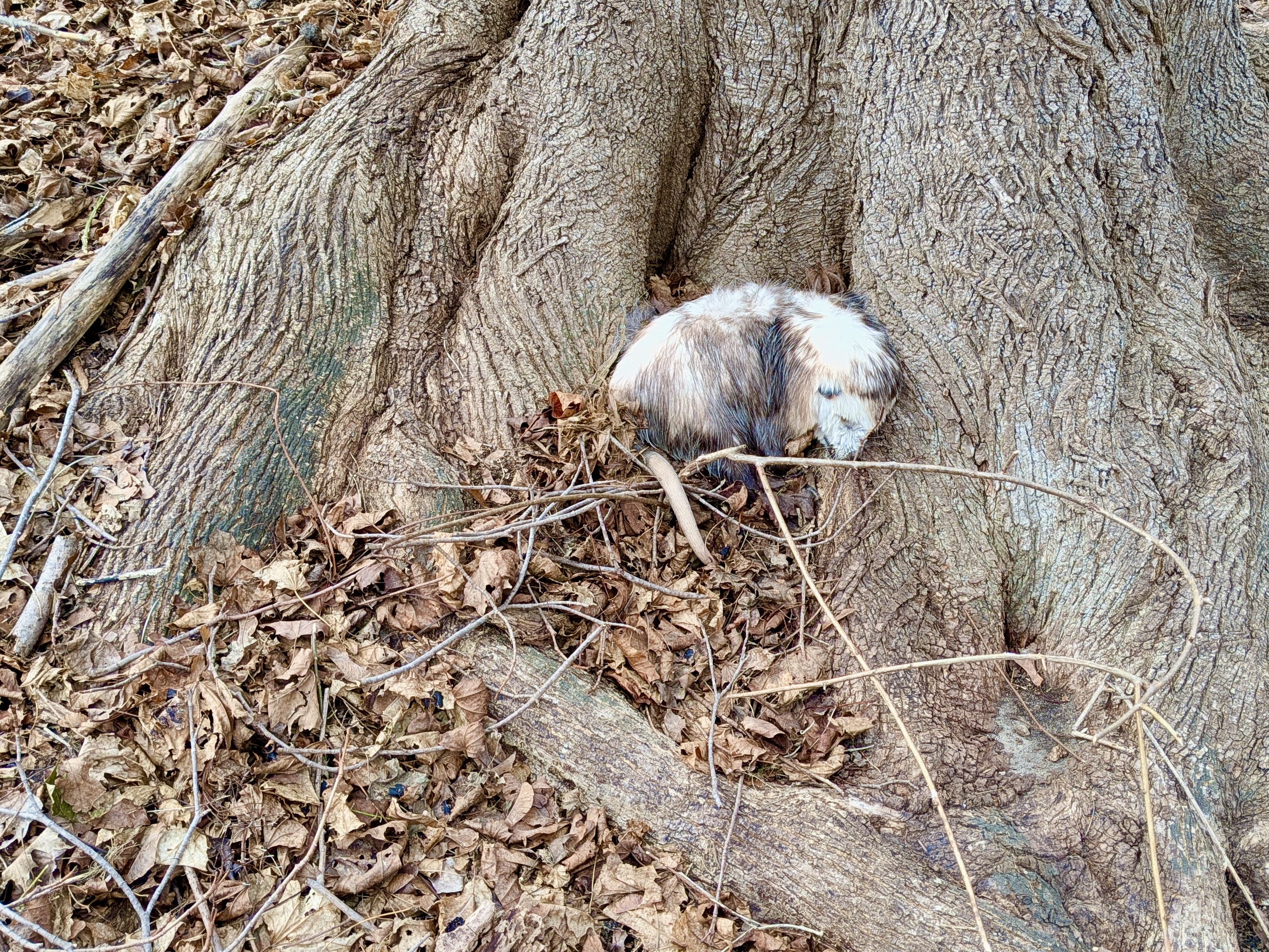
Found frozen, 13 March 2026. First record in park, 3 September 2022
The Virginia Opossum is not adapted for cold weather but has been able to expand into the Northeast from its historical southern range because of the warming climate. The cold and snow in February no doubt was a challenge even for native mammal species like the Eastern Cottontail—if not for the brush piles!
 Friends of Salter Grove