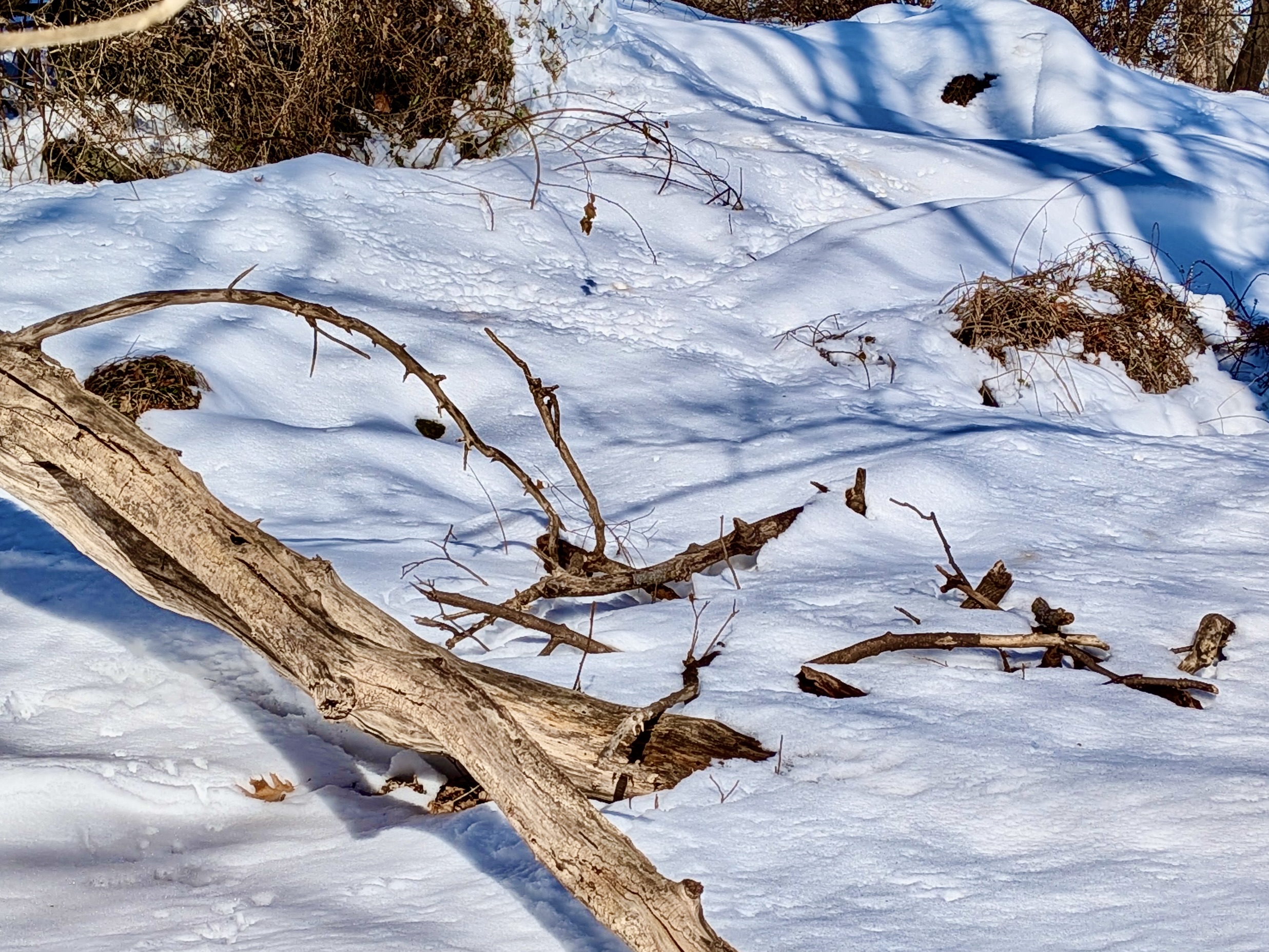
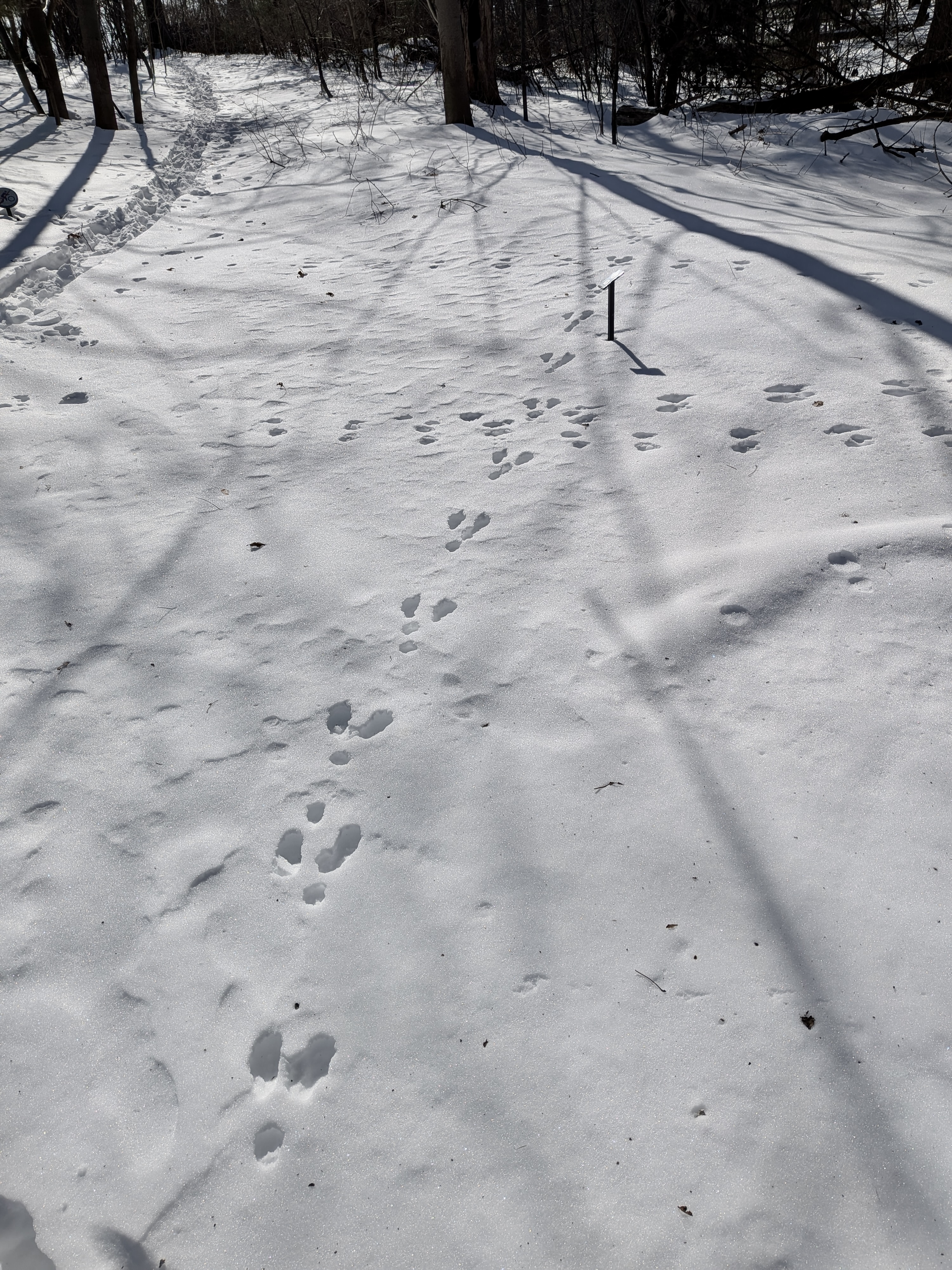
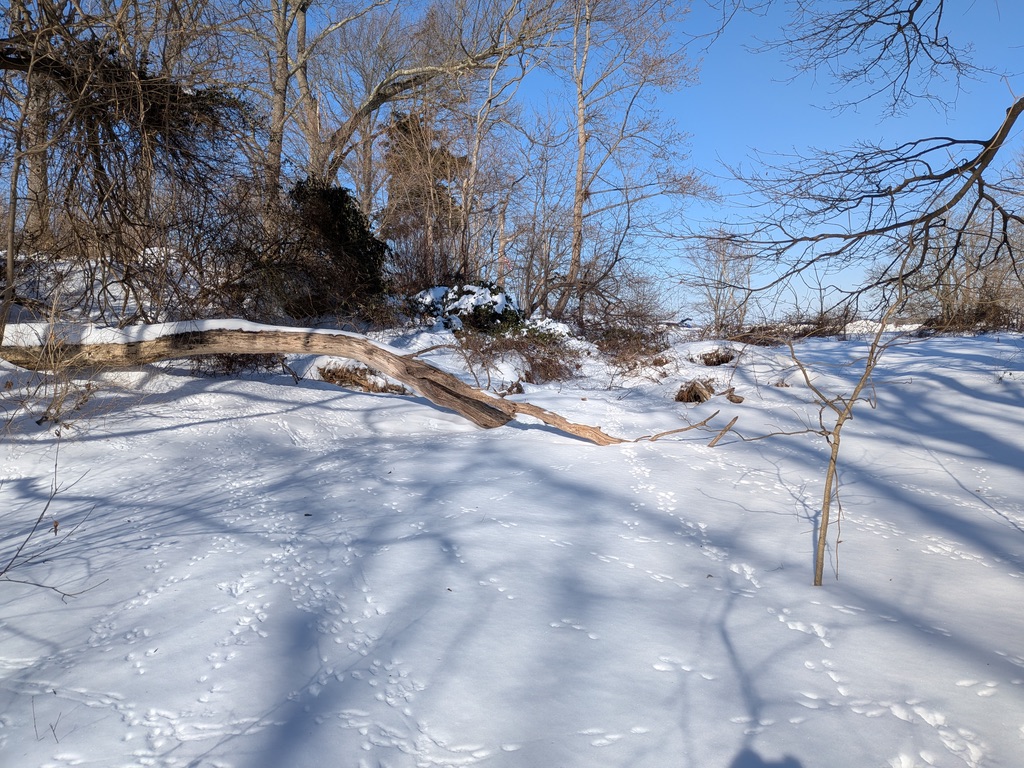
While the park was under a thick cover of snow during February 2026, certain brush piles were surrounded by abundant tracks of the Eastern Cottontail.
Abundant tracks of the Eastern Cottontail
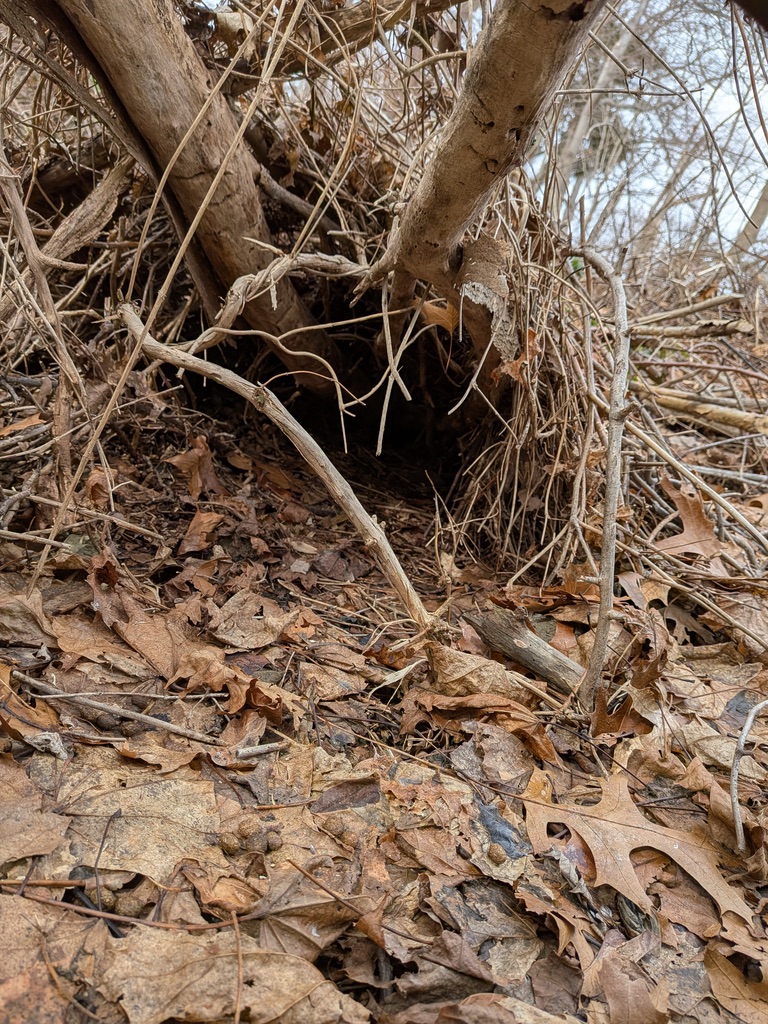
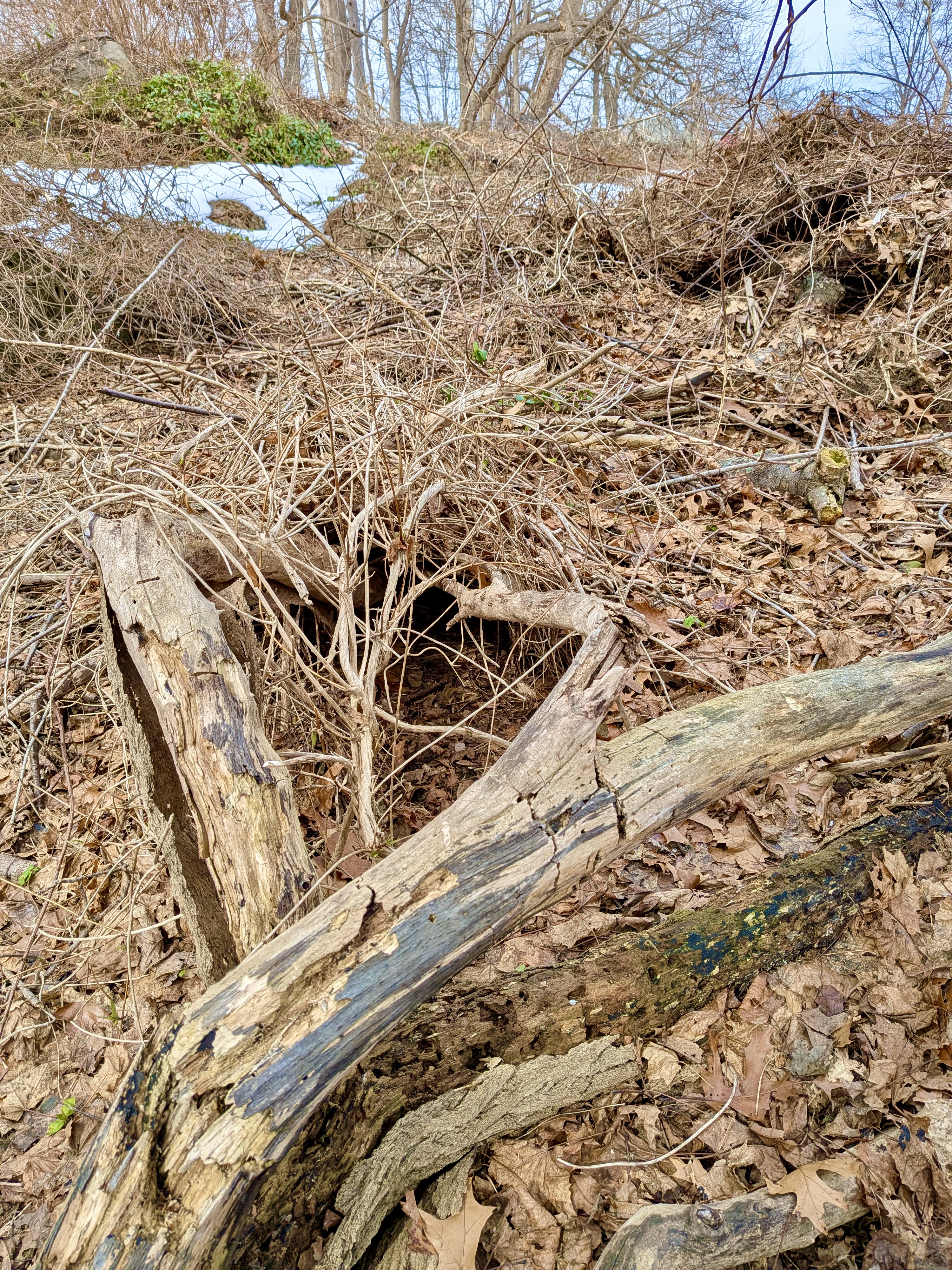
Once the snow had melted, the appearance of well-worn entrance holes in these brush piles proved that they were used as shelters during a period of extreme cold.
Entry holes were excavated from around logs
The location of where entrance holes were excavated and their relationship to the overall matrix of the popular brush piles suggest that a good one must include different kinds of plant material in alternate layers. A loosely interwoven network of woody stems of different diameters is important to form a sturdy dome-like shape that holds grassy material, herbaceous vines, and leaf litter for thermal insulation.
Brush piles that are well-built can last several years since component materials can be added over time. Such stable locations would provide save havens for wildlife from predators as well.
The snow accumulation and persistent low temperatures this winter have provided visuals of Salter Grove not possible in recent winters.
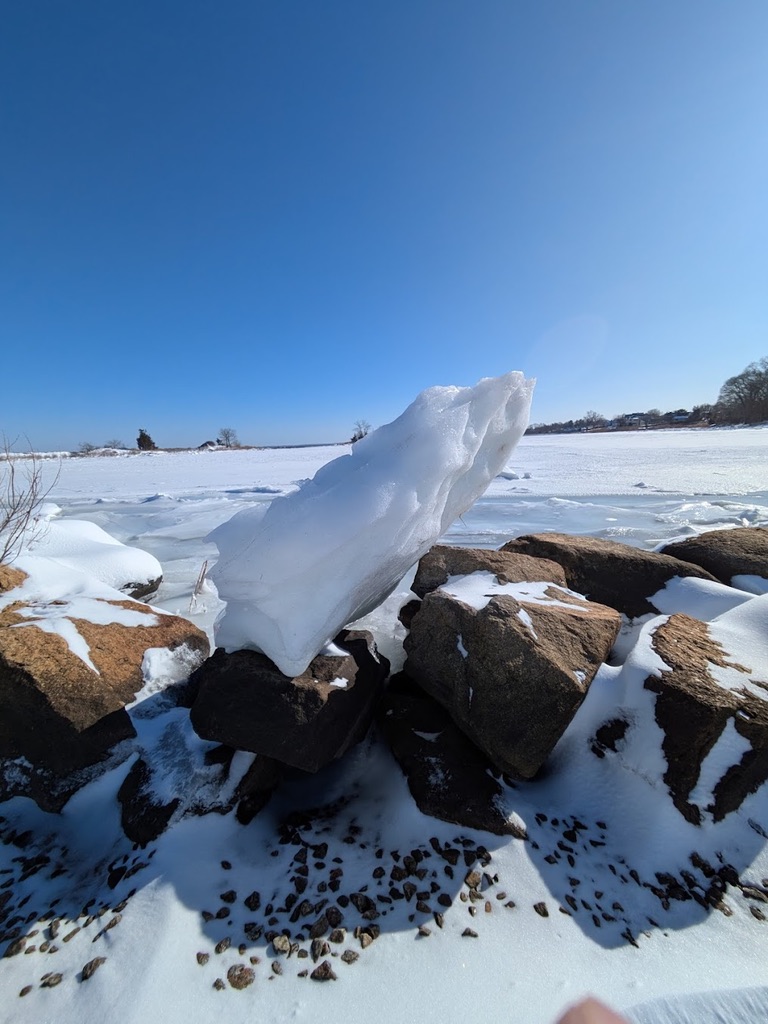
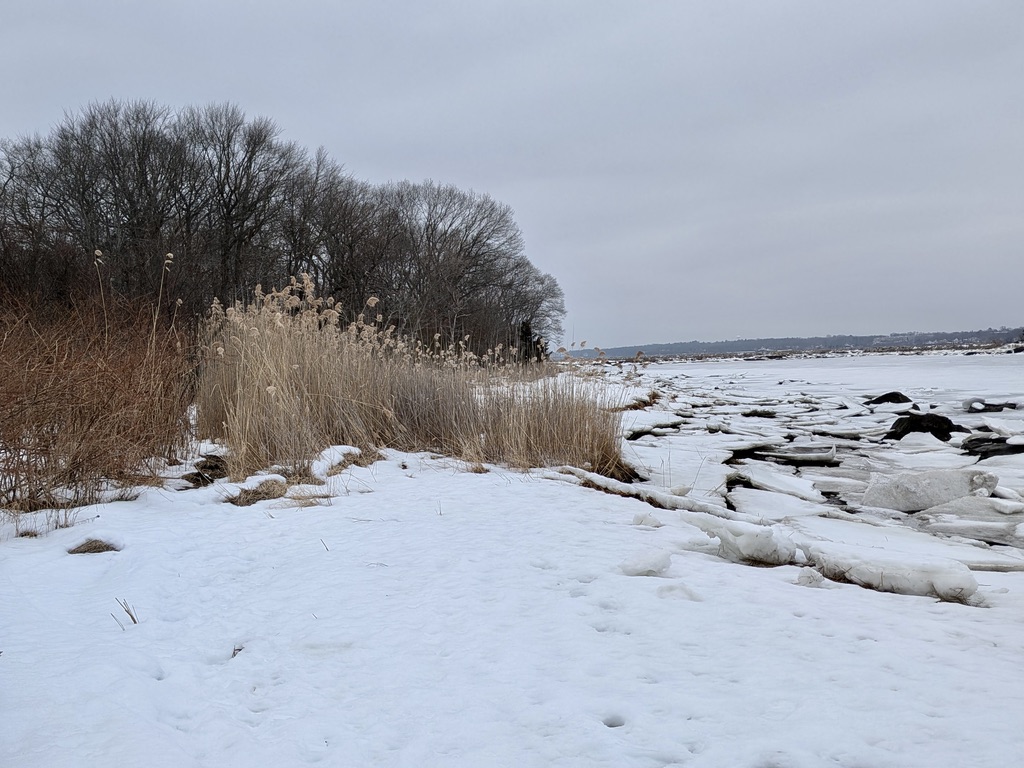
As of January 29th, 2026, the entire park was under at least a foot of snow except for the plowed area in the parking lot. Persistent low temperatures formed ice floes in both North and South Coves. Tidal movement then heaved large plates of ice on top of rocks and along the shore.
Ice fragment left by high tide on causeway rock. Photo by Andrew Chin
Northward from south end of Marsh Trail, where plates of ice press against shore. Photo by M. Wong
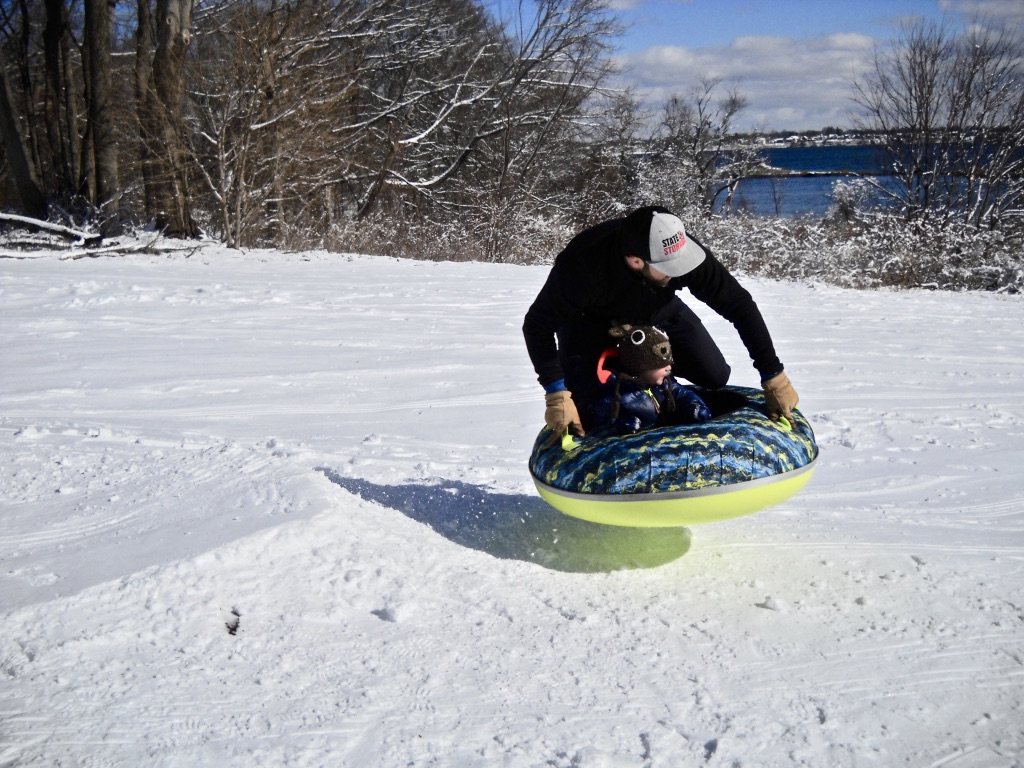
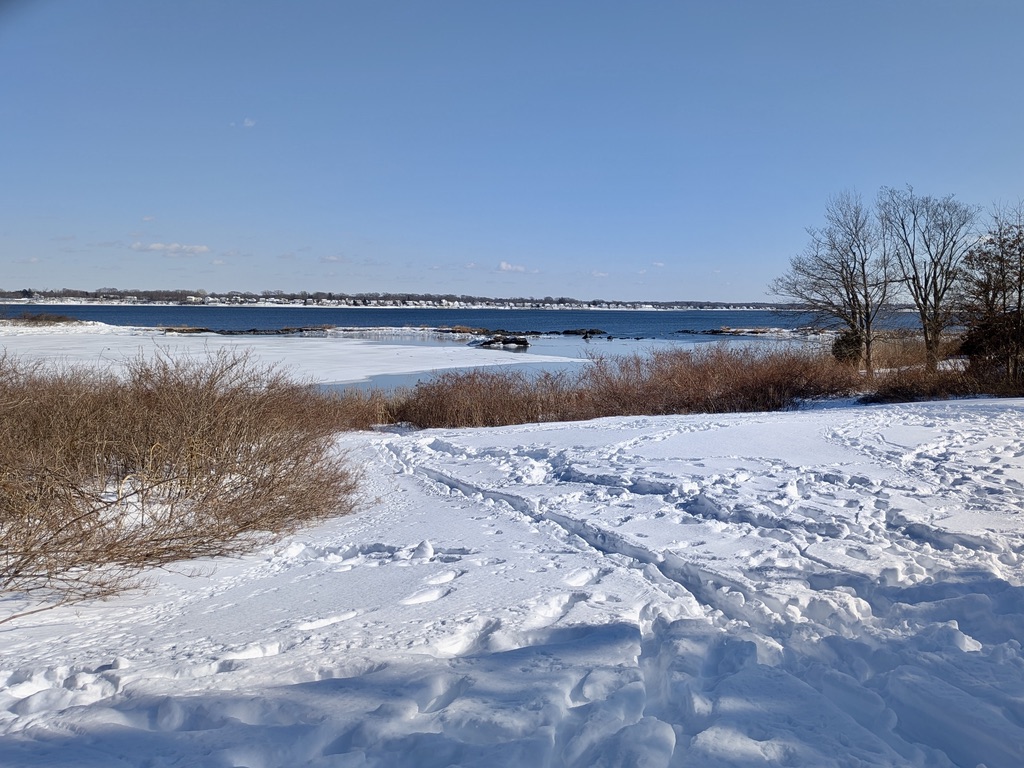
Of course, sledders took advantage of snow-covered Audubon Hill, long a neighborhood winter favorite. Hikers and cross-country skiers were out as well.
Flying down Audubon, February 2021Audubon Hill, February 2026
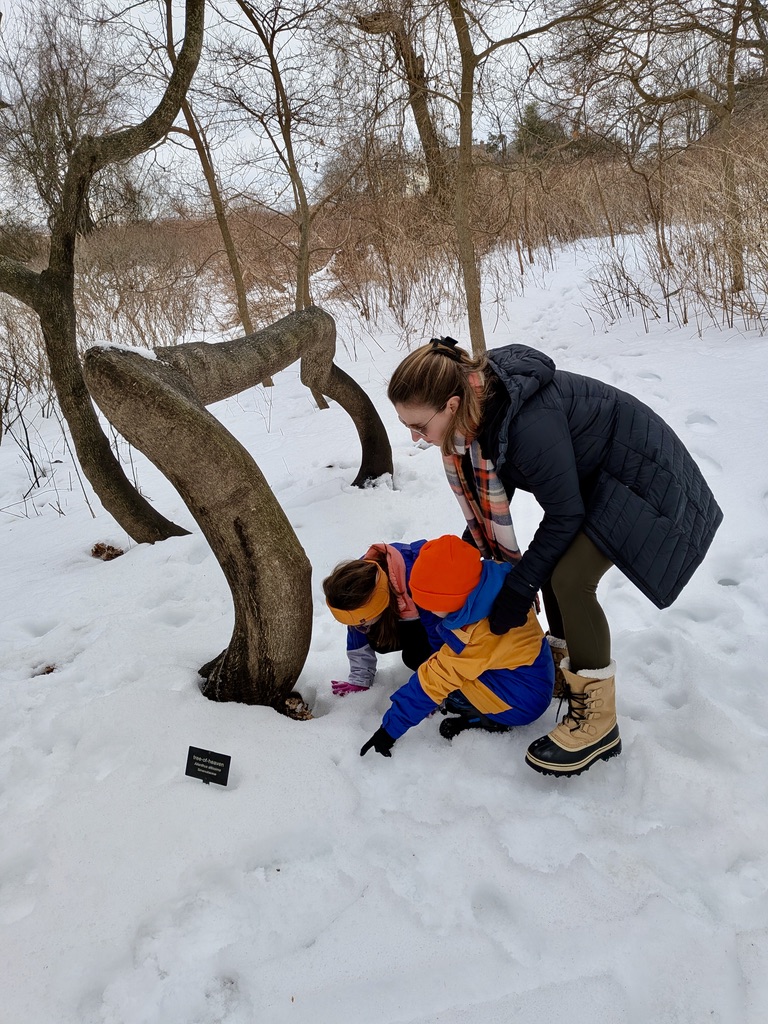
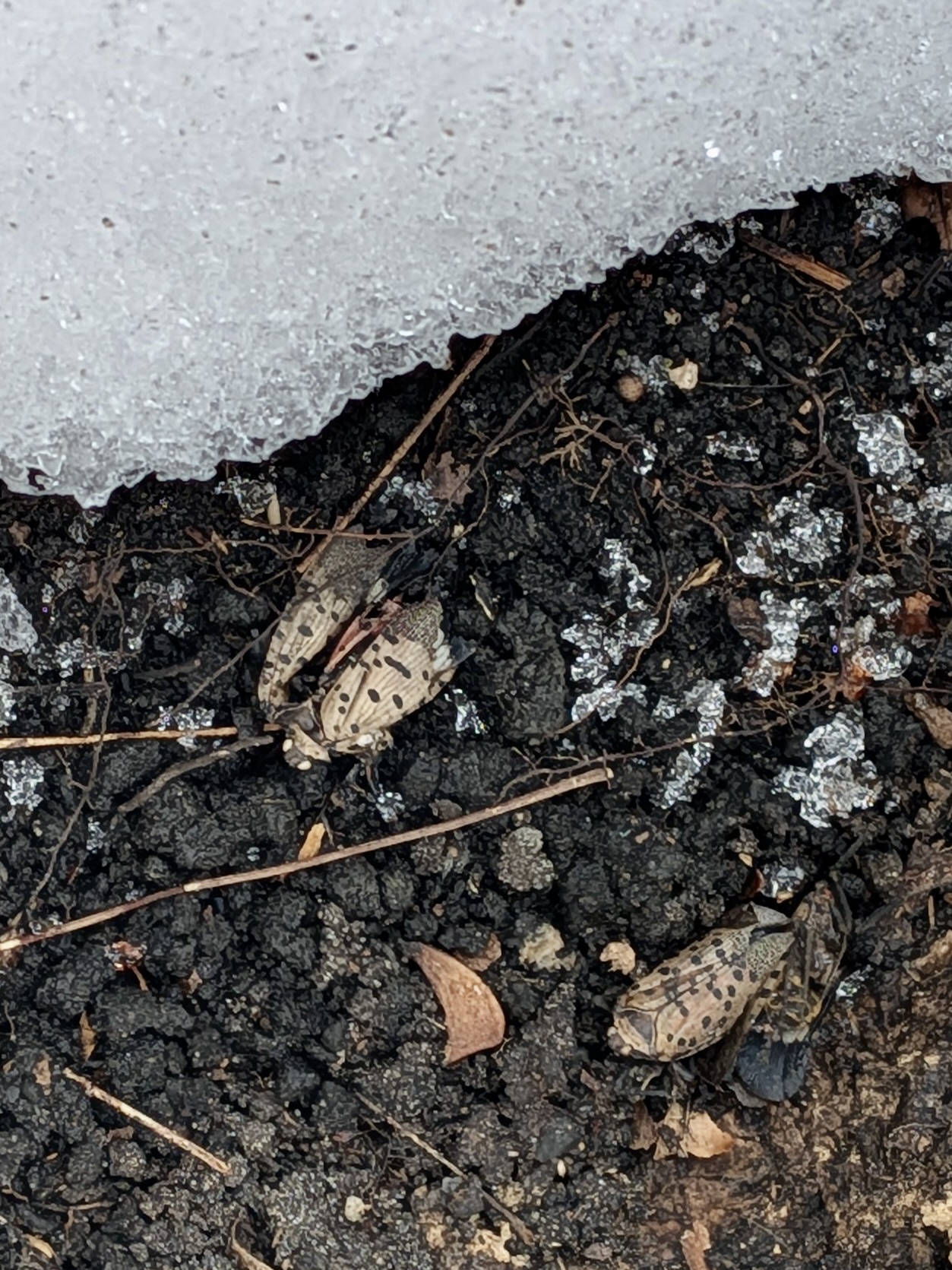
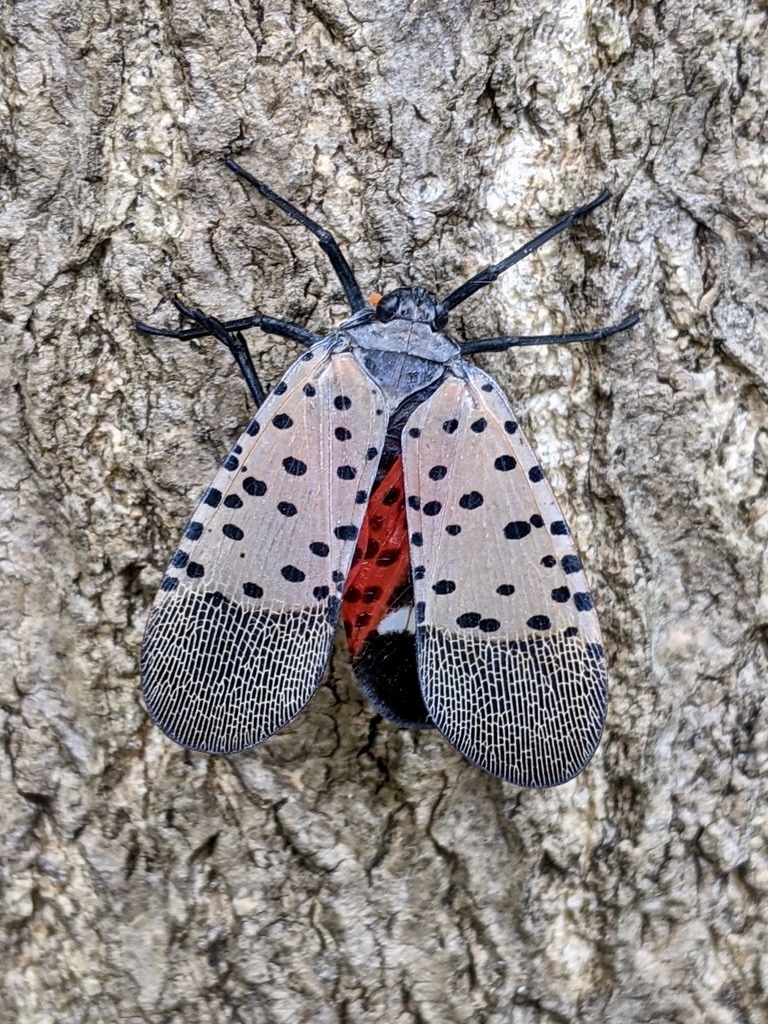
One family was admiring the tree-of-heaven along Audubon Trail only to discover traces of the Spotted Lanternfly at the base of the geometric trunk. There was a heavy infestation during the fall of 2025.
Julie Maas and son Ben looking at what daughter Nora discovered
Spotted Lanternfly, February 2026Lanternfly in September 2025
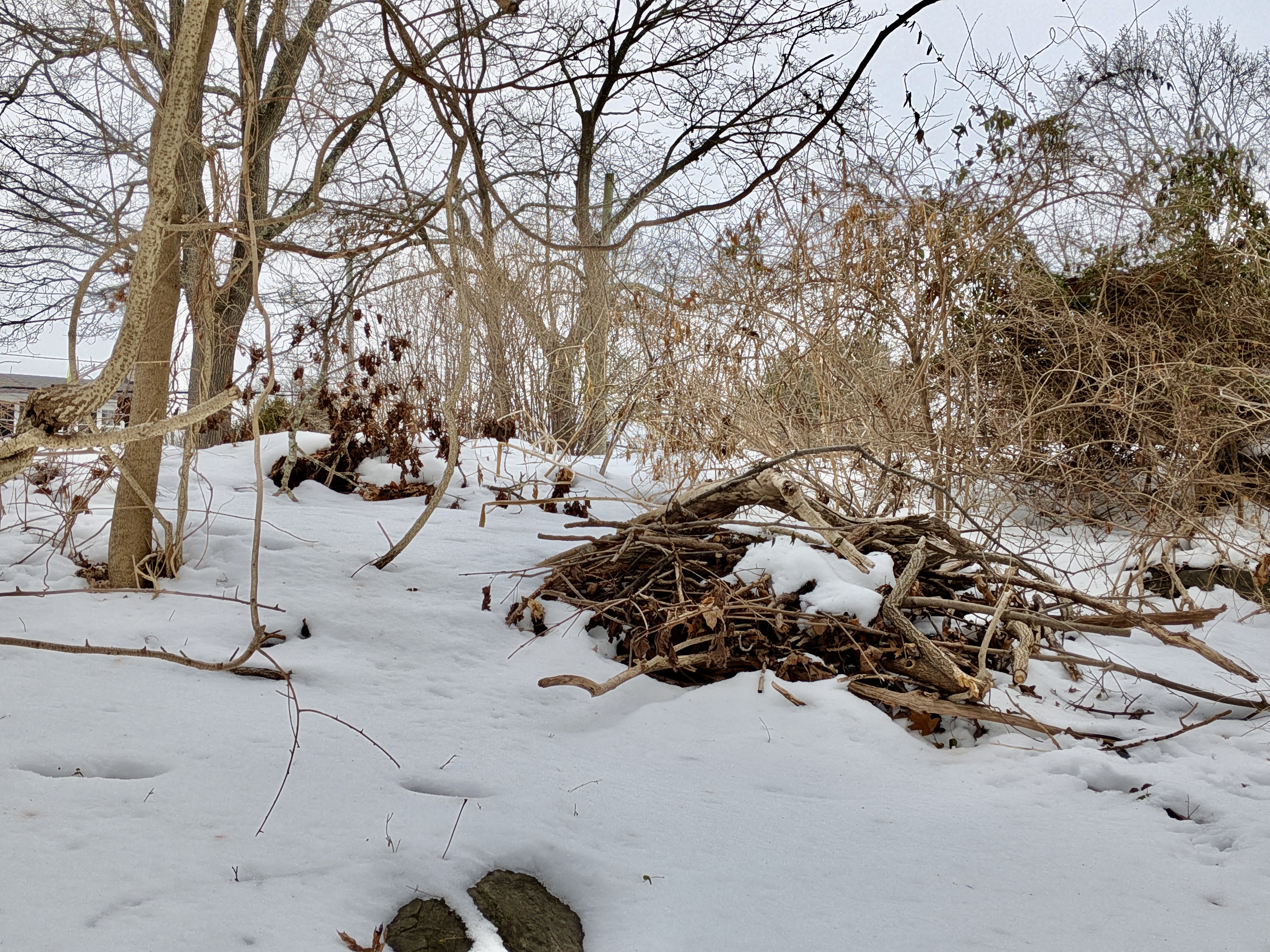
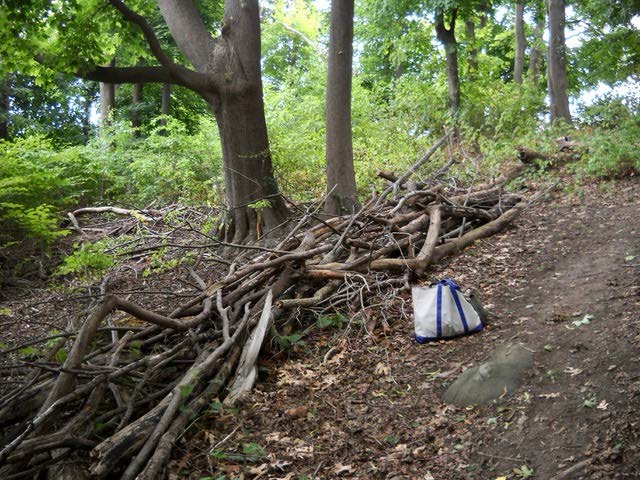
Before the snows came, Nature Trail volunteers constructed a number of brush piles using debris from the wind storm of July 3rd, 2025. The thick snow cover provided an opportunity to “track” visitation rate and structural effectiveness of these new wildlife shelters.
Brush pile constructed with debris from windstorm of July 3rd, 2025
Tracks of Eastern Cottontail trace movement after snowfall
Oldest and largest brush pile constructed in 2020 attracts most traffic
Photos by Marina Wong except where otherwise noted.
Visitors to Salter Grove often comment on the pleasant and clean appearance of the park with its well maintained and litter-free trails. So who’s responsible?
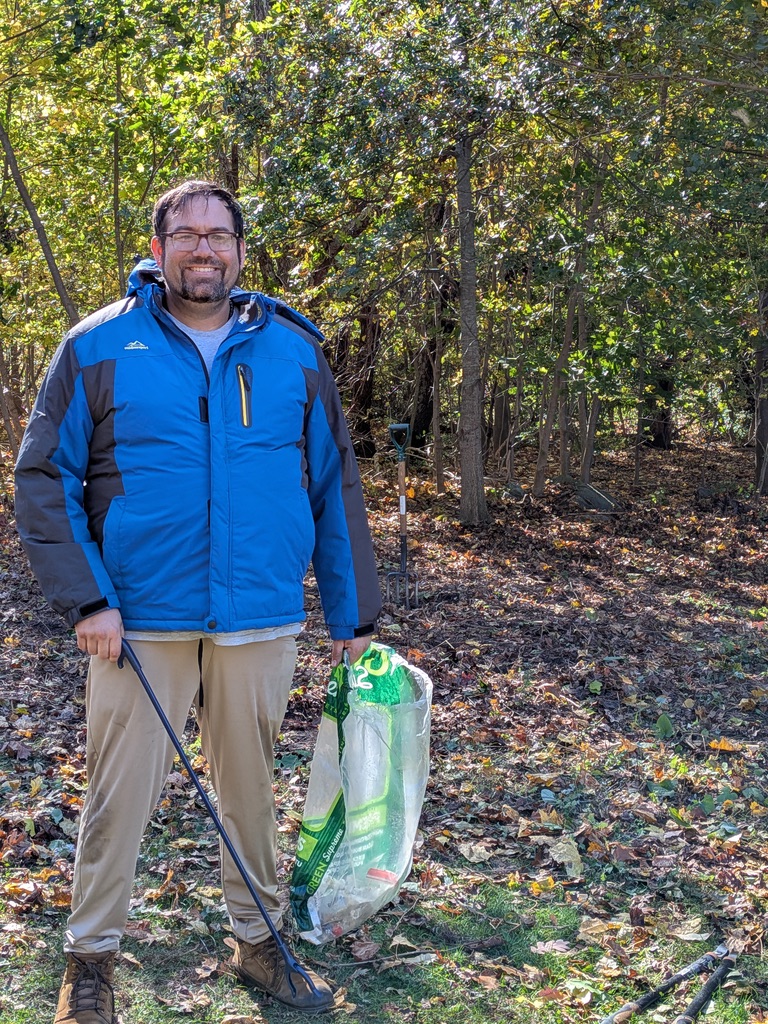
Carolyn Hardie and Andy Lohmeier
Thanks to Carolyn Hardie, who has contributed over 1000 hours of her valuable free time since March 2020 as a volunteer to help manage the vegetation. Here’s what she has to say about her experience:
“Volunteering to help restore, improve and nurture the various habitats at Salter Grove is an enjoyable and rewarding experience. Preserving a very special space for visitors while gaining valuable knowledge, getting outside and getting exercise is an ideal combination. Connecting with like-minded volunteers is definitely an added benefit!”
Thanks also to Andy Lohmeier, who has been the FOSG liaison with STB in all cleanup matters since May 2019. He has led and trained many volunteers and was named as Save the By Volunteer of the Month in May 2025. Here are his thoughts:
“Volunteering at Save The Bay is a way to meet neighbors who see the importance of taking care of beaches and shoreline for future generations to enjoy,” said Andrew. “Everyone to some extent contributes to the waste that flows to the Bay, but by doing cleanups, we can help control the problem and protect wildlife.”
It appears self-organized individuals have also been picking up trash in between cleanups. We don’t know all of them but can now thank at least one individual by name.
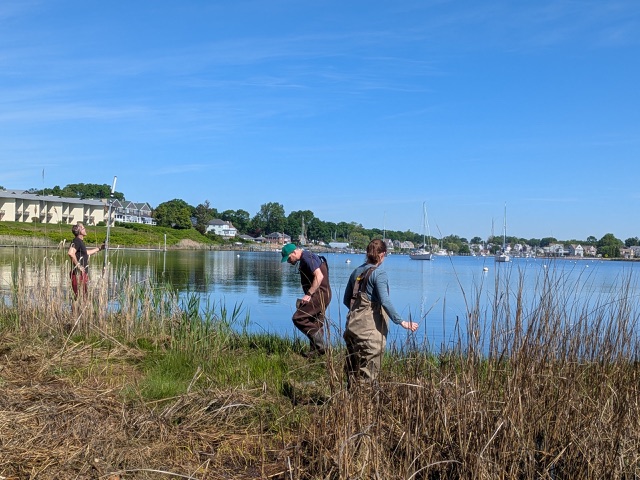
After scanning the perimeter of North Cove, the search narrowed in on the Phragmites marsh.
Prof. Brian Prendergast saw that the satellite tag on a striped bass he was tracking had detached and was floating near Salter Grove. He contacted FoSG for support in locating the tag so we reached out to members and collaborators.
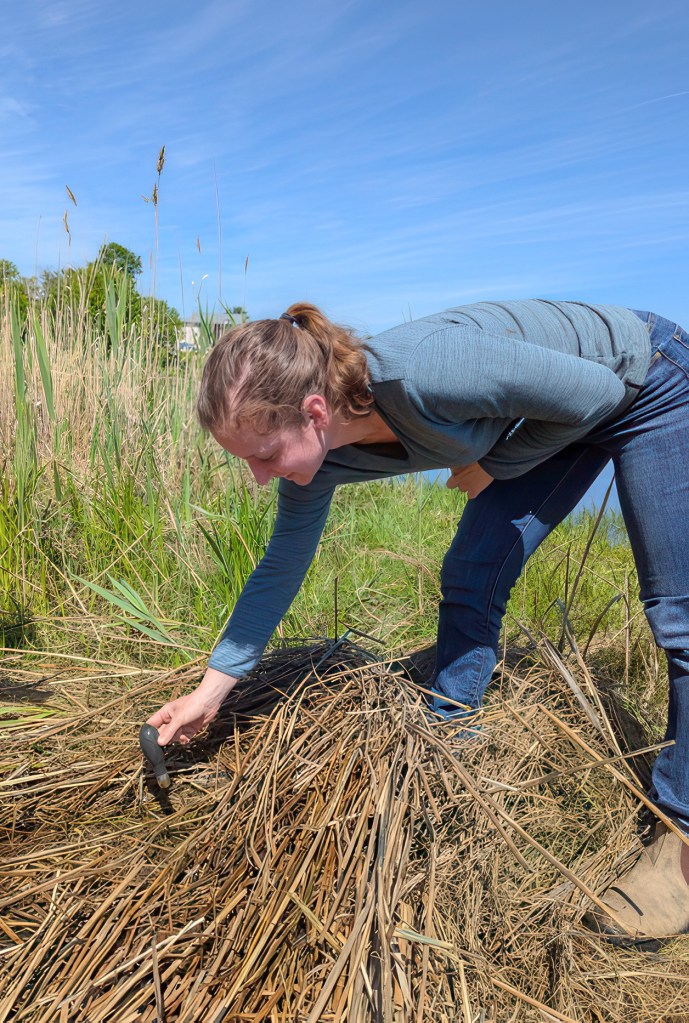
Brian Prendergast smiles as his detector indicates the satellite tag is nearby.
After recovery, the tag was passed to Scott Bennett, Program Manager of the Striped Bass Initiative who had joined the search from the Marine Biological Laboratory. He will download the data so the striped bass’s migration track can be traced. A very interesting discovery of this research is that at least some of the older fish hole up in coastal ponds during the summer where they conserve energy by remaining relatively inactive. This confirms the reports of fishers that the same fish show up annually.
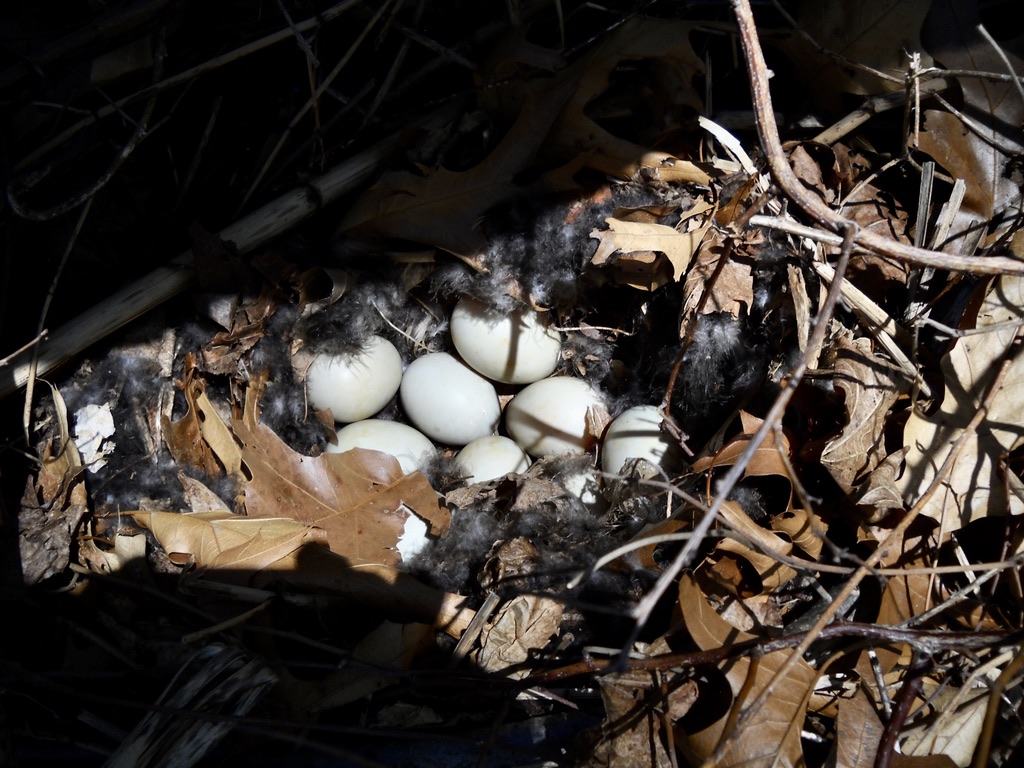
Female Mallard at nest in pond clearing Down-lined nest had 12 eggs
The first brush pile at Salter Grove was created at the north end of the vernal pond in 2020 with masses of thorny climbers removed from overloaded trees and shrubs in the park. What an exciting surprise to find that a female Mallard duck used it to shelter a nest with 12 eggs in April of 2021!
Since then, brush piles have been mindfully and strategically established throughout the park as volunteers manage the nature trails. These mounds of dried vegetation have become inviting shelters for birds and small mammals.
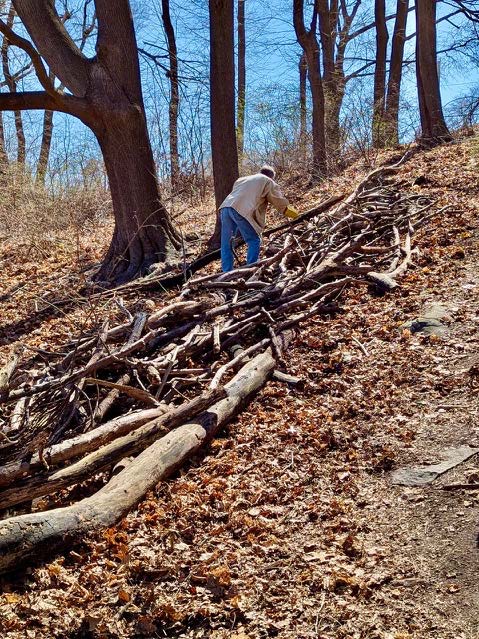
When placed on sloping terrain, the tangle of branches additionally traps leaf litter and prevents soil erosion. The fall of large branches during a storm in late 2020 provided the material for slope protection at the mid-point of Audubon Trail, where bare soil prevailed.
Elongated brush pile established November 2020
The payoff for building the elongated brush pile was spotting an American Mink capturing a mouse in the vicinity in July 2021, and then two more sightings in June 2022. The observations of this predaceous mammal on a slope so near Narragansett Parkway were unexpected because the mink’s usual haunts are the marshy shorelines along the breakwater, causeway, and Marsh Trail.
Even plants benefit from the elongated brush pile. The broad-leaved enchanter’s-nightshade, a native species of moist woodland, was seen for the first time in the park in August 2024 upslope at the pile’s southern end! It was likely brought in by a bird that defecated while perching on the brush pile, and no doubt the moist litter-rich environment encouraged the plant to grow where there had been only bare soil.
Broad-leaved enchanter’s nightshade first observed in August 2024
And then, for some unknown reason, this elongated brush pile was completely dismantled in March 2025 by scattering in the understory. Thus, a corridor for safe passage and a wildlife shelter was destroyed.
Brush pile dismantled March 2025 Brush pile restored April 2025
Friends of Salter Grove has written permission from the City of Warwick’s Tree Warden to manage the vegetation structure of Salter Grove. All branches and foliage cut are formed into brush piles as shelters for wildlife, rather than stuffed into bags for collection. Regular observations of these brush piles indicate that more and more wildlife are using them.
Even if well-intentioned, whenever individuals dismantle established brush piles, create new ones, or otherwise alter the physical infrastructure of the park, on-going management efforts are disrupted.
We are always keen to learn how we can better manage the park to recruit more native species of plants and animals. So let us know your ideas (friendsofsaltersgrove@gmail.com), but please don’t undo what has already been done.
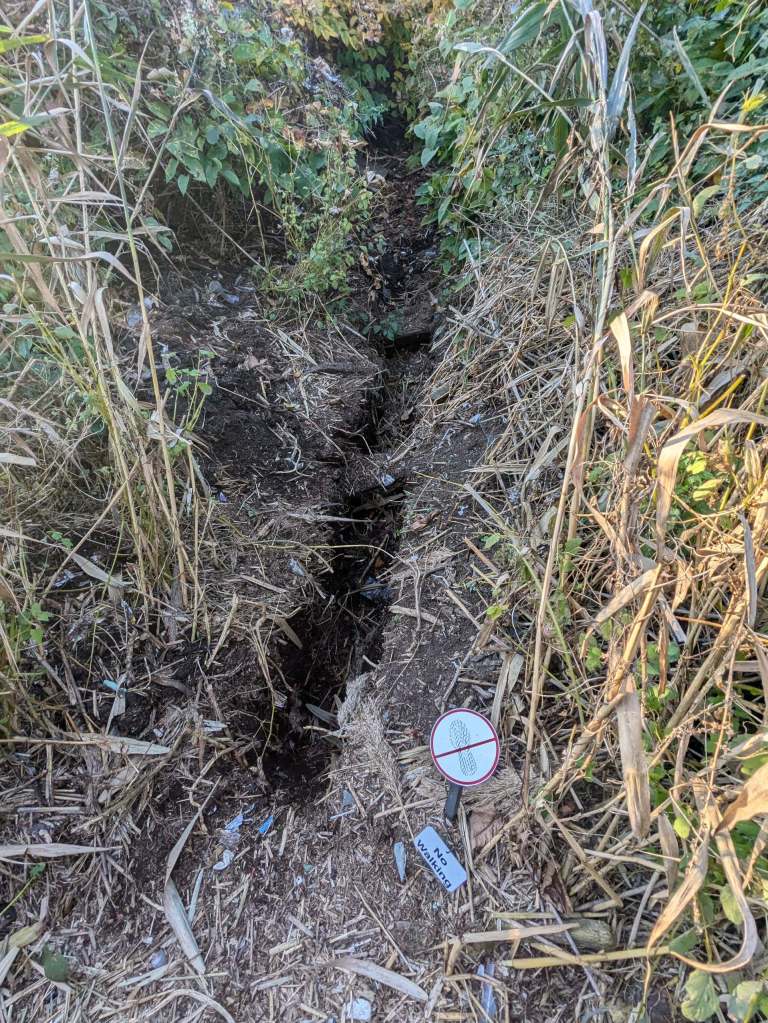
The pictured trench was recently dug to nearly three feet deep at the top of the Phragmites marsh below Audubon Hill at the south end of the park.
Signs notwithstanding, this trench creates a serious hazard to children. It was not authorized by the City of Warwick or RIDEM and serves no useful purpose, Its creation also disturbed natural vegetation and drainage.





 Friends of Salter Grove