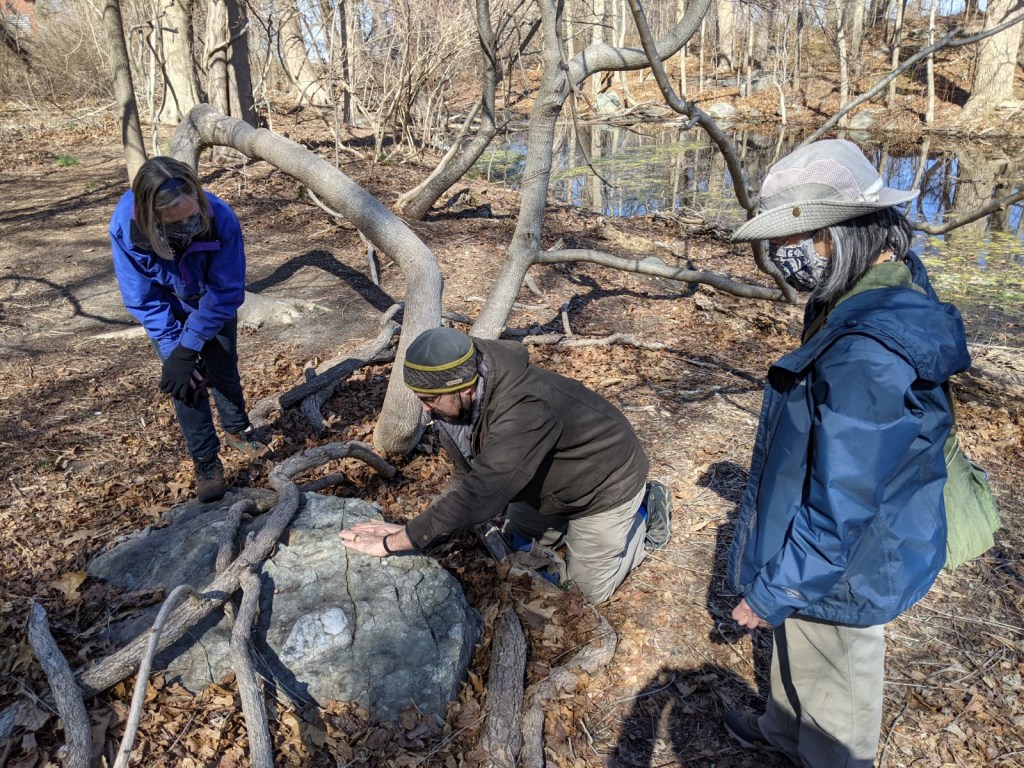
As a preliminary to a geology section in our developing online nature trail guide, Jonathan Alvarez, a geologist from EA Engineering in Warwick, kindly shared his knowledge of features found at Salter Grove.
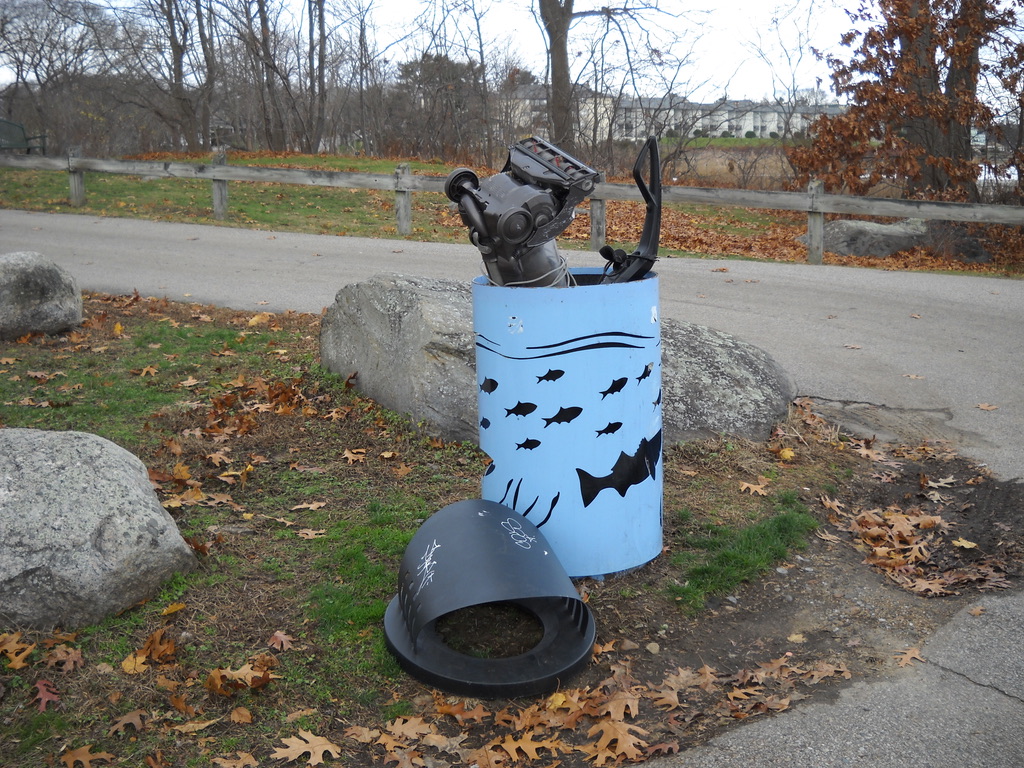
It is truly a shame that so many of the exposed rocks have been defaced by juvenile graffiti that obscures a fascinating geological history. Even birds know better than to foul their own nest! Please help us to realize our park’s potential as an outdoor classroom by leaving no trace of your visits.
Jonathan explains how conglomerates, sometimes referred to as puddingstone, are metamorphosed sedimentary rocks. These are part of the Rhode Island Formation and are Pennsylvanian in age (298-323 million years old). These conglomerates formed in a turbulent environment similar to a river bottom where the rounded cobbles and sandy matrix eventually were compressed through burial. During the Pennsylvanian Period, Rocky Mountain-sized ranges occurred east and west of the present Narragansett Bay, and their erosion produced enormous quantities of sediment that filled the space between, including wide river basins similar to the San Joaquin or Sonoma Valleys.Continue reading →
Beverly Wiley (pictured above) met with Ward 1 Councilperson Bill Foley and FoSG coordinator Peter Becker to discuss outstanding issues affecting Salter Grove.
The exchange included installation of amenities, parking safety, and city-wide park regulations (especially concerning vandalism) and their enforcement by police.
Bev wants to ‘get things done’, and that was music to our ears.
Bill and Mayor Picozzi have already helped with a City Council resolution and letter of support, respectively, for the parking safety project.
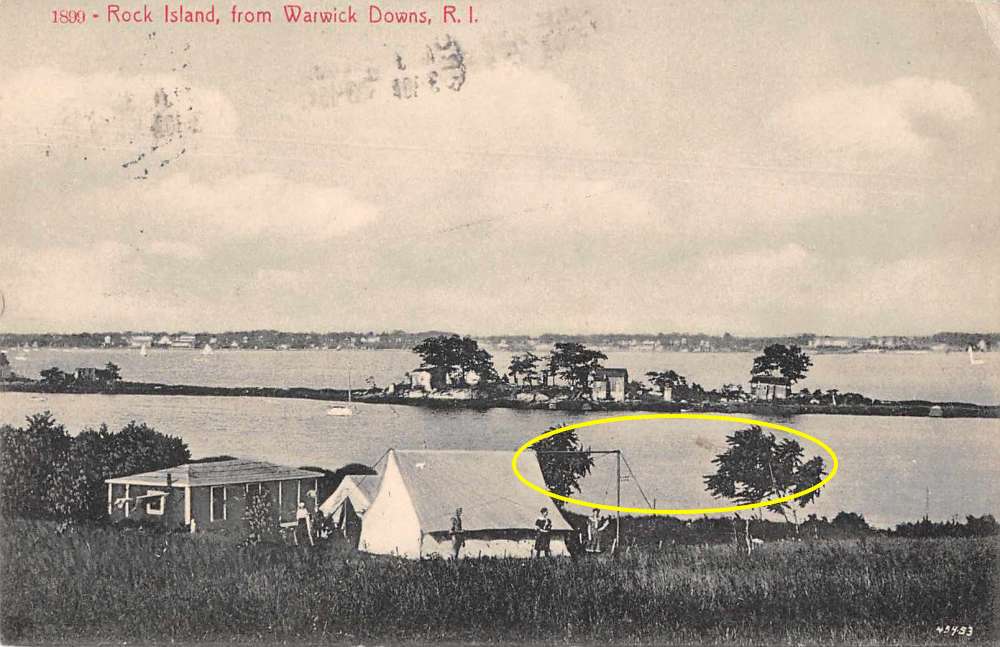
Source: hippostcard.com. No copyright infringement intended.
The above view of Rock Island from what is currently known as Audubon Hill shows an interesting slice of Salter Gove’s history from the turn of the previous century.
At least three houses, long since gone, are visible on the island. Riverside, in the background, is already quite developed.
The circled trees are probably individuals of tree-of-heaven, which was introduced from China to the United States in the late 1700s as an ornamental plant. At Salter Grove, scattered individuals can now be found at the edge of the woodland south of the parking lot.
We would like to illustrate more of such historical changes in the Guide to Salter Grove website being developed. If you have photographs that you are willing to share we’d like to hear from you.
Please send scanned copies of your photos with all available information (dates, locality in park etc.) to guru@saltergrove.org. We would also welcome personal accounts of activities and times spent at the park in years past to add to our understanding of the park’s evolution.
Juvenile Red-tailed Hawk with freshly-captured squirrel
While working on the nature trails on Tuesday, November 17th, a hawk flew right toward us, struggling to keep hold of a squirrel in its talons. It graciously posed for some photos, and then flew to a limb tangle where it was better able to pin the squirrel down for a feast. It must have been very hungry because it even stripped the fur off the squirrel’s tail, presumably to access the tidbits there.
An hour later, a large raccoon was spotted sleeping 35 feet up on a black oak bough, not far from the hawk’s feeding perch.
Then an immature bald eagle soared by over South Cove.
Finally, the same hawk was seen close up, feeding on another bird, but unfortunately the camera battery had died.
Salter Grove—who needs a documentary when you can see it live?