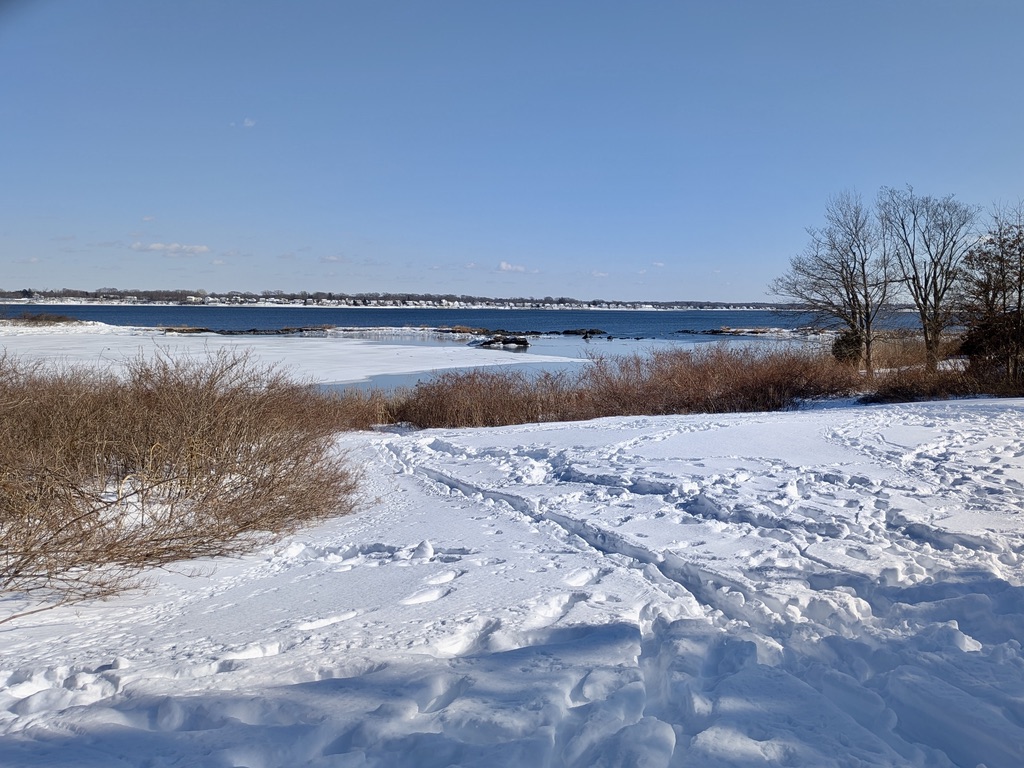
The snow accumulation and persistent low temperatures this winter have provided visuals of Salter Grove not possible in recent winters.
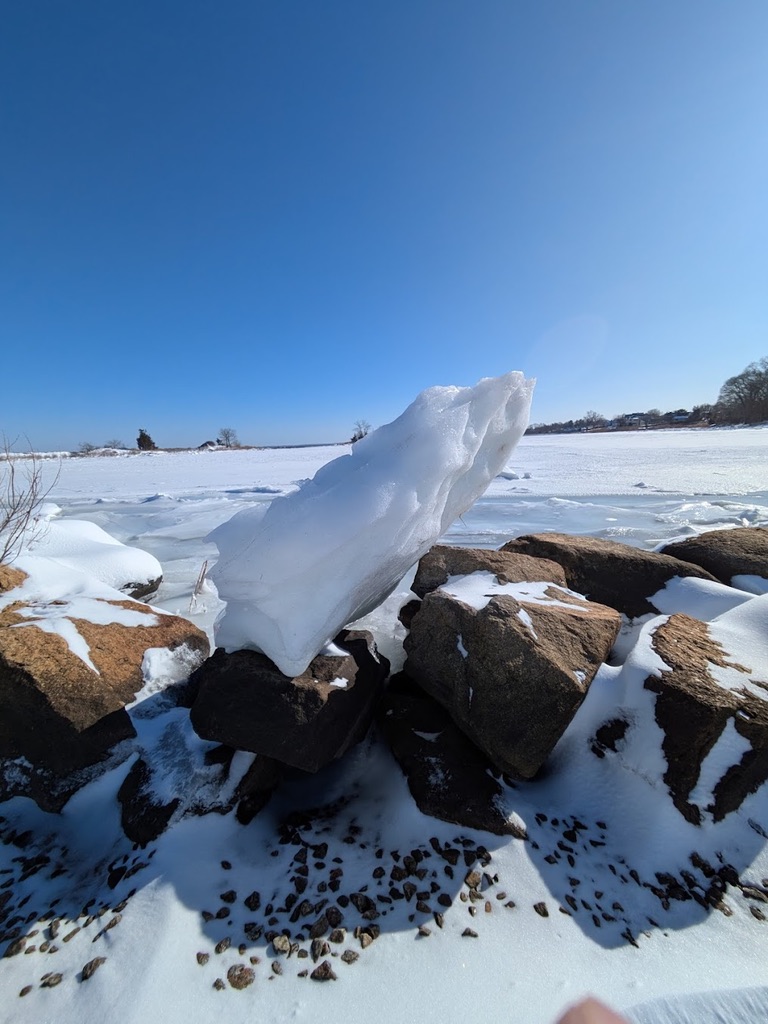
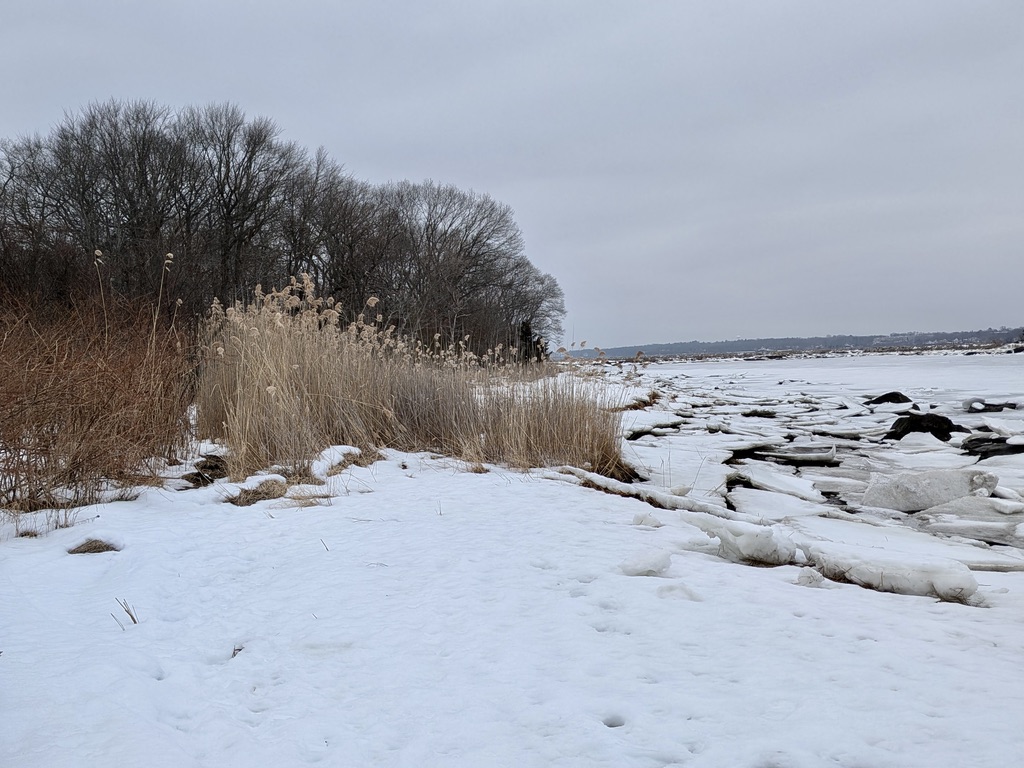
As of January 29th, 2026, the entire park was under at least a foot of snow except for the plowed area in the parking lot. Persistent low temperatures formed ice floes in both North and South Coves. Tidal movement then heaved large plates of ice on top of rocks and along the shore.
Ice fragment left by high tide on causeway rock. Photo by Andrew Chin
Northward from south end of Marsh Trail, where plates of ice press against shore. Photo by M. Wong
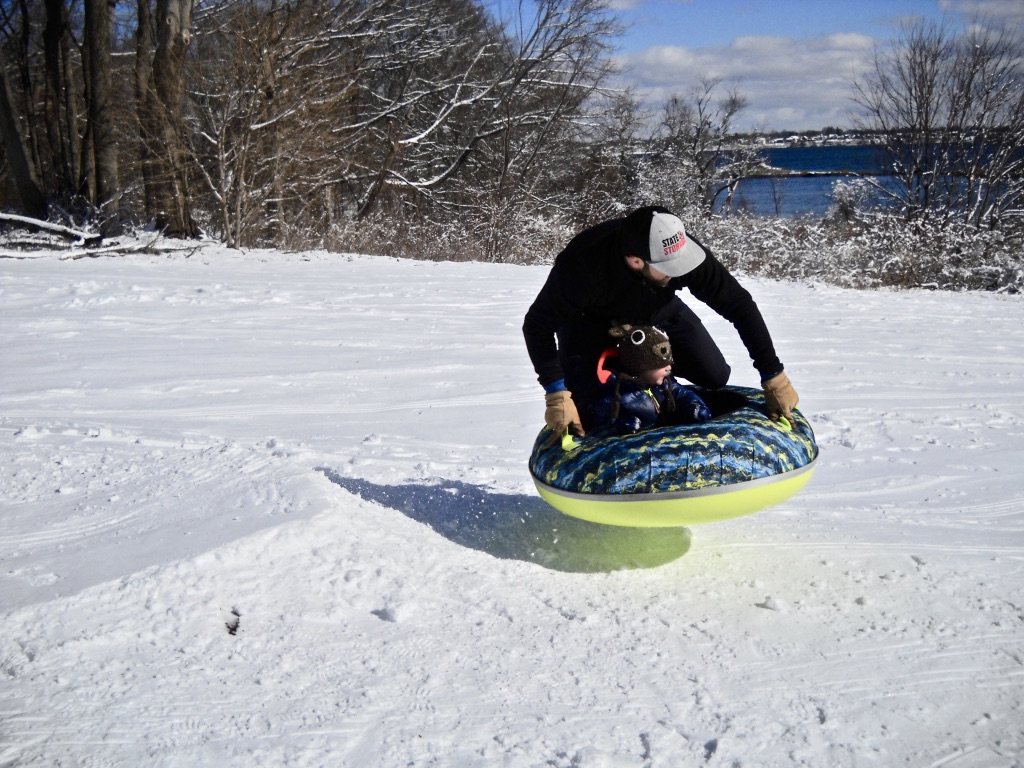
Of course, sledders took advantage of snow-covered Audubon Hill, long a neighborhood winter favorite. Hikers and cross-country skiers were out as well.
Flying down Audubon, February 2021Audubon Hill, February 2026
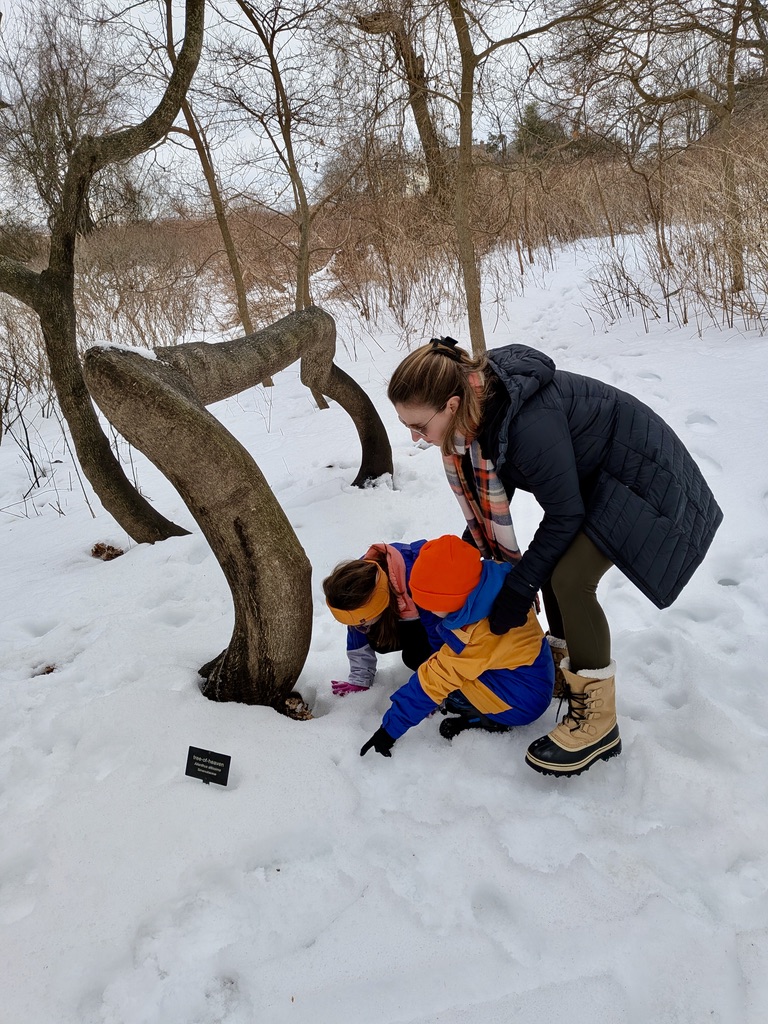
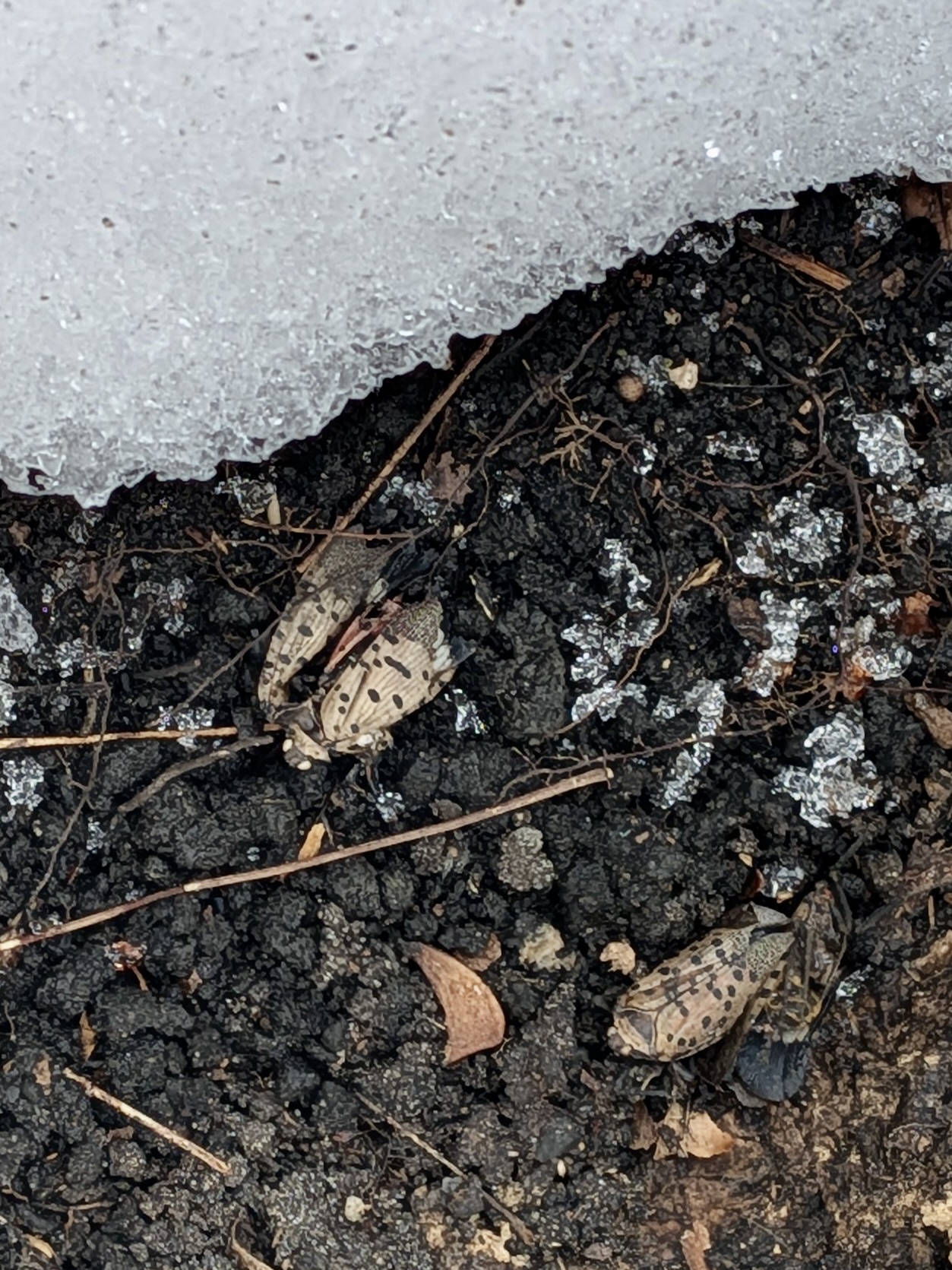
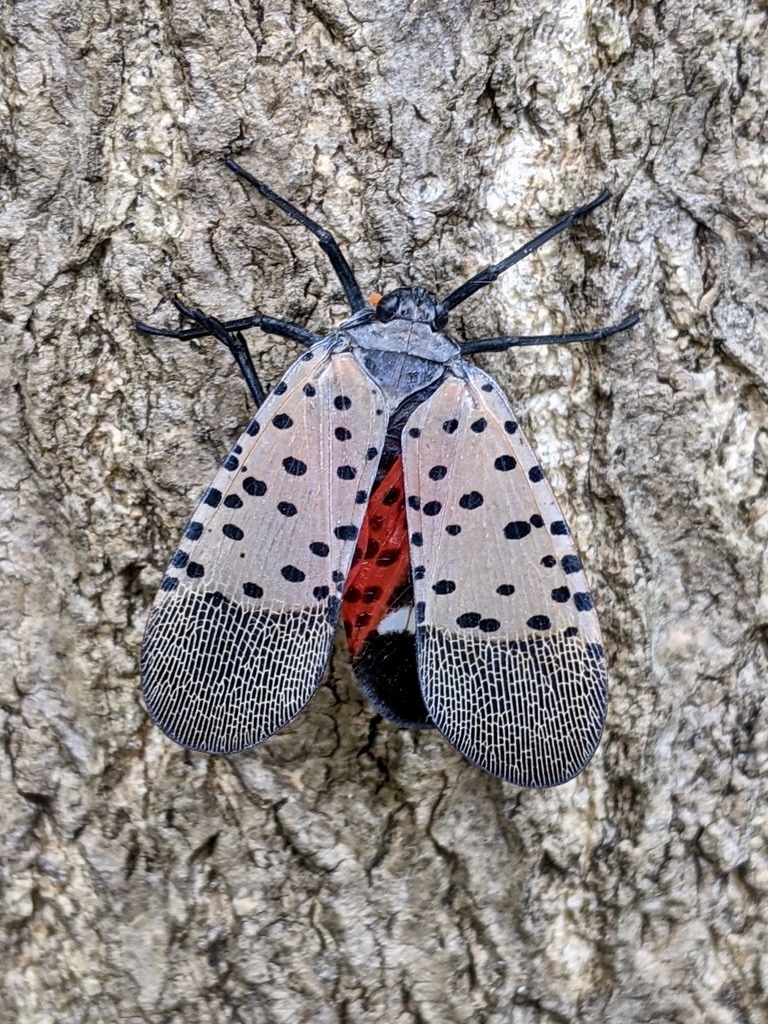
One family was admiring the tree-of-heaven along Audubon Trail only to discover traces of the Spotted Lanternfly at the base of the geometric trunk. There was a heavy infestation during the fall of 2025.
Julie Maas and son Ben looking at what daughter Nora discovered
Spotted Lanternfly, February 2026Lanternfly in September 2025
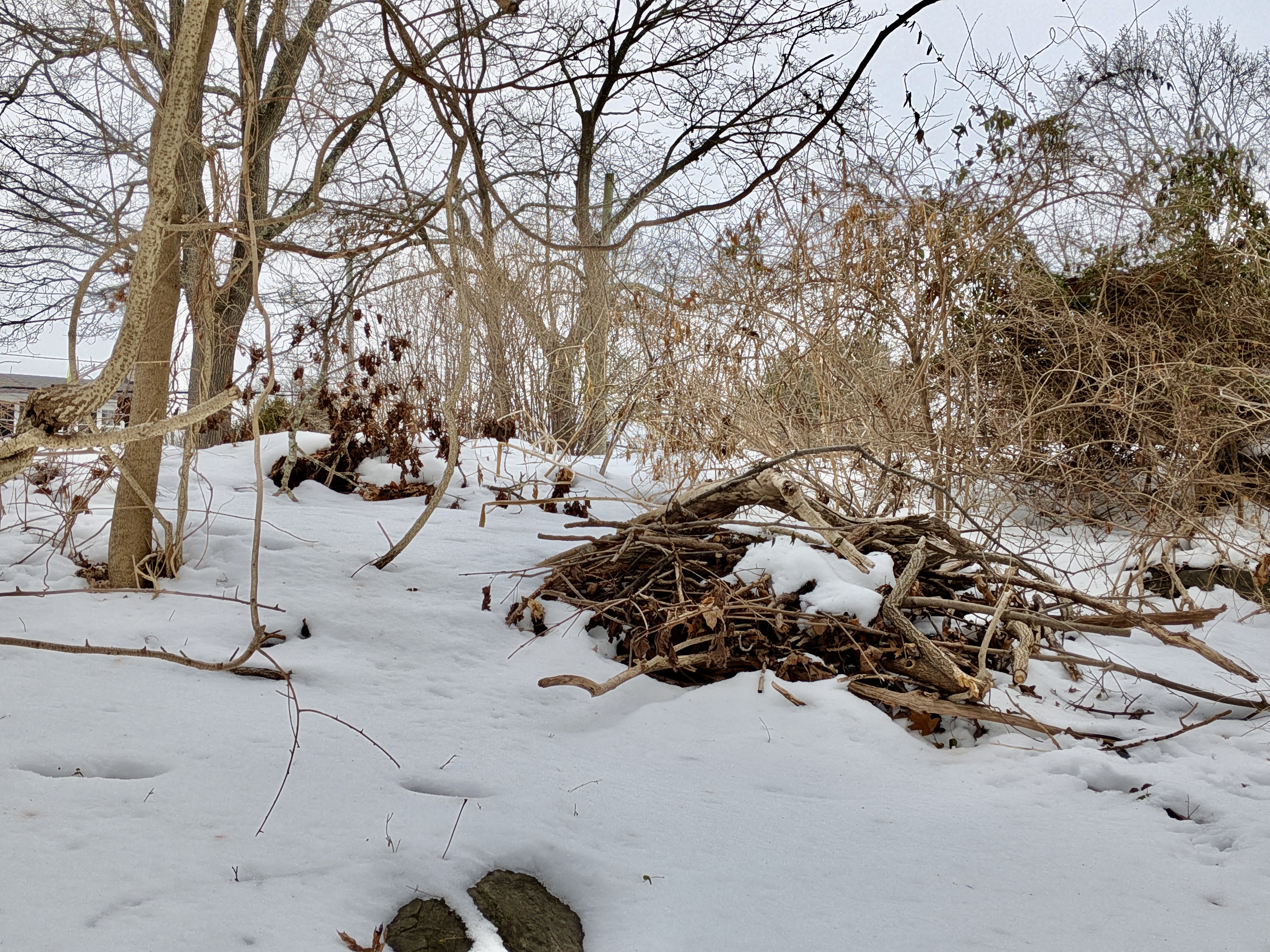
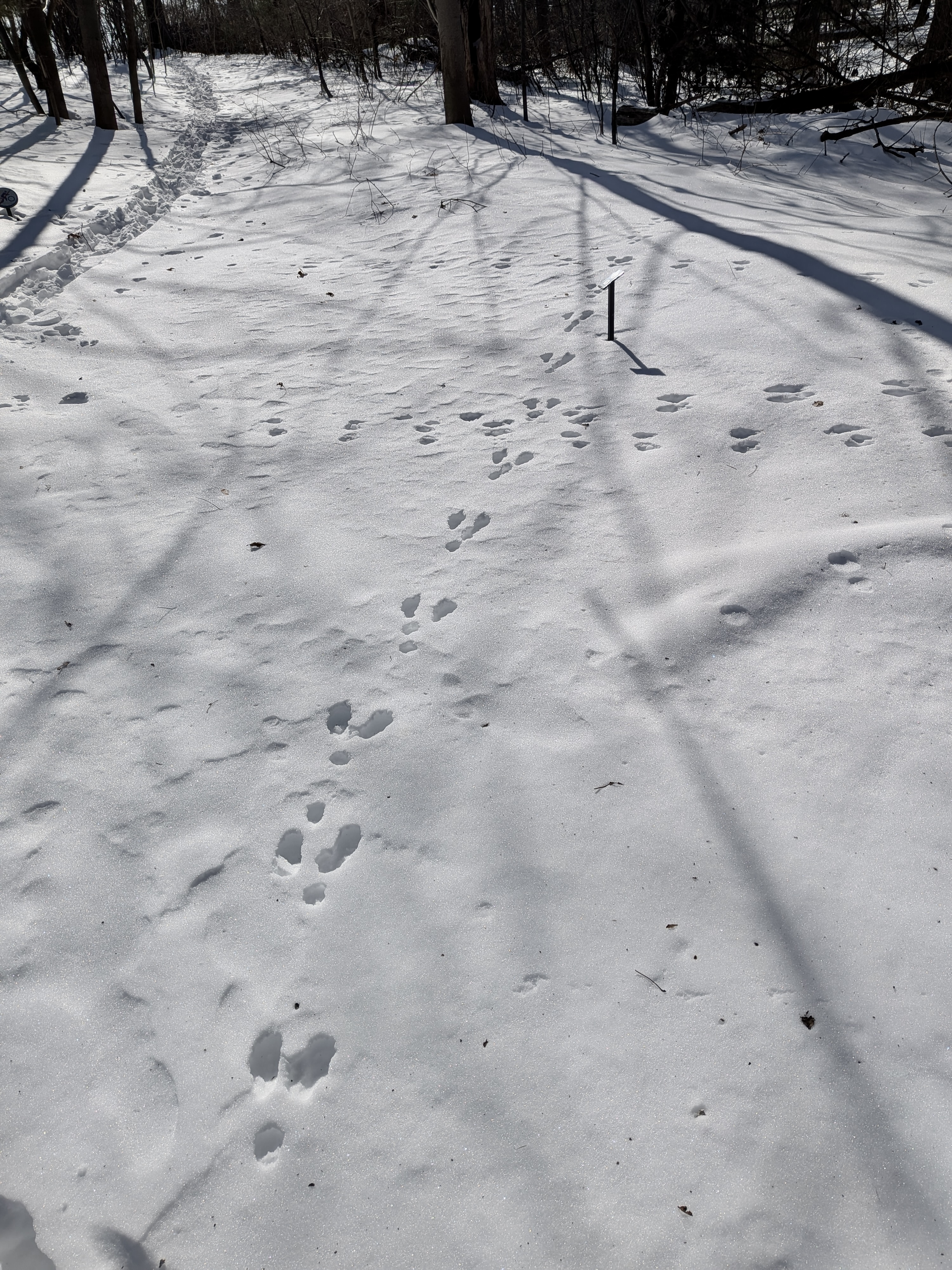
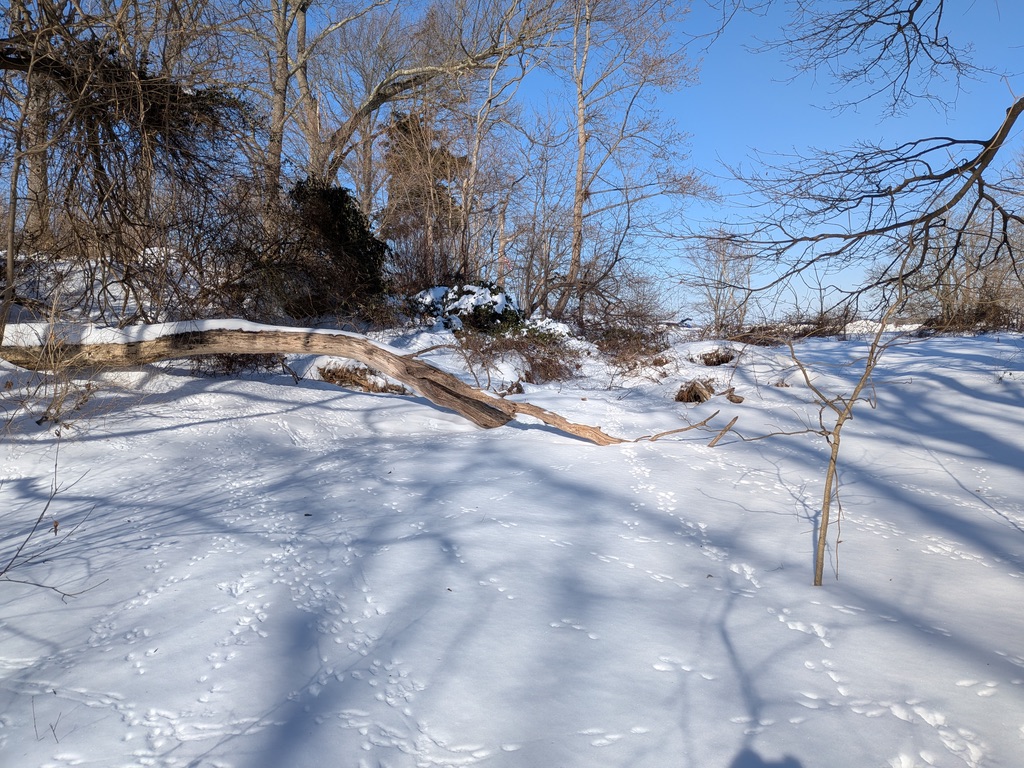
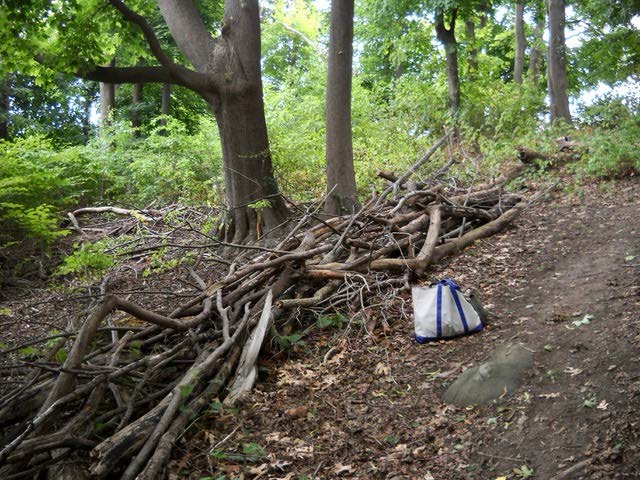
Before the snows came, Nature Trail volunteers constructed a number of brush piles using debris from the wind storm of July 3rd, 2025. The thick snow cover provided an opportunity to “track” visitation rate and structural effectiveness of these new wildlife shelters.
Brush pile constructed with debris from windstorm of July 3rd, 2025
Tracks of Eastern Cottontail trace movement after snowfall
Oldest and largest brush pile constructed in 2020 attracts most traffic
Photos by Marina Wong except where otherwise noted.
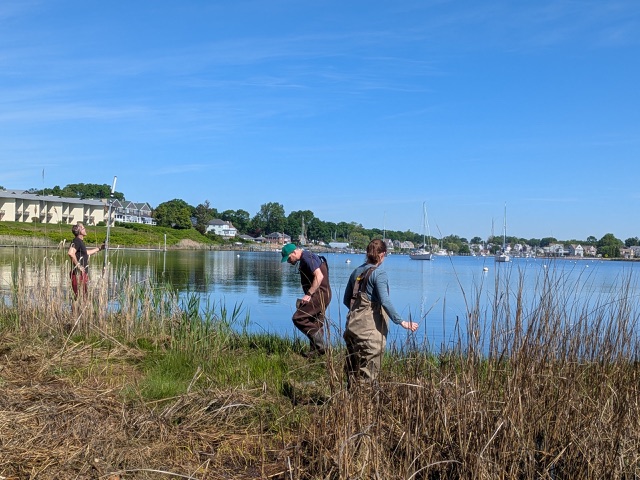
After scanning the perimeter of North Cove, the search narrowed in on the Phragmites marsh.
Prof. Brian Prendergast saw that the satellite tag on a striped bass he was tracking had detached and was floating near Salter Grove. He contacted FoSG for support in locating the tag so we reached out to members and collaborators.
Brian Prendergast smiles as his detector indicates the satellite tag is nearby.
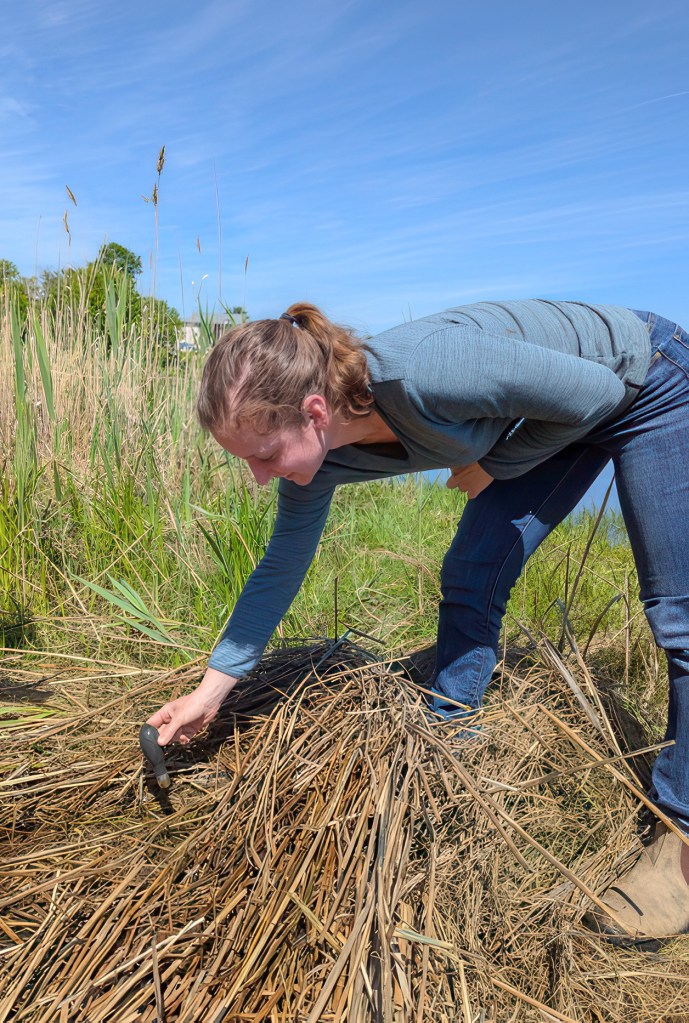
After recovery, the tag was passed to Scott Bennett, Program Manager of the Striped Bass Initiative who had joined the search from the Marine Biological Laboratory. He will download the data so the striped bass’s migration track can be traced. A very interesting discovery of this research is that at least some of the older fish hole up in coastal ponds during the summer where they conserve energy by remaining relatively inactive. This confirms the reports of fishers that the same fish show up annually.
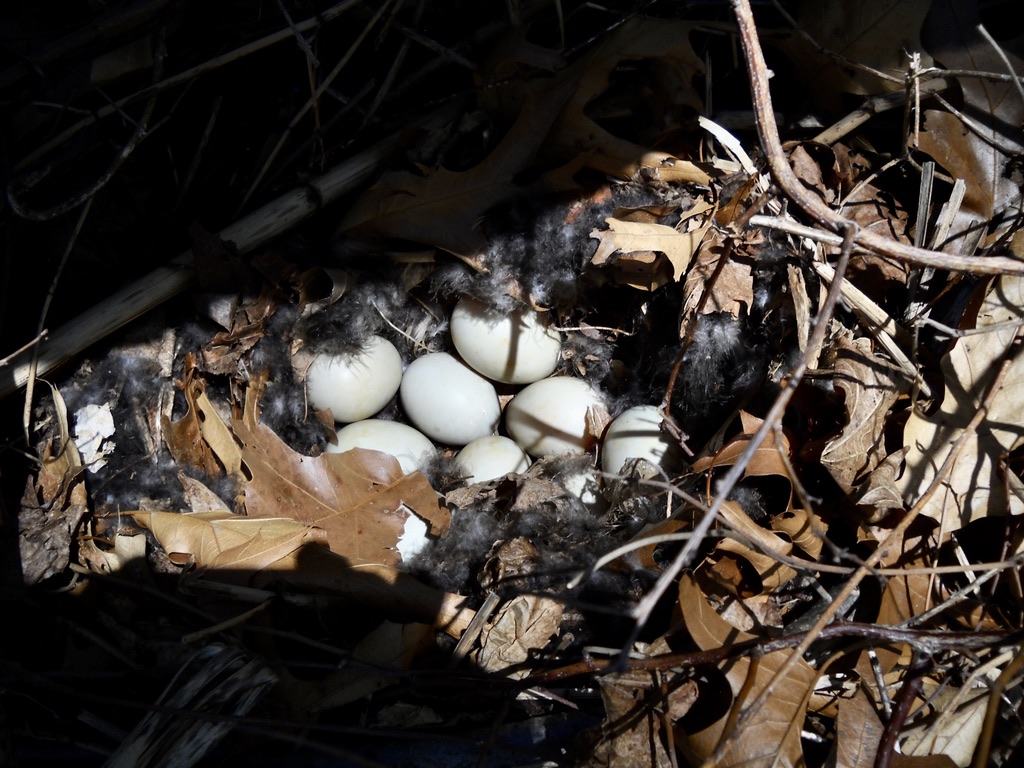
Female Mallard at nest in pond clearing Down-lined nest had 12 eggs
The first brush pile at Salter Grove was created at the north end of the vernal pond in 2020 with masses of thorny climbers removed from overloaded trees and shrubs in the park. What an exciting surprise to find that a female Mallard duck used it to shelter a nest with 12 eggs in April of 2021!
Since then, brush piles have been mindfully and strategically established throughout the park as volunteers manage the nature trails. These mounds of dried vegetation have become inviting shelters for birds and small mammals.
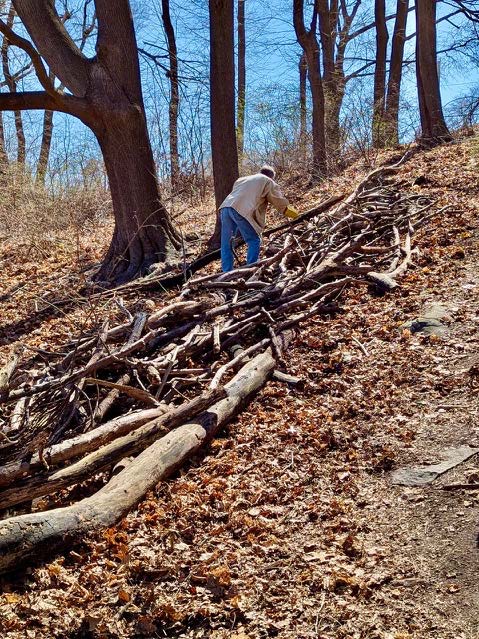
When placed on sloping terrain, the tangle of branches additionally traps leaf litter and prevents soil erosion. The fall of large branches during a storm in late 2020 provided the material for slope protection at the mid-point of Audubon Trail, where bare soil prevailed.
Elongated brush pile established November 2020
The payoff for building the elongated brush pile was spotting an American Mink capturing a mouse in the vicinity in July 2021, and then two more sightings in June 2022. The observations of this predaceous mammal on a slope so near Narragansett Parkway were unexpected because the mink’s usual haunts are the marshy shorelines along the breakwater, causeway, and Marsh Trail.
Even plants benefit from the elongated brush pile. The broad-leaved enchanter’s-nightshade, a native species of moist woodland, was seen for the first time in the park in August 2024 upslope at the pile’s southern end! It was likely brought in by a bird that defecated while perching on the brush pile, and no doubt the moist litter-rich environment encouraged the plant to grow where there had been only bare soil.
Broad-leaved enchanter’s nightshade first observed in August 2024
And then, for some unknown reason, this elongated brush pile was completely dismantled in March 2025 by scattering in the understory. Thus, a corridor for safe passage and a wildlife shelter was destroyed.
Brush pile dismantled March 2025 Brush pile restored April 2025
Friends of Salter Grove has written permission from the City of Warwick’s Tree Warden to manage the vegetation structure of Salter Grove. All branches and foliage cut are formed into brush piles as shelters for wildlife, rather than stuffed into bags for collection. Regular observations of these brush piles indicate that more and more wildlife are using them.
Even if well-intentioned, whenever individuals dismantle established brush piles, create new ones, or otherwise alter the physical infrastructure of the park, on-going management efforts are disrupted.
We are always keen to learn how we can better manage the park to recruit more native species of plants and animals. So let us know your ideas (friendsofsaltersgrove@gmail.com), but please don’t undo what has already been done.
The lower-than-usual rainfall combined with higher-than-usual temperatures during the growing season in 2022 greatly reduced fruit production at Salter Grove to a level not seen in many years. It was alarming because many insectivorous birds and their fledglings include large amounts of fruits in their diet after at the end of the breeding season.
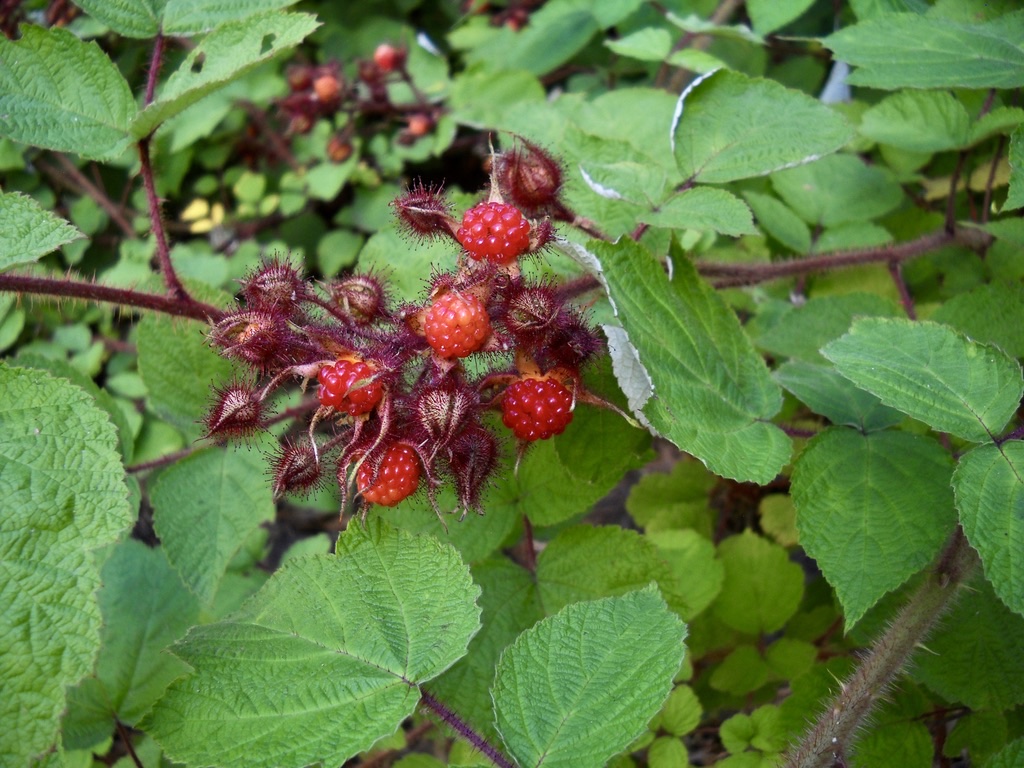
Shriveled leafy-flowered blackberry (L) and wine raspberry (R), early August 2022.
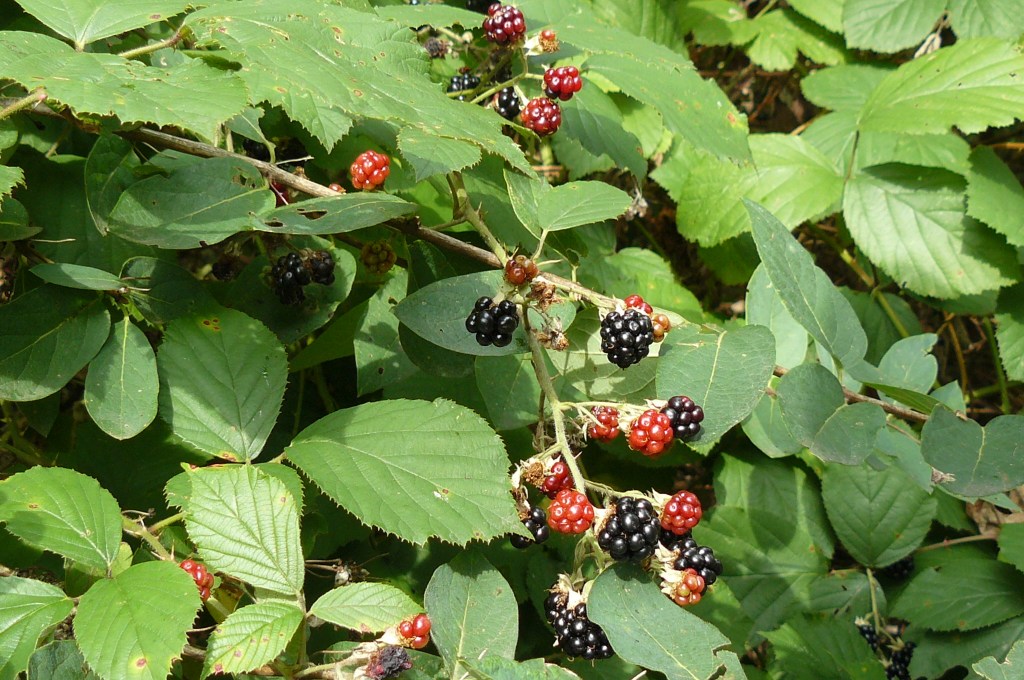
However, the bumper crop of juicy and plump berries this year should convince fruit-eating birds that Salter Grove is a great place to raise their families!
Just two weeks ago, a Baltimore Oriole was already pokoing through ground vegetation to get at fruits of twice-leaved blackberry that creep through low vegetation.
Twice-leaved raspberry in fruit (National Dendrological Collection of Poland, CC BY-SA 4.0).
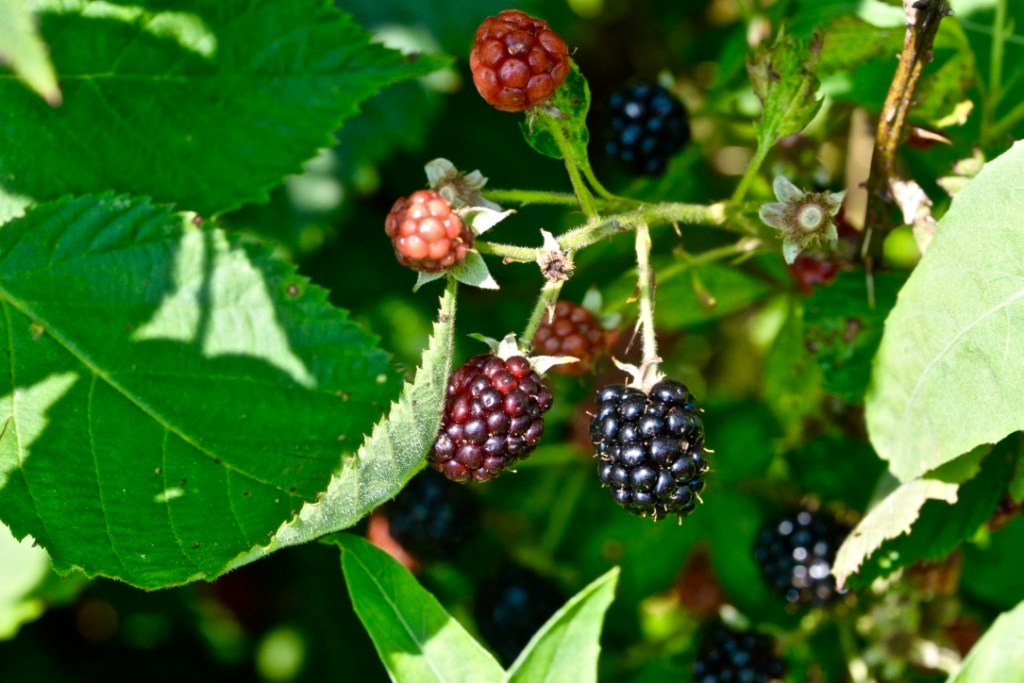
Soon, the hedges of leafy-flowered blackberry, and wine raspberry that line the lawn south of the parking lot will be filled with ripe fruits.
Leafy-flowered blackberry (L), and wine raspberry in mid-July (R). Continue reading →
Salter Grove recently hosted high school students who fulfilled their community service hours towards their graduation requirements. The experience proved to be mutually beneficial.
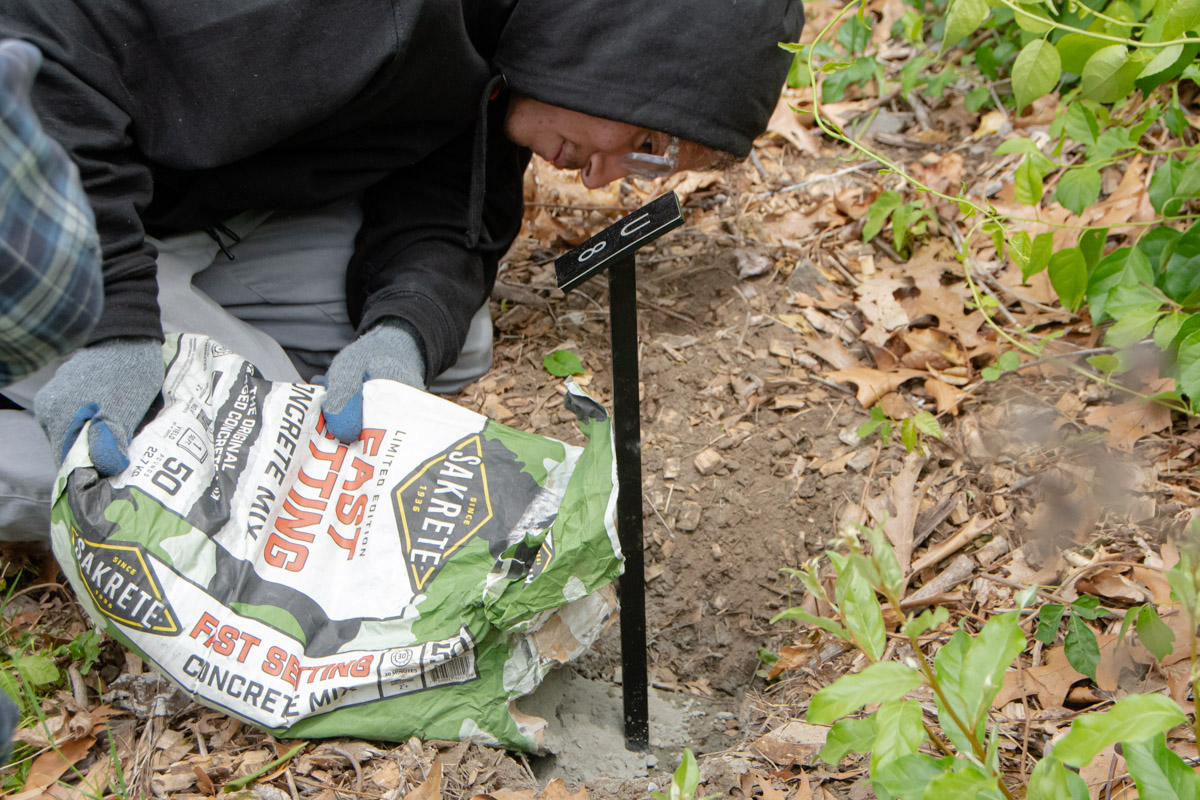
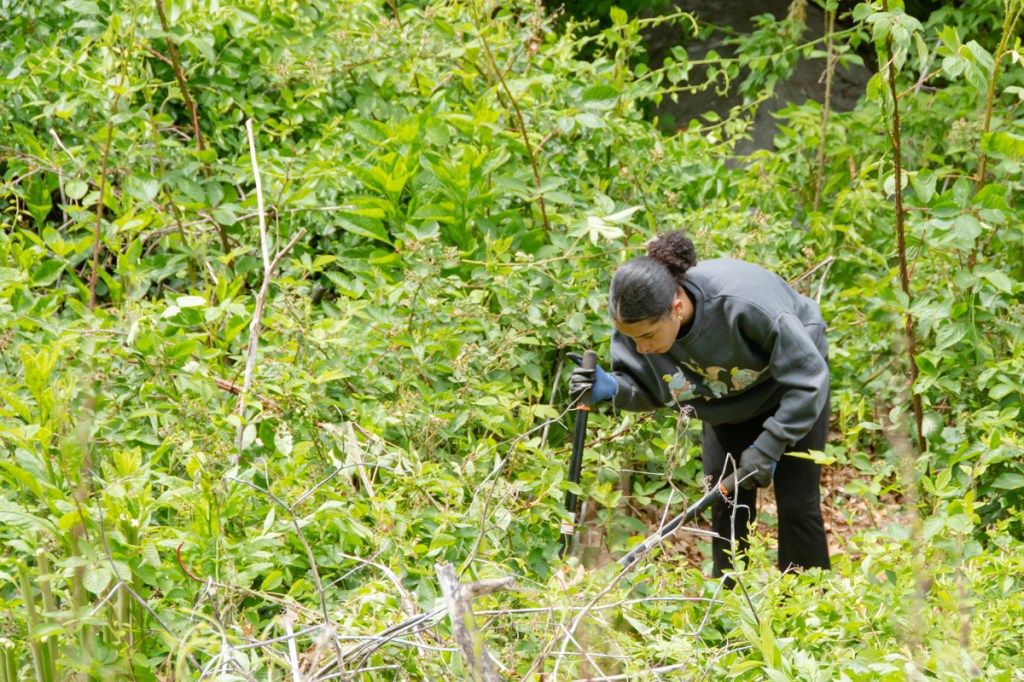
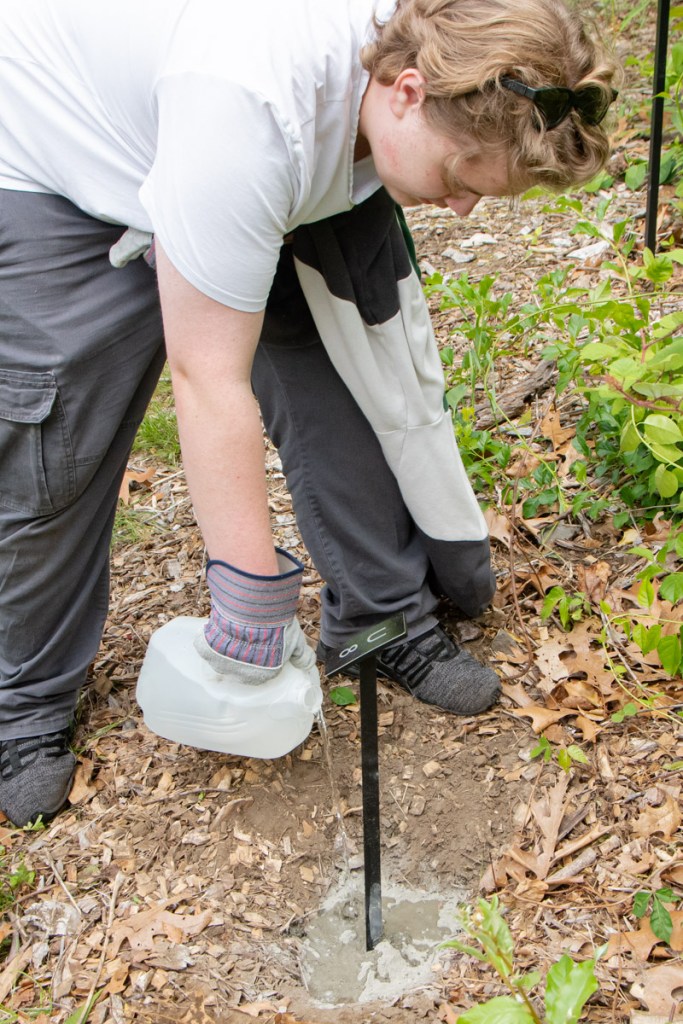
Alexandra Dickinson maintaining the trail through the Knotweed Jungle and excavating a hole for a trail marker.
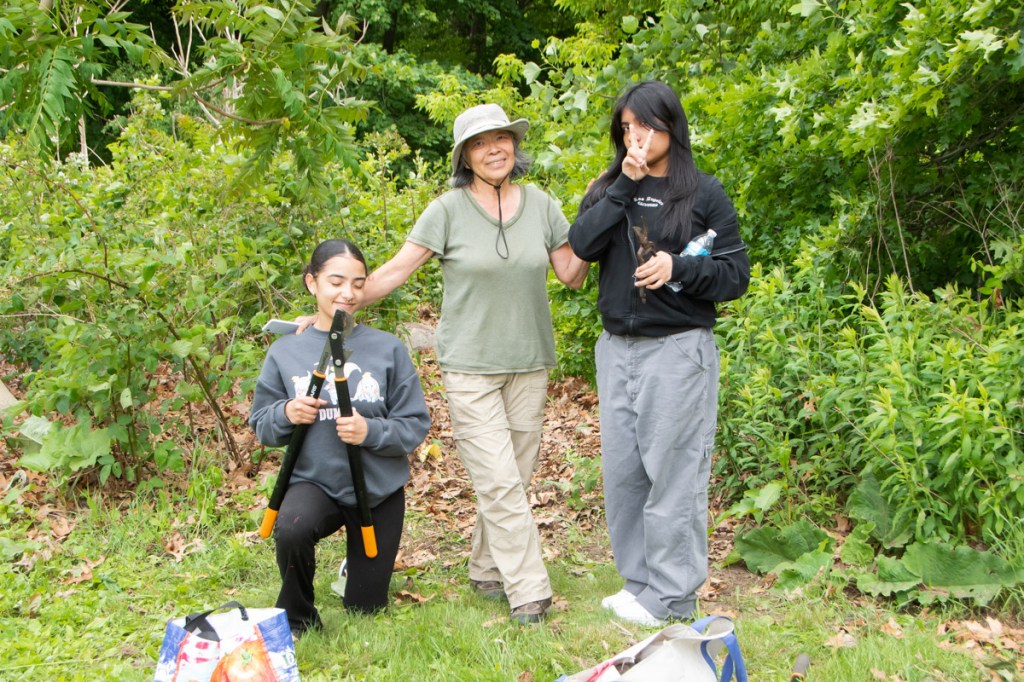
Two equally effective approaches were taken. Starting in late May, Alexandra Dickinson, a senior from Lincoln School in Providence dedicated 40 hours over a two-week period to assist with maintaining the vegetation and signage along the nature trails.
Using both field observations and the Guide to Salter Grove, she learned to identify many of the common birds and plants that occur in the park.
Alexandra examining wild asparagus along the Marsh Trail.
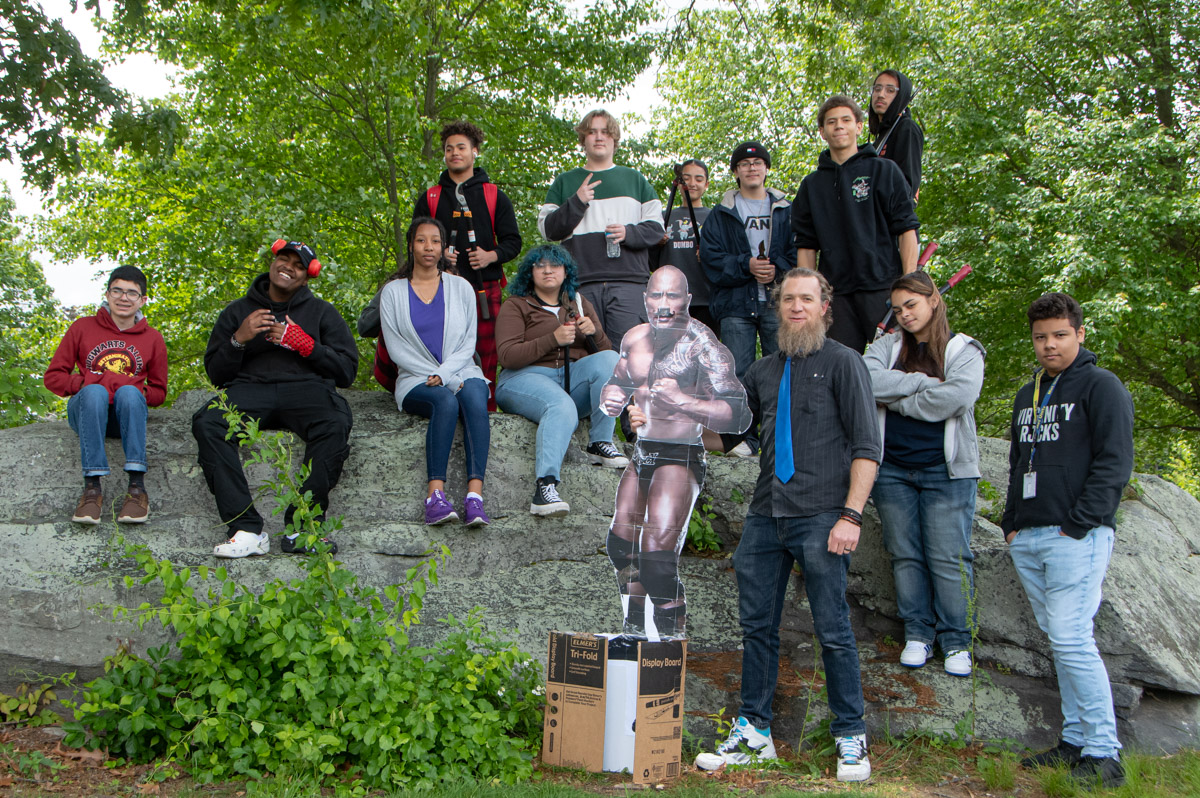
MET HS students, their blue-tied teacher, and their mascot The Rock.
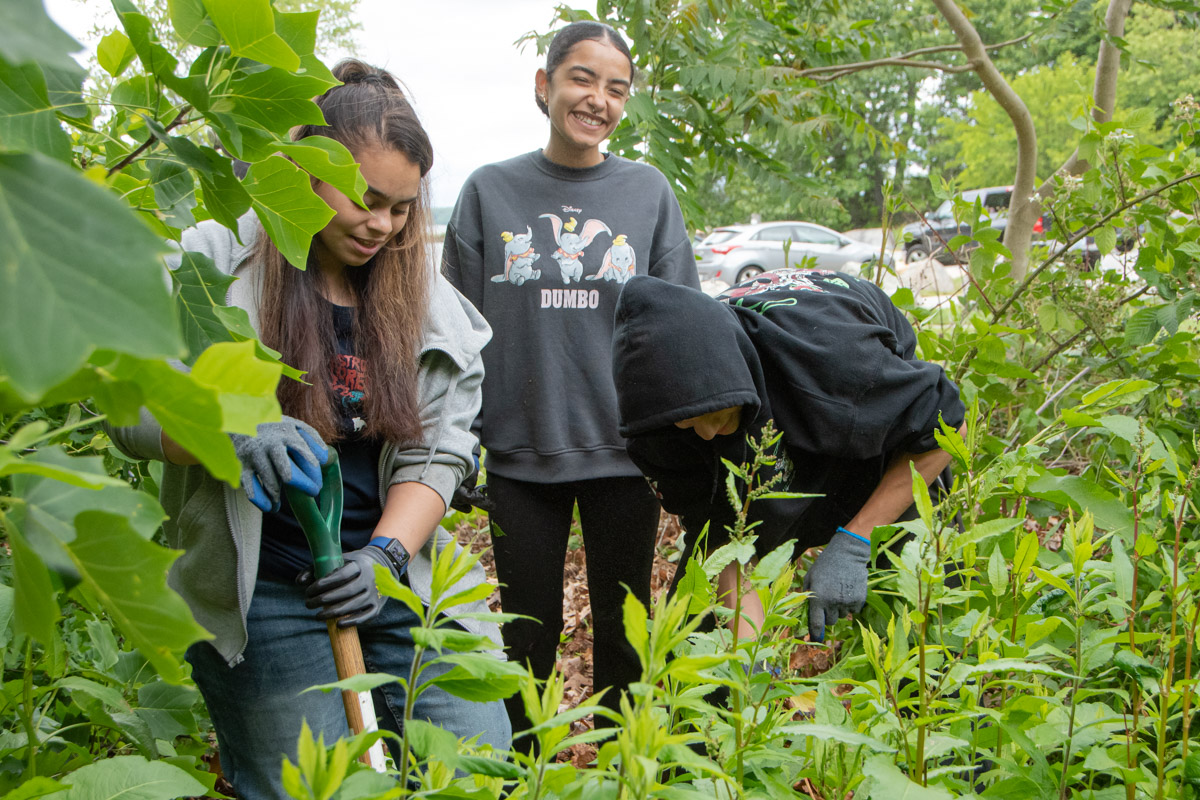
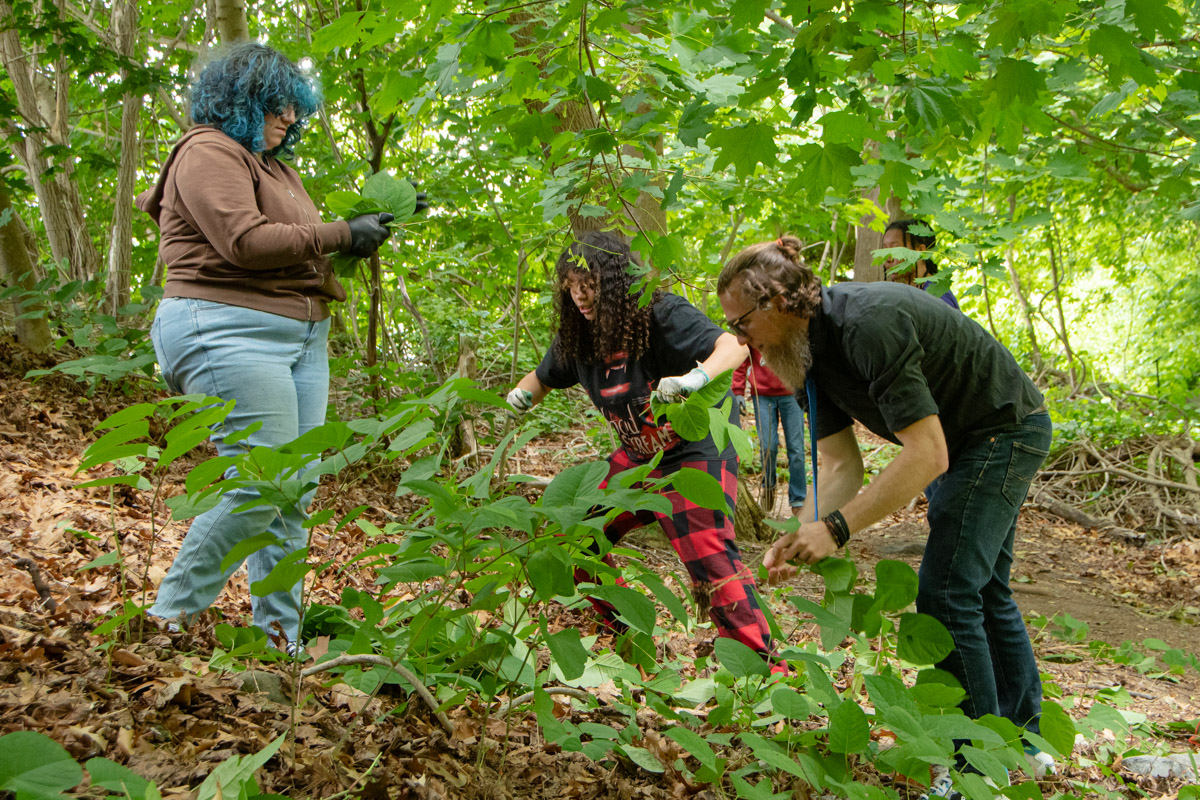
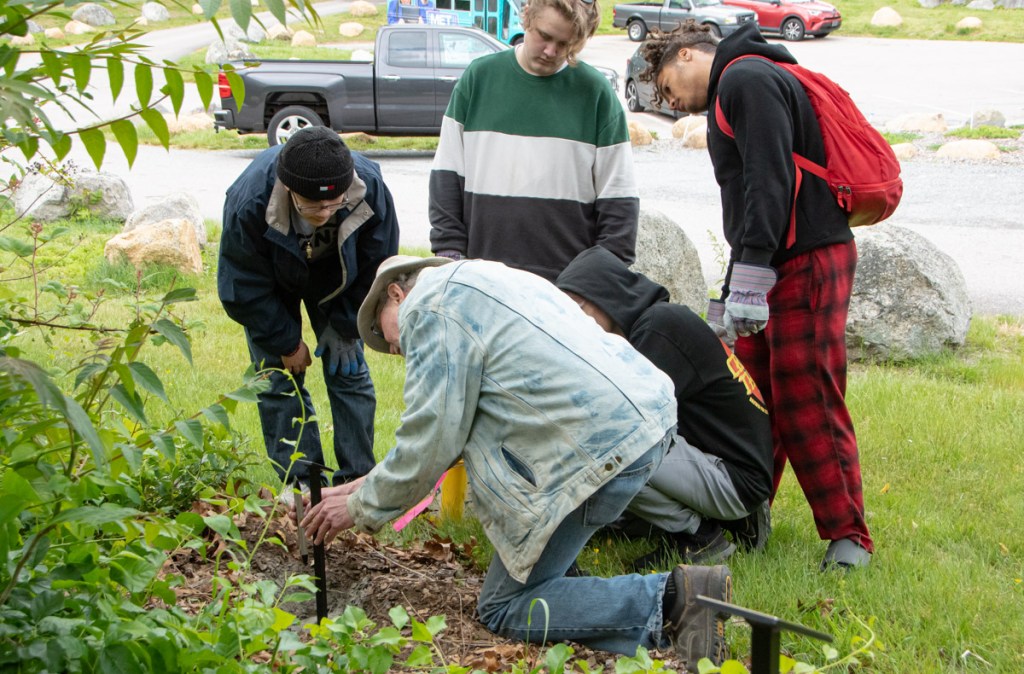
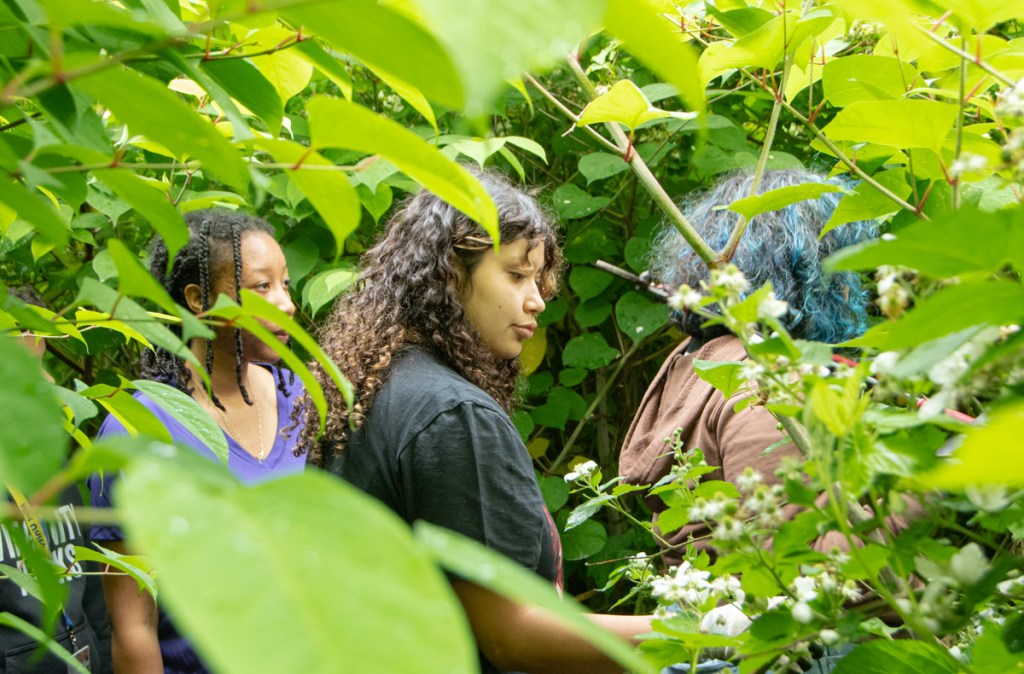
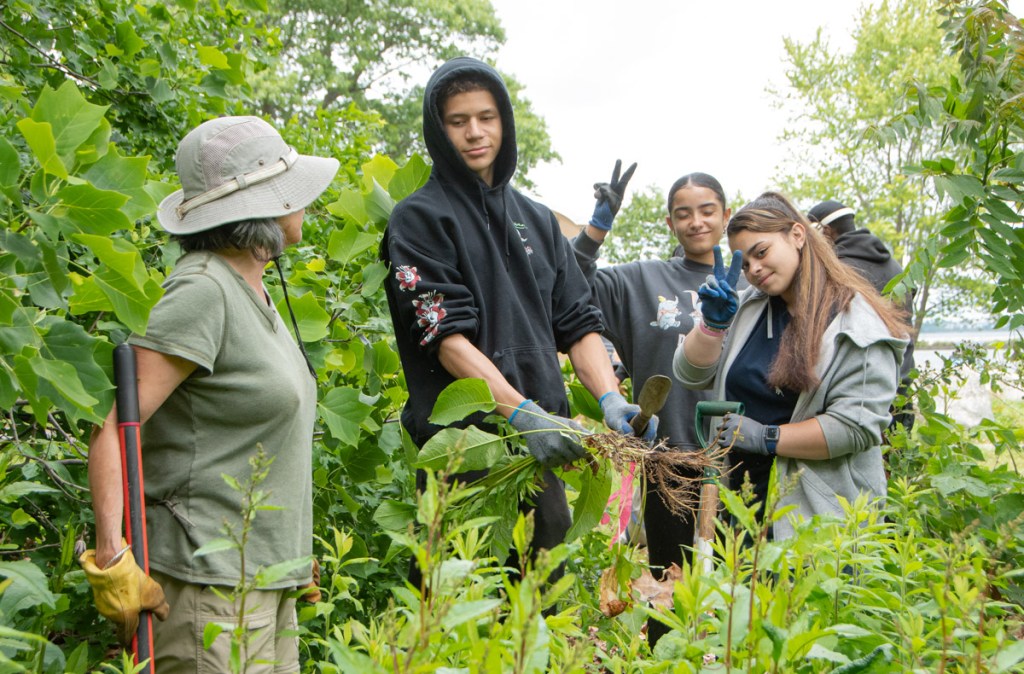
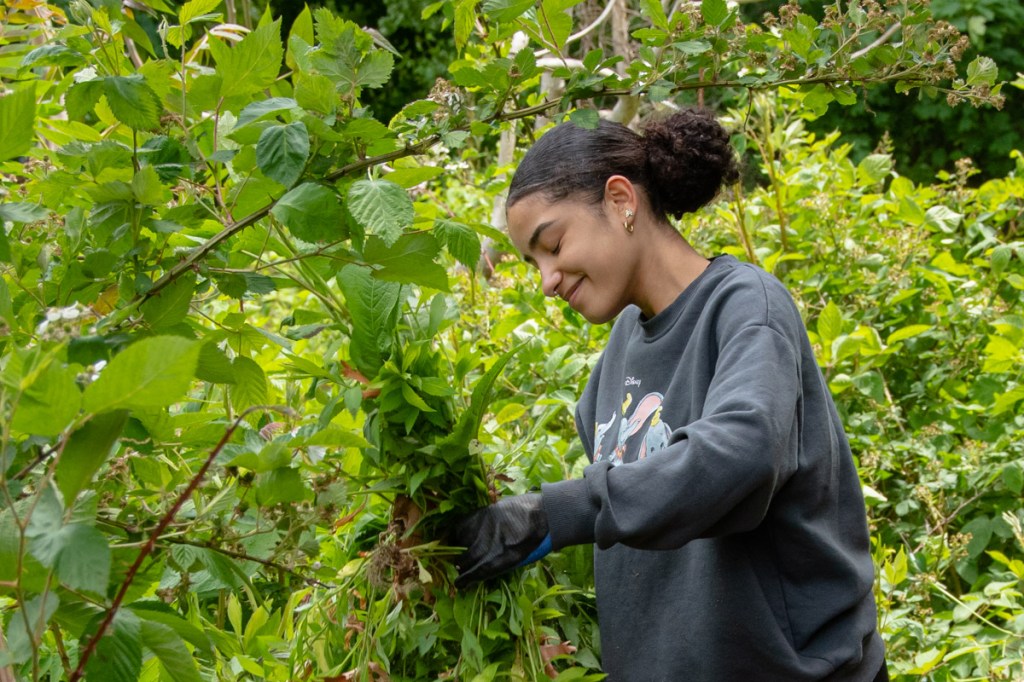
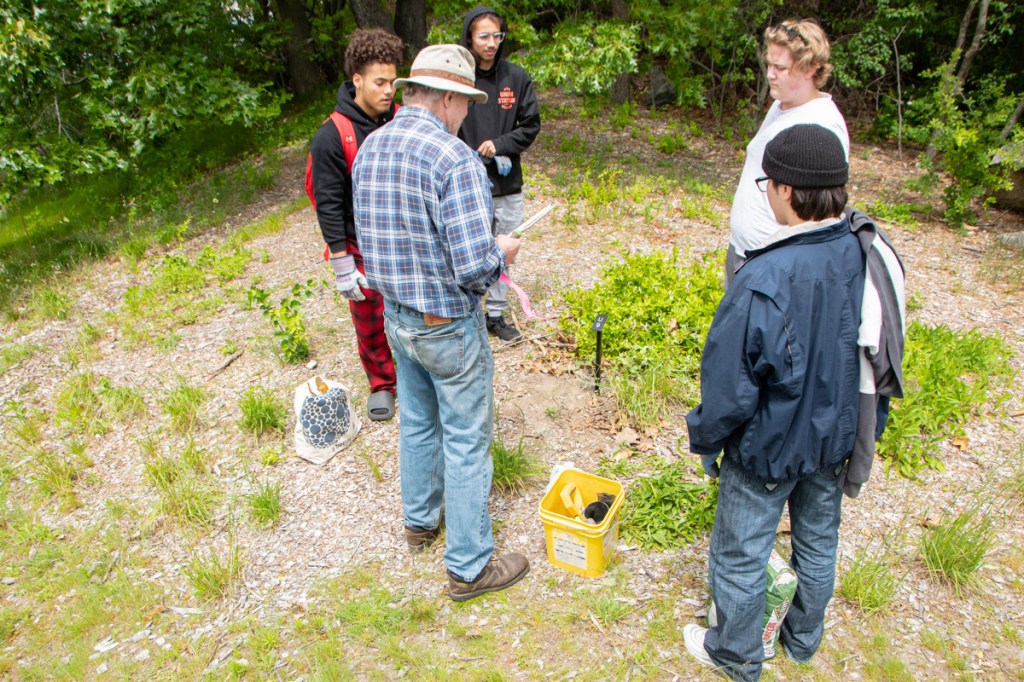
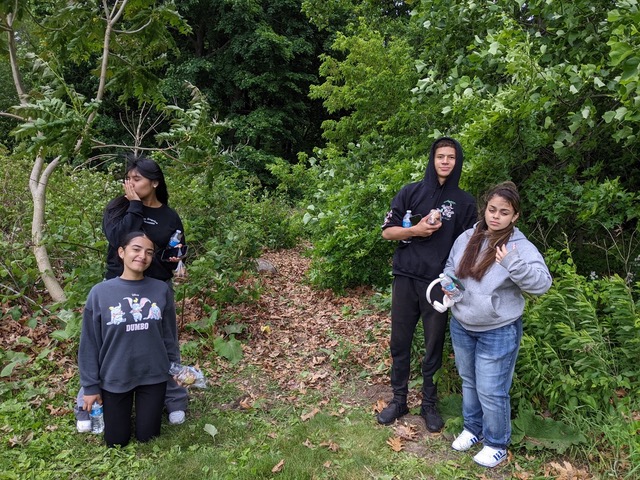
In early June, Cole Robinson and his class of 14 sophomores from the MET High School devoted two hours to: 1) install signage along the Upland Trail, 2) clear vegetation to provide access to a patch of heavily fruiting blackberry, and 3) remove Japanese knotweed throughout the park to deter further invasion.
Installing a trail marker.
Clearing vegetation for access to blackberry patch.
Removing Japanese knotweed from pond area.
All of the students were first introduced to the impenetrable patch of Japanese knotweed on Audubon Field. Witnessing the aggressive growth of this introduced species helped them realize how their respective tasks contribute to the overall care of the park.
See more photos from the MET students’ work at Salter Grove below:
(MET visit photographs by FoSG member Jason Major)
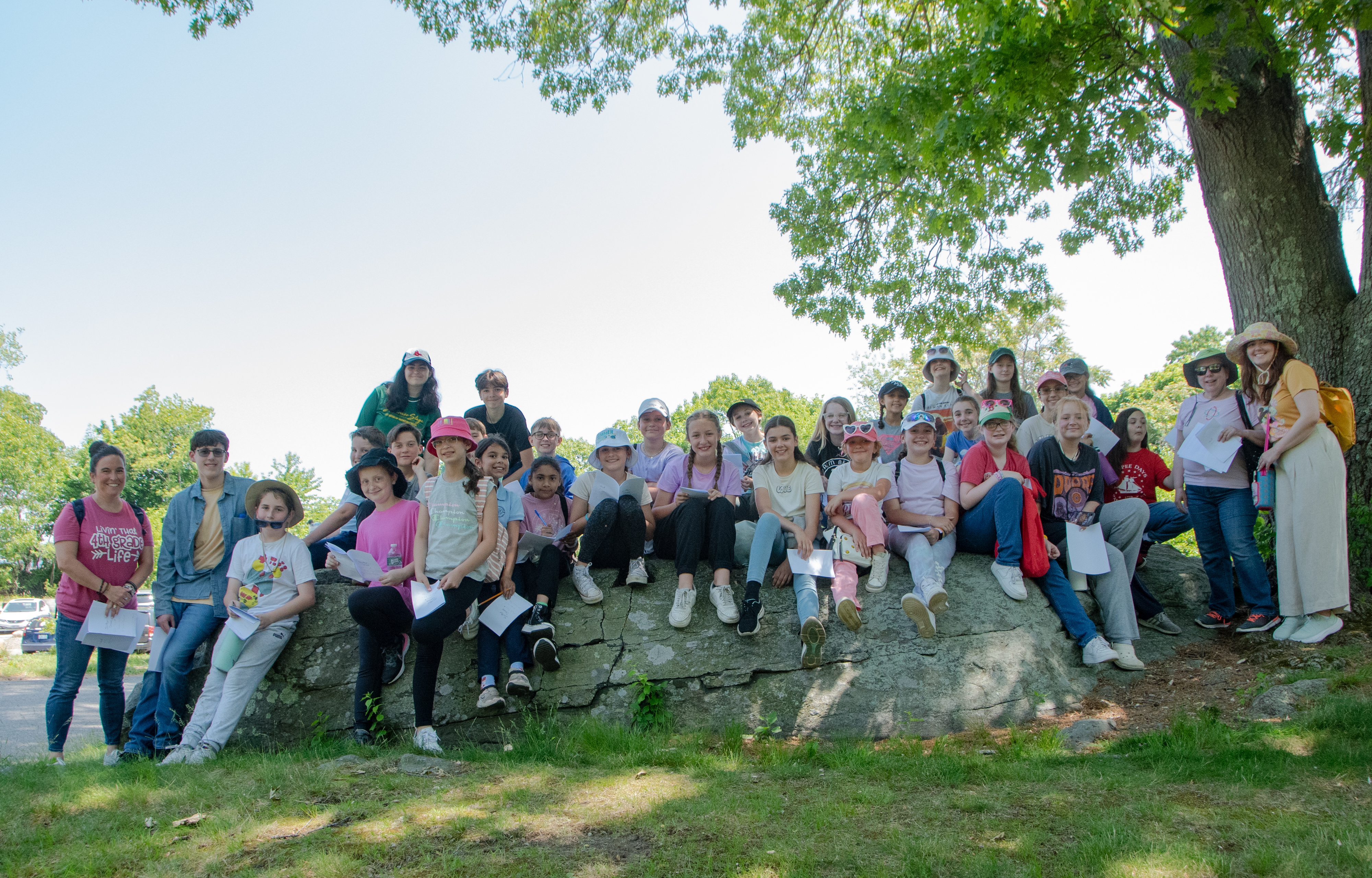
On June 1st, 2023, 4th- and 5th-graders from St. Peter School walked to Salter Grove accompanied by three teachers and five 8th-grade honor students.
Students and teachers from St. Peter School
During the 90-minute visit, information from the Guide to Salter Grove was accessed by smartphone to to explore and learn about the ecological assets of the park.
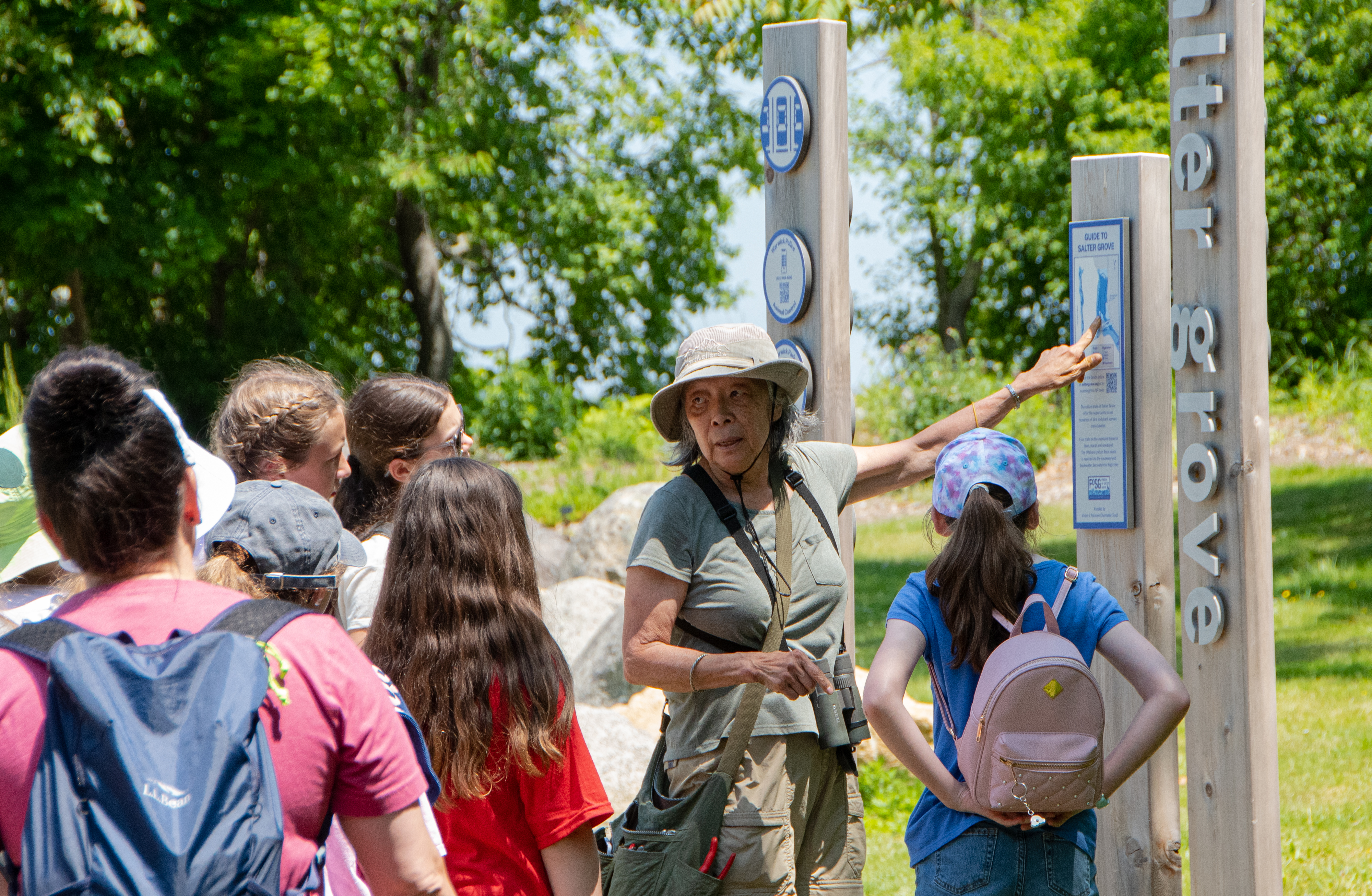
Talking about what will be seen on the nature trails.
Science topics discussed in the classroom came to life for students and teachers alike.
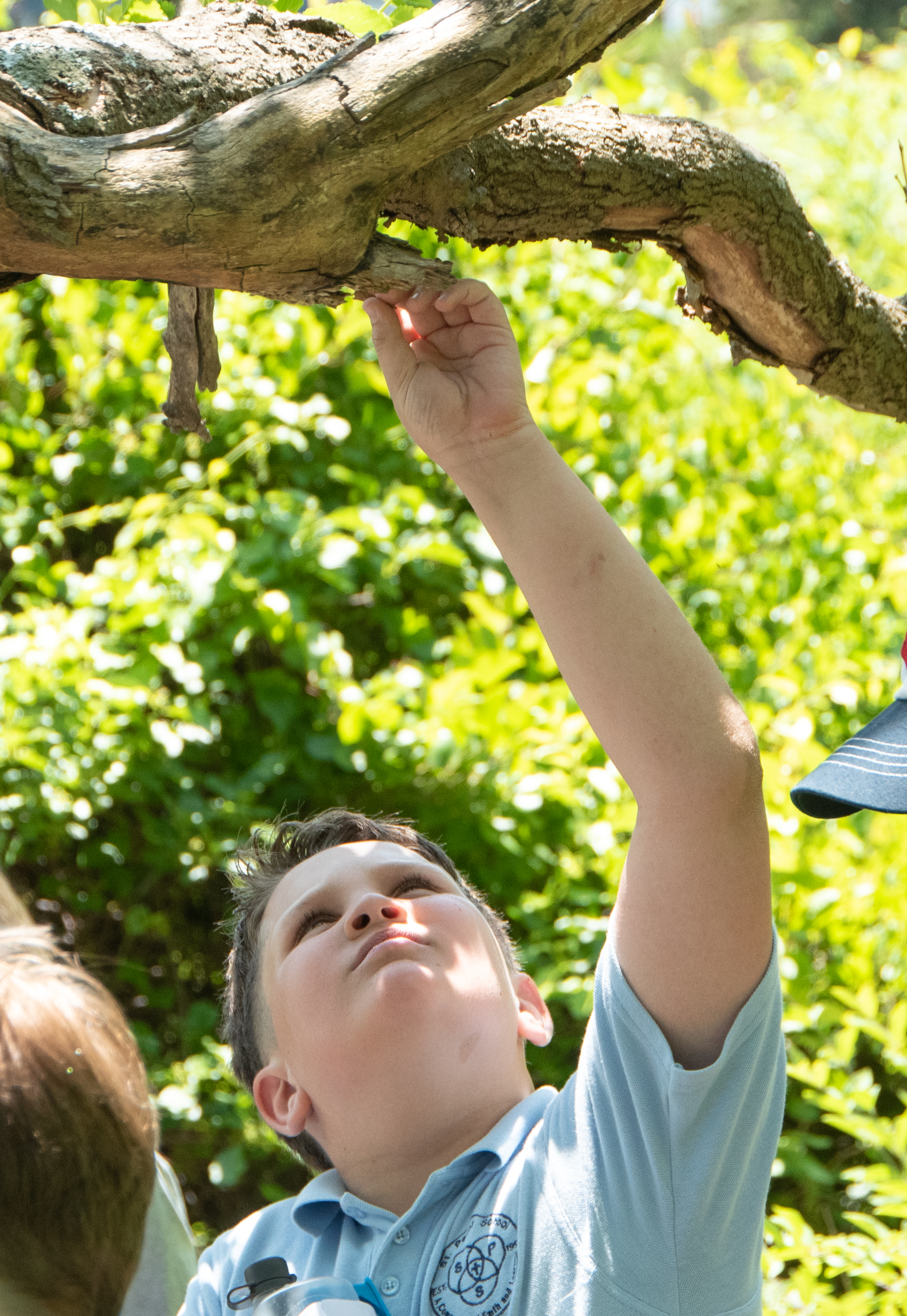
Students recorded observations in journals.
Organized into small groups, they walked along nature trails to observation stations that featured examples of: glacial history and geology of Rhode Island; native versus introduced plants; impact of invasive plants; different kinds of aquatic and terrestrial habitats; tolerance of marsh plants to brackish water; and human impact on the environment.
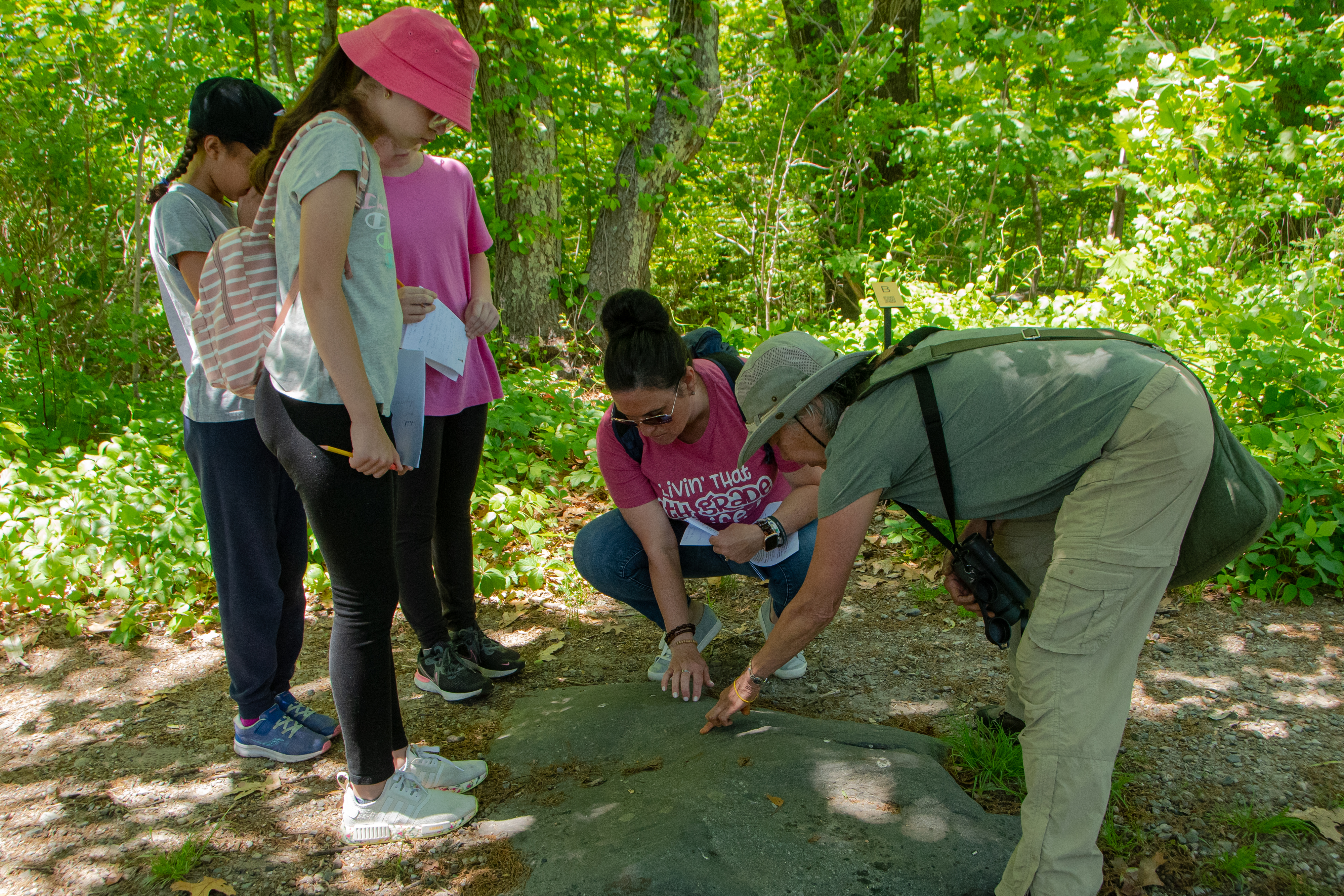
Examining glacial striations along Upland Trail.
And all this, from just six of 23 observation stations!
Inside the knotweed jungle.
Dr. Susan Unger, the science teacher who organized this field trip, would like to continue using Salter Grove as an outdoor classroom. Future field trips would focus on fewer topics so students can dive more deeply into the subject matter. Instead of simply noting down observations, they could collect data to answer specific questions formulated during classroom discussion.
See more photos from the St. Peter School field trip below:























 Friends of Salter Grove