
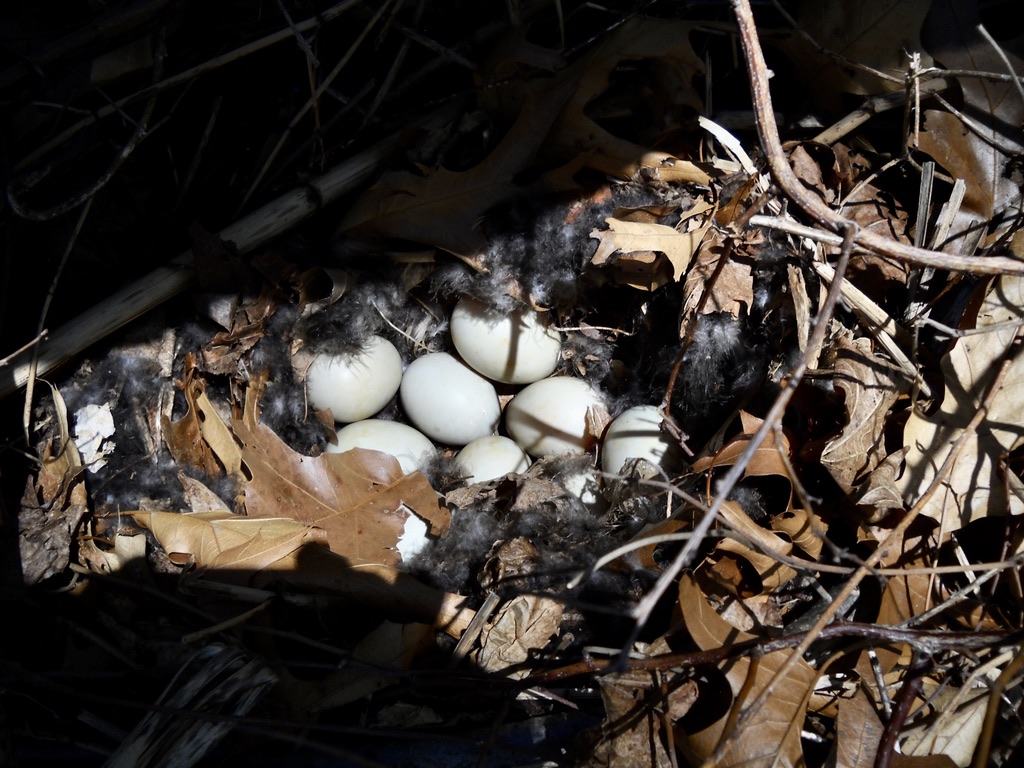
The first brush pile at Salter Grove was created at the north end of the vernal pond in 2020 with masses of thorny climbers removed from overloaded trees and shrubs in the park. What an exciting surprise to find that a female Mallard duck used it to shelter a nest with 12 eggs in April of 2021!
Since then, brush piles have been mindfully and strategically established throughout the park as volunteers manage the nature trails. These mounds of dried vegetation have become inviting shelters for birds and small mammals.
When placed on sloping terrain, the tangle of branches additionally traps leaf litter and prevents soil erosion. The fall of large branches during a storm in late 2020 provided the material for slope protection at the mid-point of Audubon Trail, where bare soil prevailed.
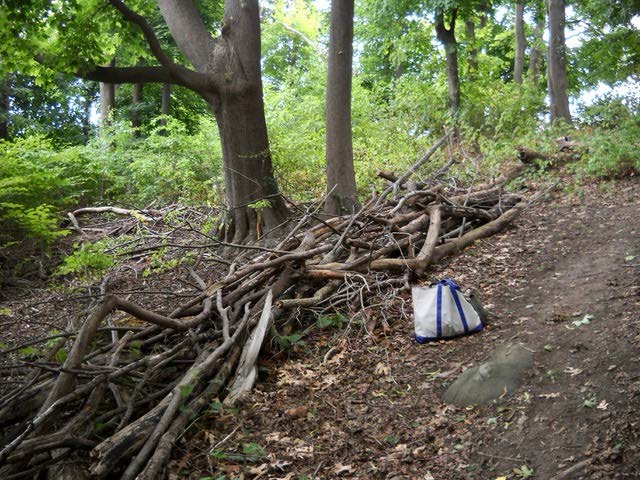
The payoff for building the elongated brush pile was spotting an American Mink capturing a mouse in the vicinity in July 2021, and then two more sightings in June 2022. The observations of this predaceous mammal on a slope so near Narragansett Parkway were unexpected because the mink’s usual haunts are the marshy shorelines along the breakwater, causeway, and Marsh Trail.
Even plants benefit from the elongated brush pile. The broad-leaved enchanter’s-nightshade, a native species of moist woodland, was seen for the first time in the park in August 2024 upslope at the pile’s southern end! It was likely brought in by a bird that defecated while perching on the brush pile, and no doubt the moist litter-rich environment encouraged the plant to grow where there had been only bare soil.


And then, for some unknown reason, this elongated brush pile was completely dismantled in March 2025 by scattering in the understory. Thus, a corridor for safe passage and a wildlife shelter was destroyed.

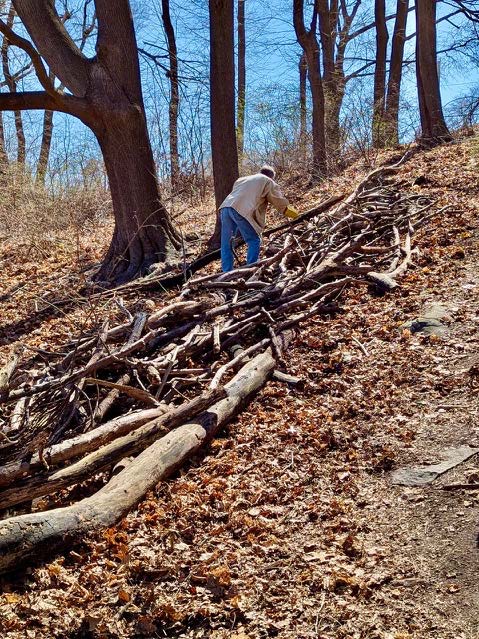
Friends of Salter Grove has written permission from the City of Warwick’s Tree Warden to manage the vegetation structure of Salter Grove. All branches and foliage cut are formed into brush piles as shelters for wildlife, rather than stuffed into bags for collection. Regular observations of these brush piles indicate that more and more wildlife are using them.
Even if well-intentioned, whenever individuals dismantle established brush piles, create new ones, or otherwise alter the physical infrastructure of the park, on-going management efforts are disrupted.
We are always keen to learn how we can better manage the park to recruit more native species of plants and animals. So let us know your ideas (friendsofsaltersgrove@gmail.com), but please don’t undo what has already been done.
 Friends of Salter Grove