Only Possible With Volunteers

Visitors to Salter Grove often comment on the pleasant and clean appearance of the park with its well maintained and litter-free trails. So who’s responsible? 

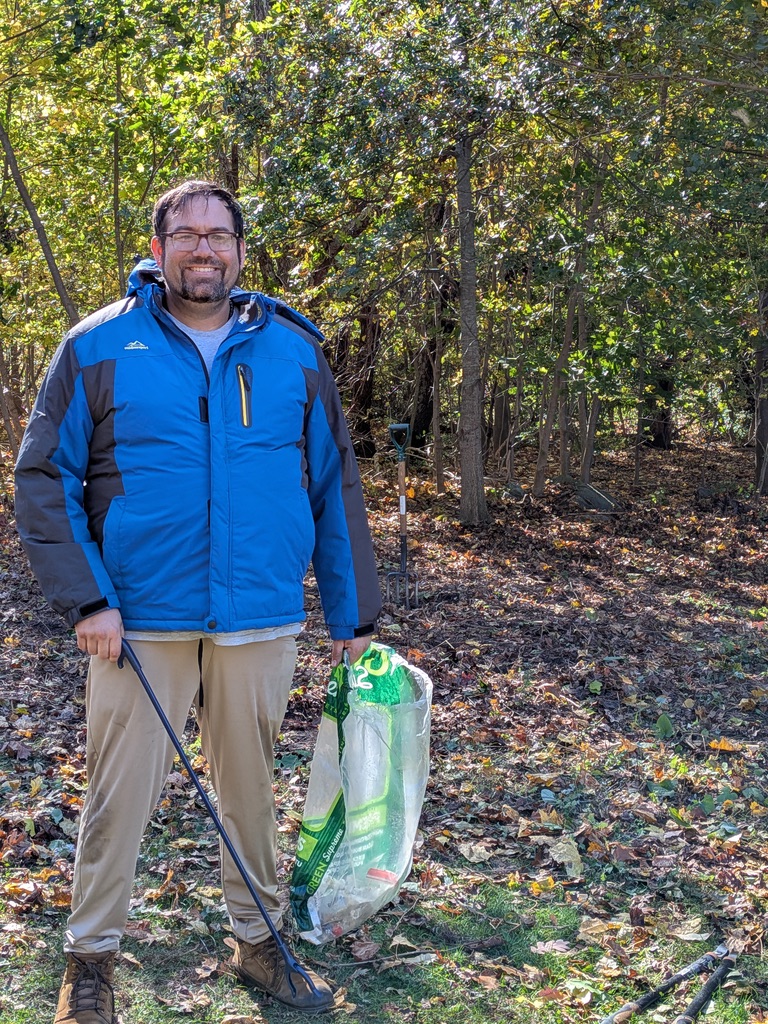
Carolyn Hardie and Andy Lohmeier 

Thanks to Carolyn Hardie, who has contributed over 1000 hours of her valuable free time since March 2020 as a volunteer to help manage the vegetation. Here’s what she has to say about her experience:

“Volunteering to help restore, improve and nurture the various habitats at Salter Grove is an enjoyable and rewarding experience. Preserving a very special space for visitors while gaining valuable knowledge, getting outside and getting exercise is an ideal combination. Connecting with like-minded volunteers is definitely an added benefit!”

Thanks also to Andy Lohmeier, who has been the FOSG liaison with STB in all cleanup matters since May 2019. He has led and trained many volunteers and was named as Save the By Volunteer of the Month in May 2025. Here are his thoughts:

“Volunteering at Save The Bay is a way to meet neighbors who see the importance of taking care of beaches and shoreline for future generations to enjoy,” said Andrew. “Everyone to some extent contributes to the waste that flows to the Bay, but by doing cleanups, we can help control the problem and protect wildlife.”

It appears self-organized individuals have also been picking up trash in between cleanups. We don’t know all of them but can now thank at least one individual by name.

Peter Richard while freelancing

Striped Bass Satellite Tag Found

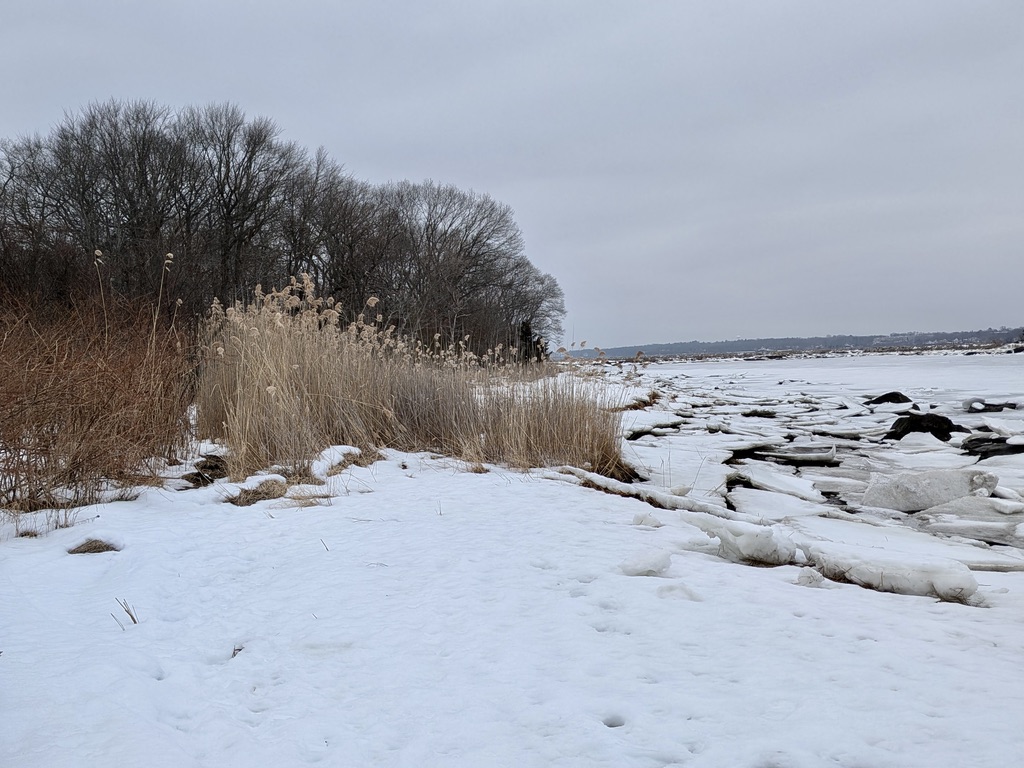
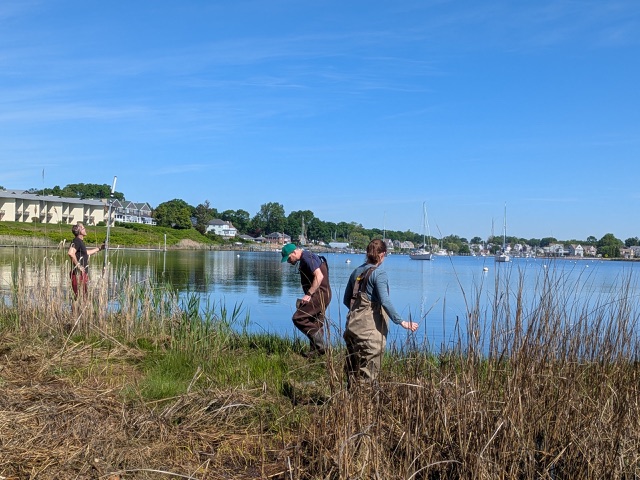
After scanning the perimeter of North Cove, the search narrowed in on the Phragmites marsh. 

Prof. Brian Prendergast saw that the satellite tag on a striped bass he was tracking had detached and was floating near Salter Grove. He contacted FoSG for support in locating the tag so we reached out to members and collaborators. 

Brian Prendergast smiles as his detector indicates the satellite tag is nearby. 
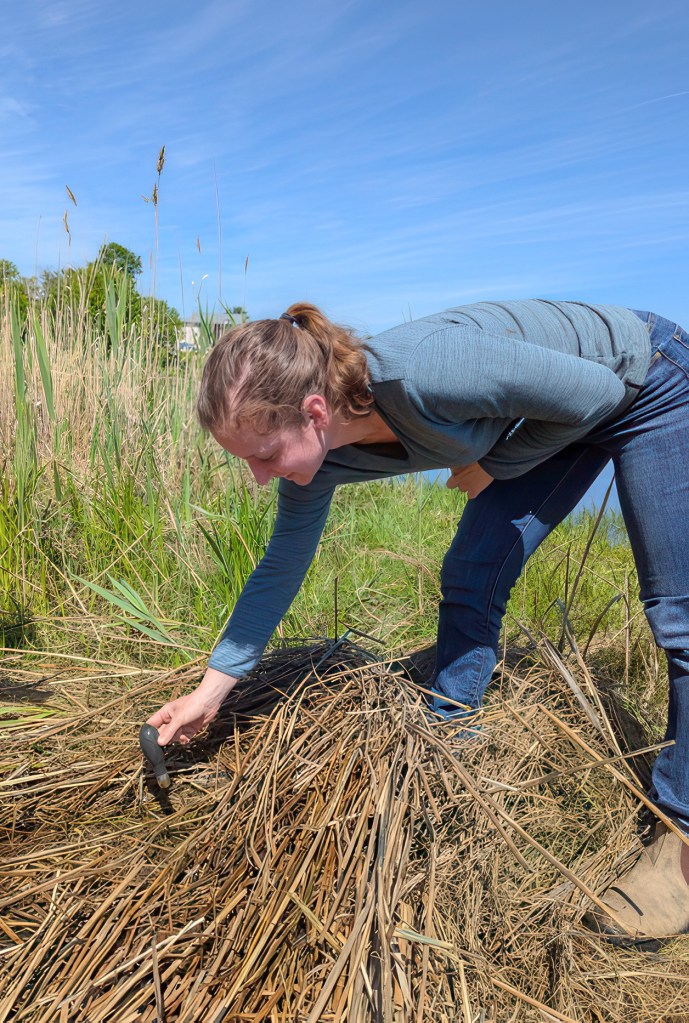
Heather Kinney of TNC’s Coastal Restoration Team found the satellite tag buried under reeds. 

After recovery, the tag was passed to Scott Bennett, Program Manager of the Striped Bass Initiative who had joined the search from the Marine Biological Laboratory. He will download the data so the striped bass’s migration track can be traced.  A very interesting discovery of this research is that at least some of the older fish hole up in coastal ponds during the summer where they conserve energy by remaining relatively inactive. This confirms the reports of fishers that the same fish show up annually. 

Who Did This?

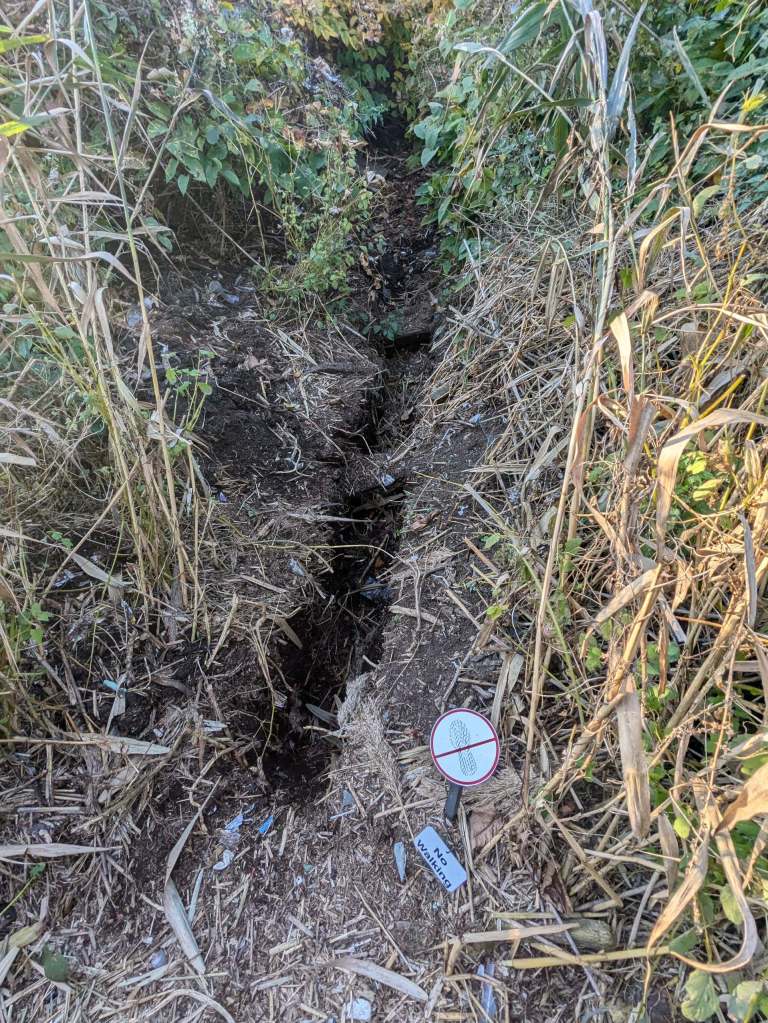
The pictured trench was recently dug to nearly three feet deep at the top of the Phragmites marsh below Audubon Hill at the south end of the park.

Signs notwithstanding, this trench creates a serious hazard to children. It was not authorized by the City of Warwick or RIDEM and serves no useful purpose, Its creation also disturbed natural vegetation and drainage.

If you know who did this, please advise friendsofsaltersgrove@gmail.com, with proof, if possible.

Thanks to Warwick DPW!

Under a Park Use Agreement with the Department of Environmental Management, the City of Warwick has assumed responsibility for the maintenance of Salter Grove for 20 years until 2034.

Stormy weather and careless visitors have added to the demands of this agreement. A large shade tree that just missed falling on one of the benches on Audubon Hill and a shattered wooden guard rail near the playground were the latest challenges.

Hats off to Warwick’s DPW for promptly addressing these incidents!

A Berry Good Year for Frugivores 

The lower-than-usual rainfall combined with higher-than-usual temperatures during the growing season in 2022 greatly reduced fruit production at Salter Grove to a level not seen in many years. It was alarming because many insectivorous birds and their fledglings include large amounts of fruits in their diet after at the end of the breeding season. 

However, the bumper crop of juicy and plump berries this year should convince fruit-eating birds that Salter Grove is a great place to raise their families!

Just two weeks ago, a Baltimore Oriole was already pokoing through ground vegetation to get at fruits of twice-leaved blackberry that creep through low vegetation. 

Twice-leaved raspberry in fruit (National Dendrological Collection of Poland, CC BY-SA 4.0). 

Soon, the hedges of leafy-flowered blackberry, and wine raspberry that line the lawn south of the parking lot will be filled with ripe fruits. 

Continue reading